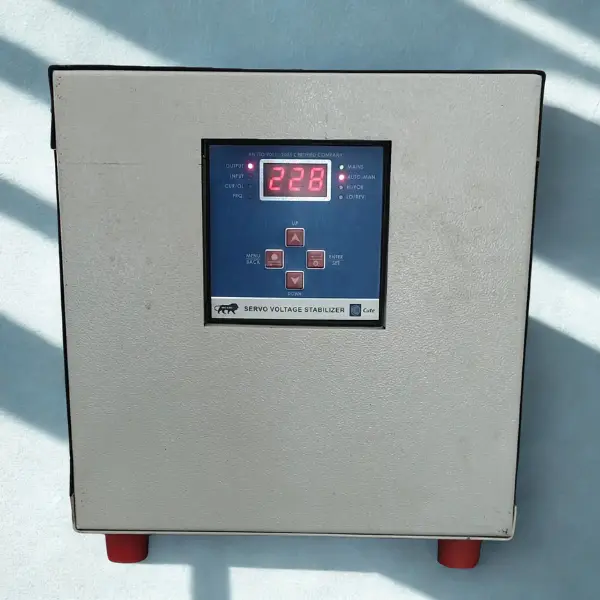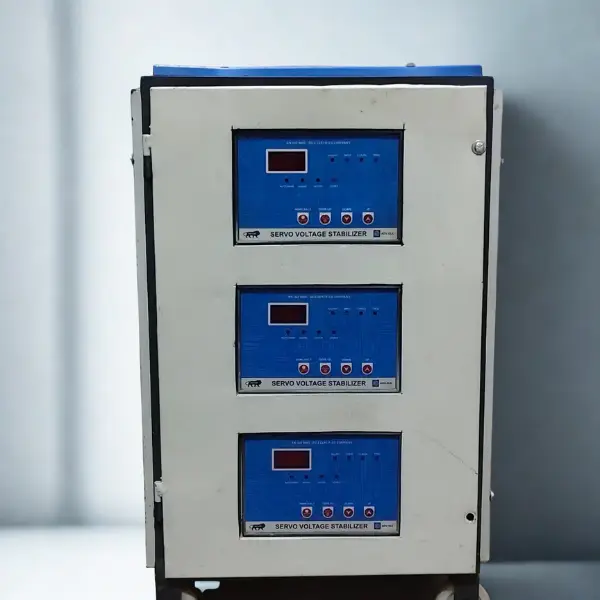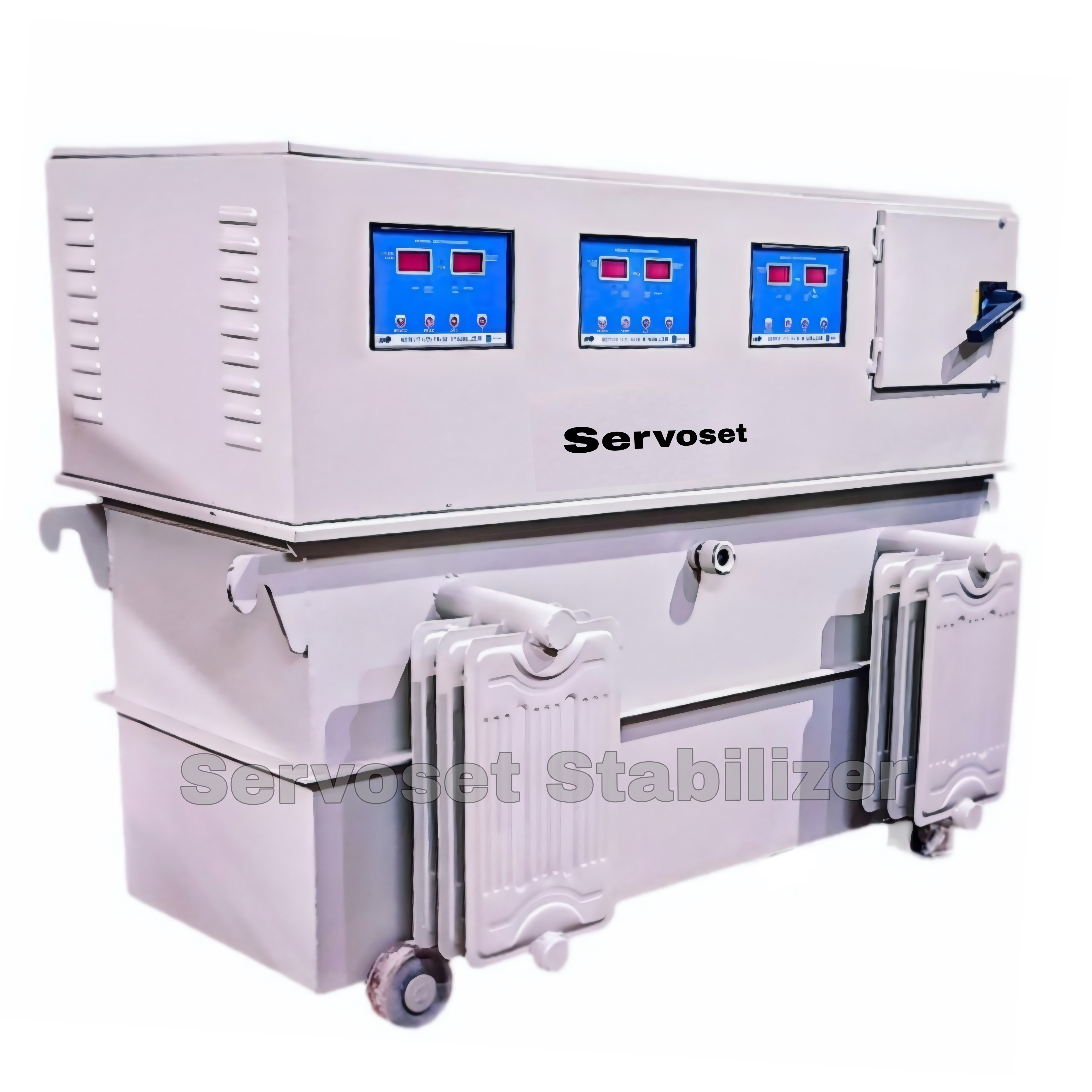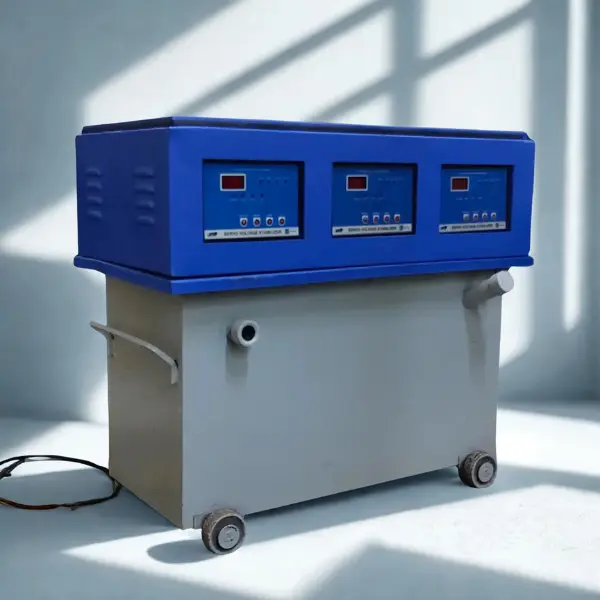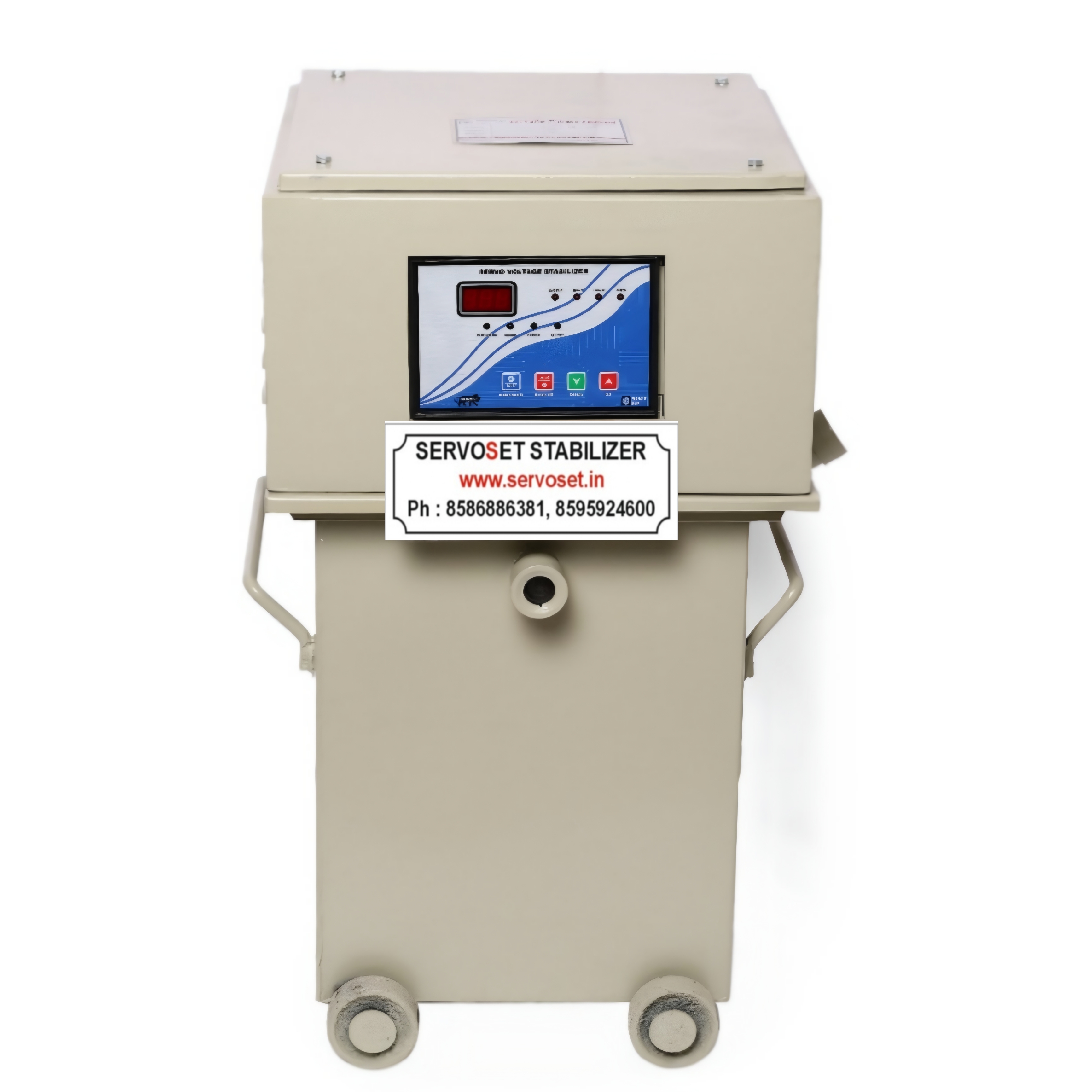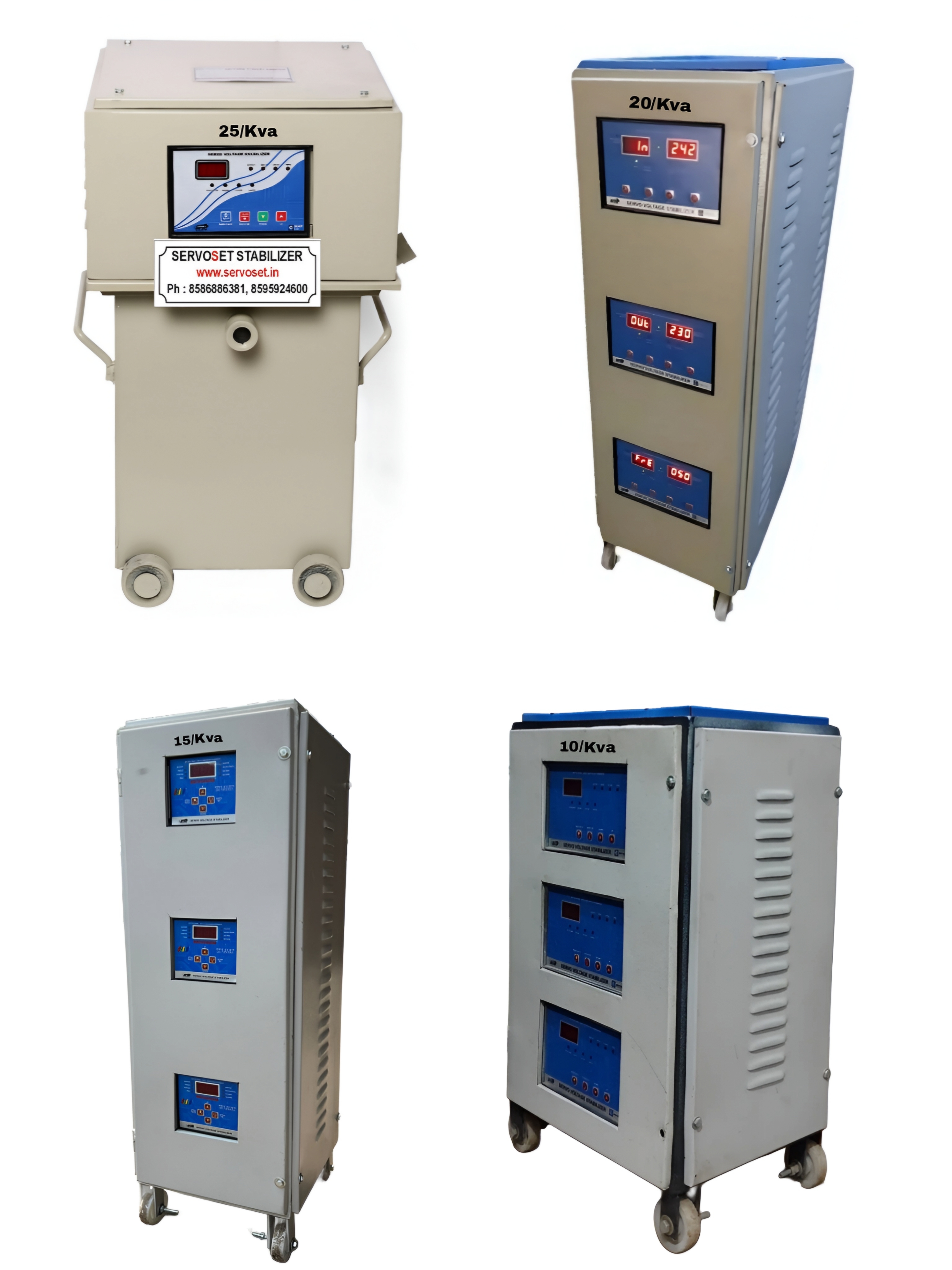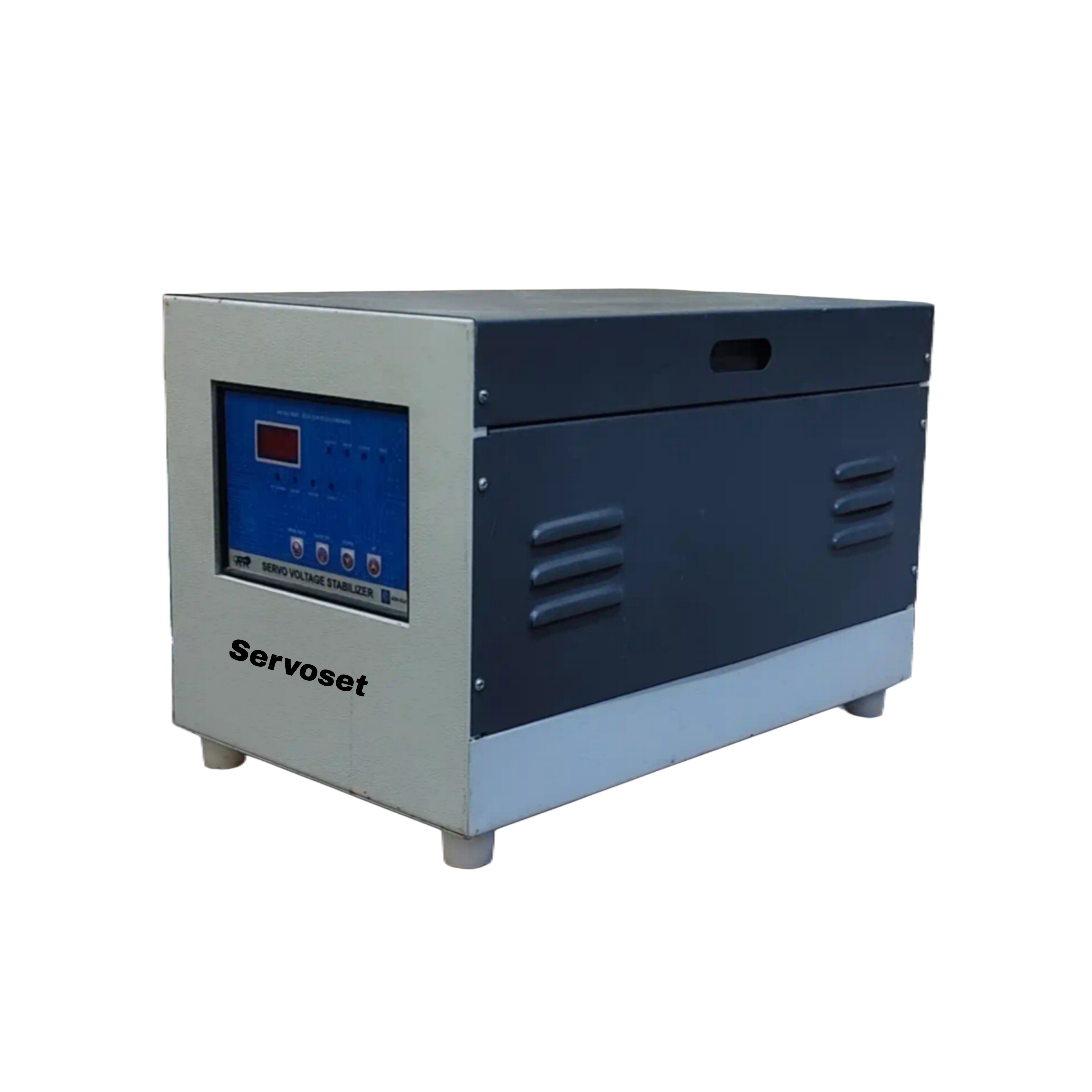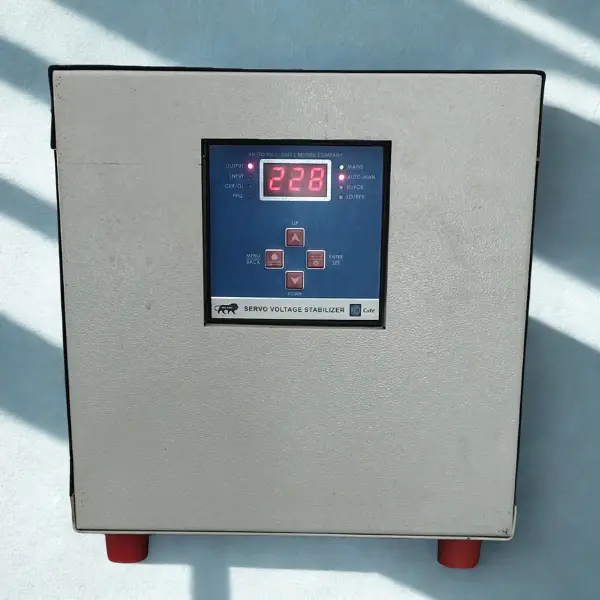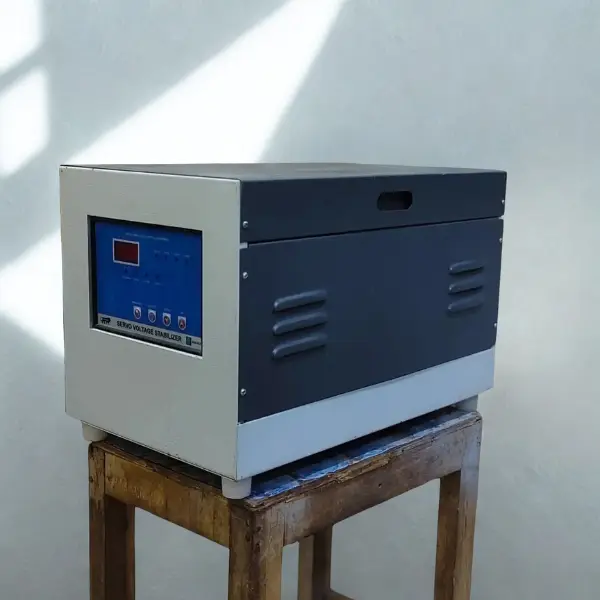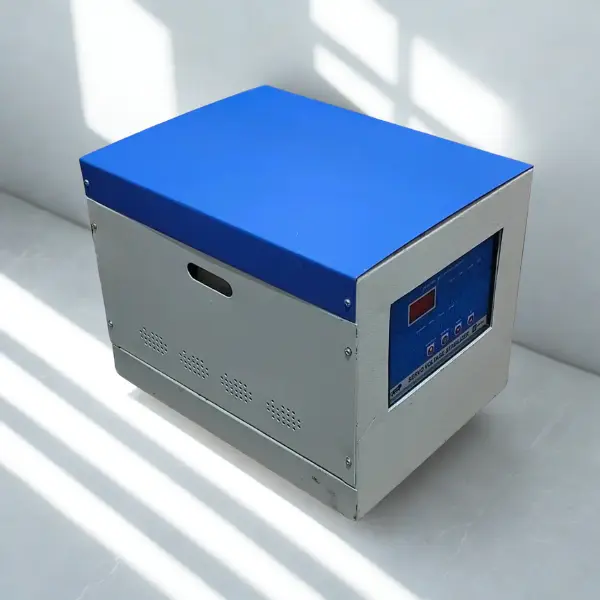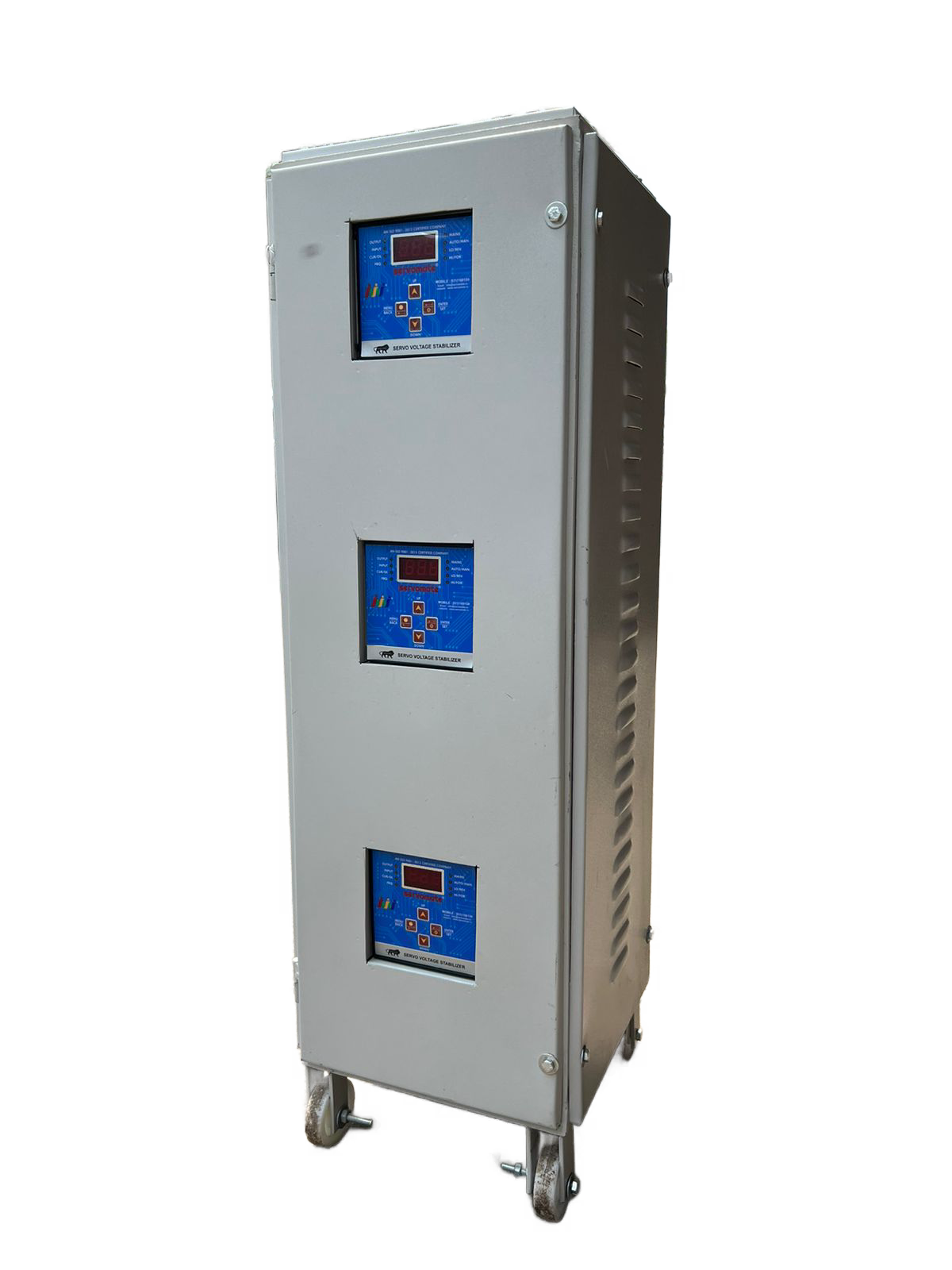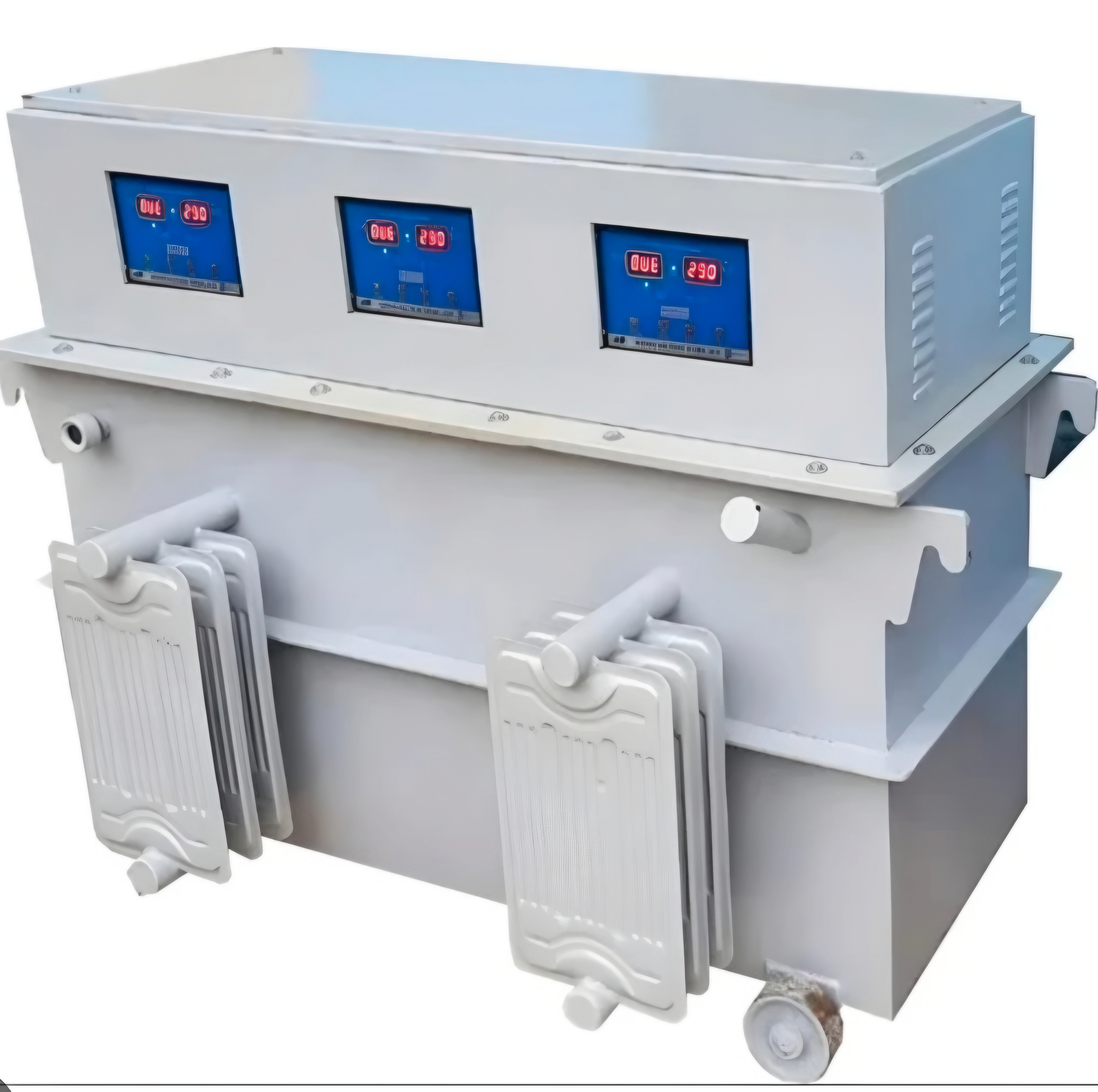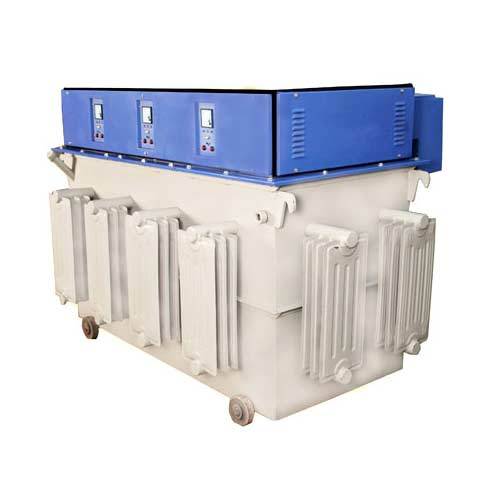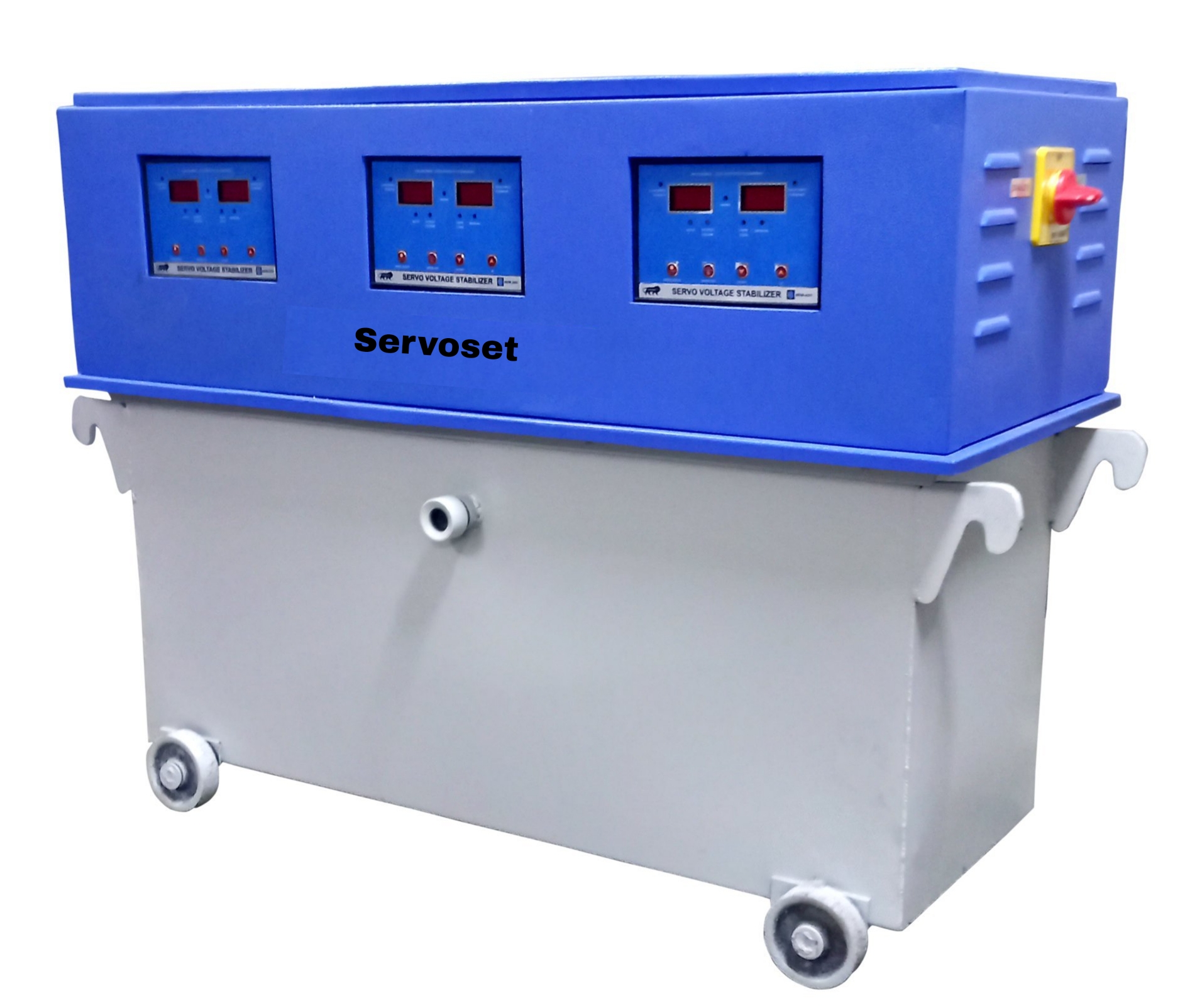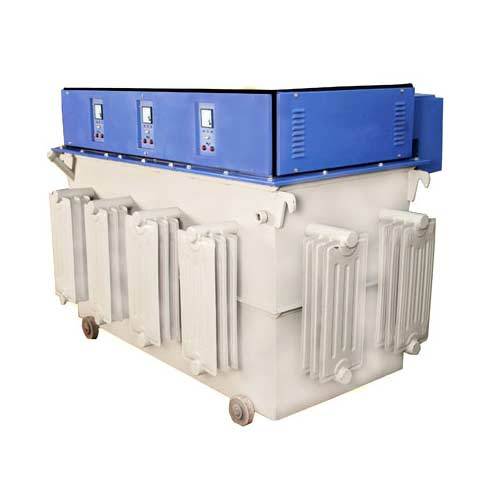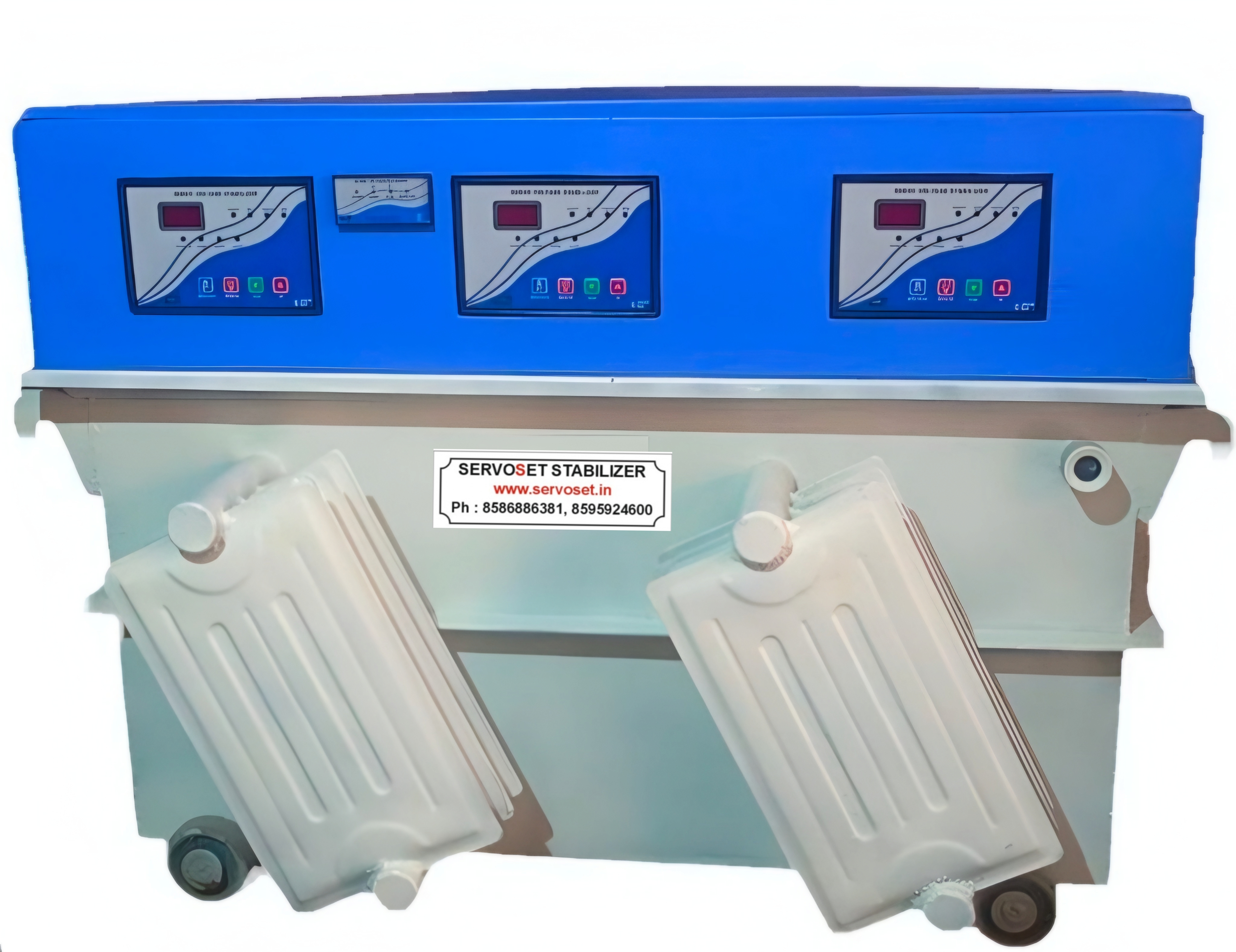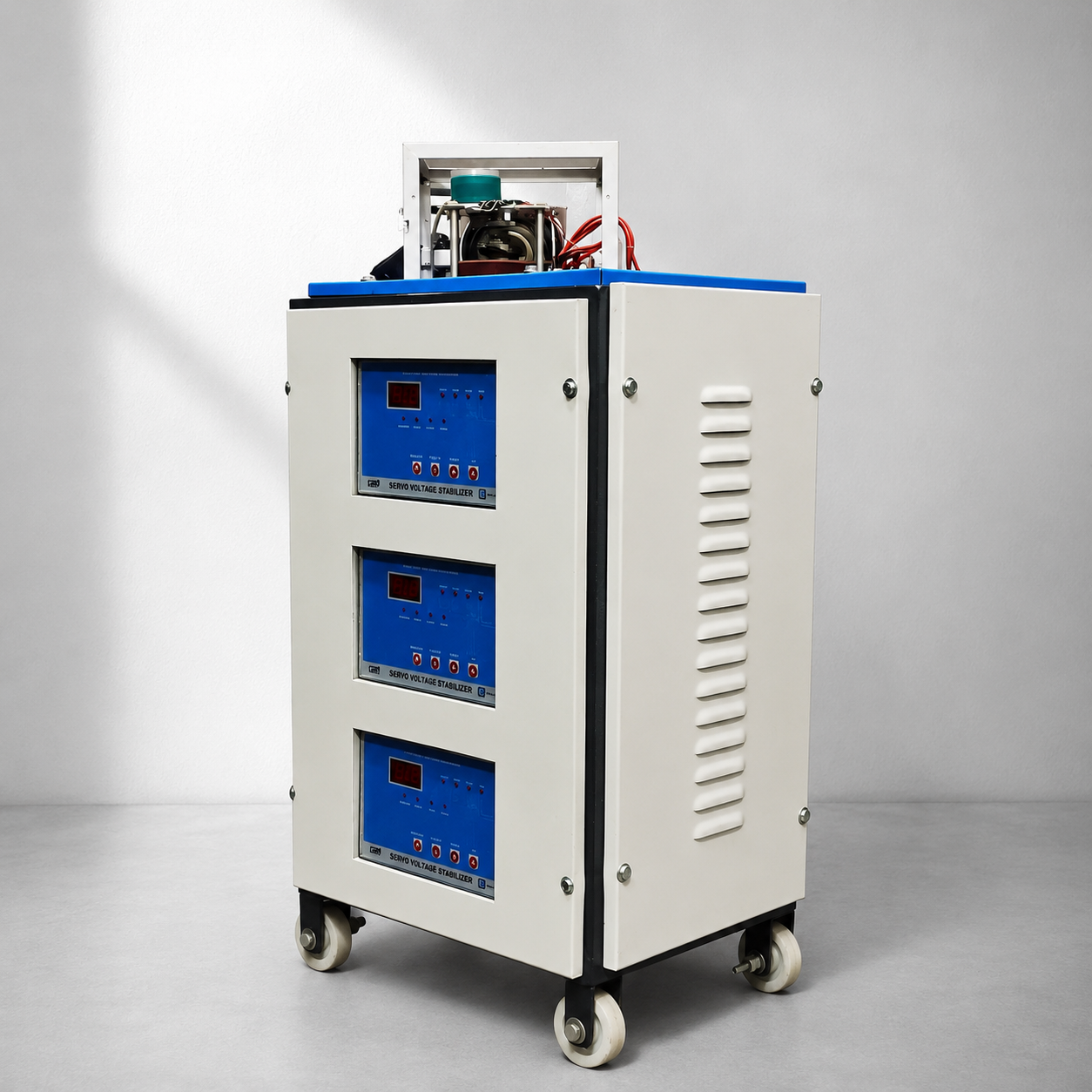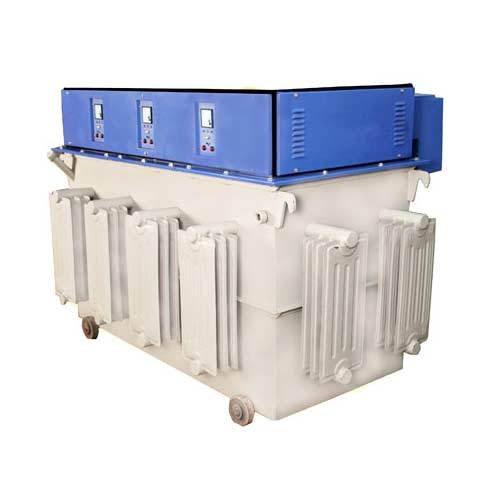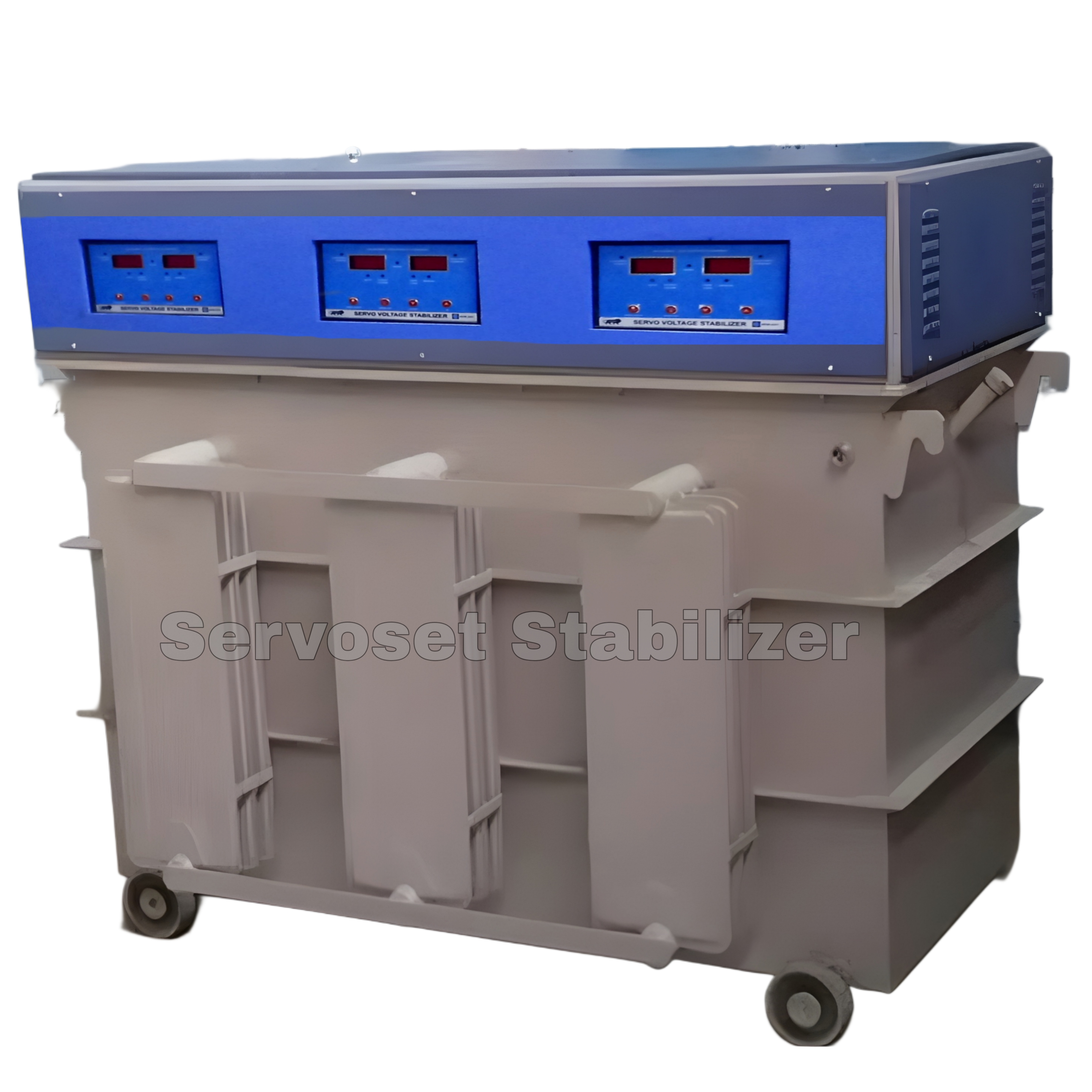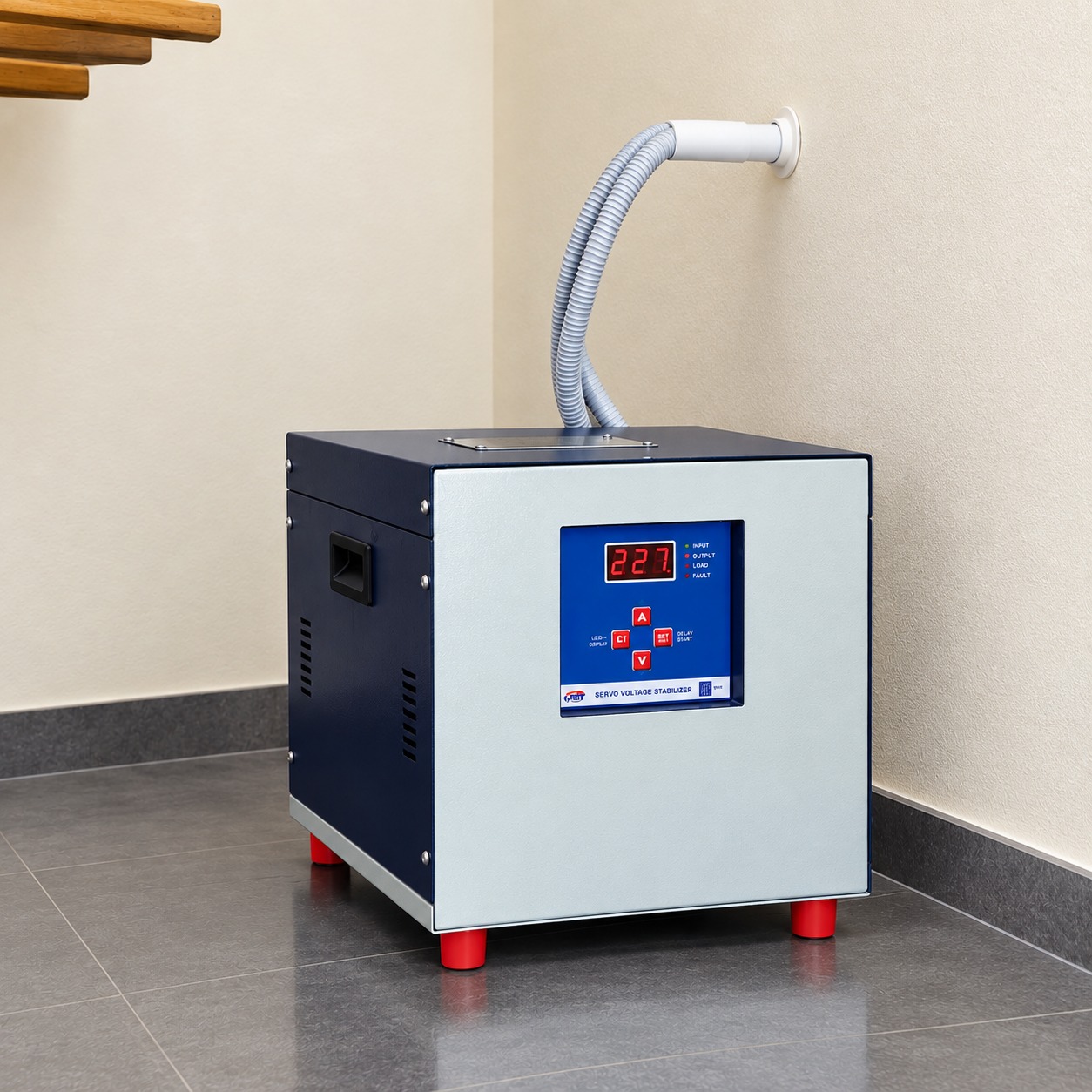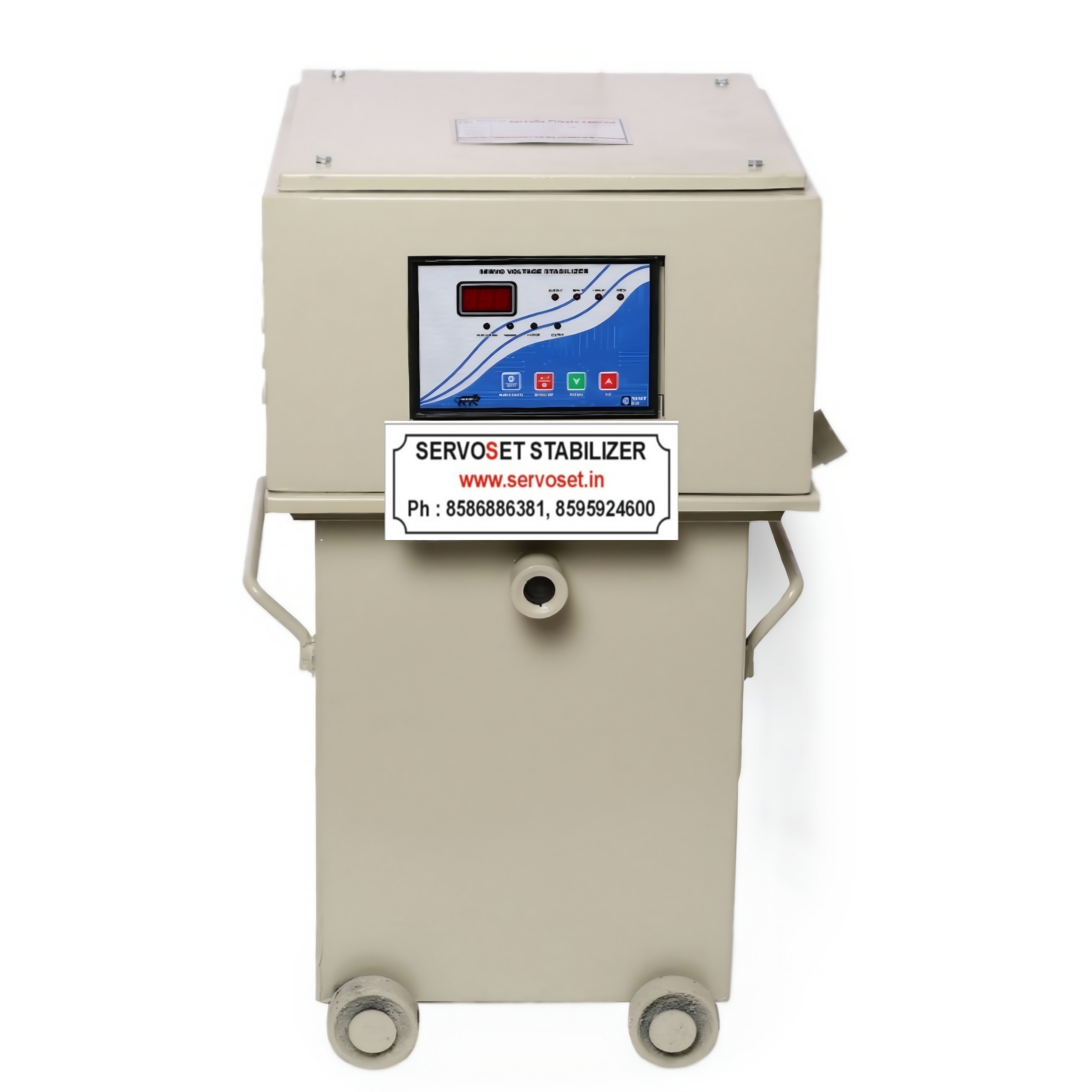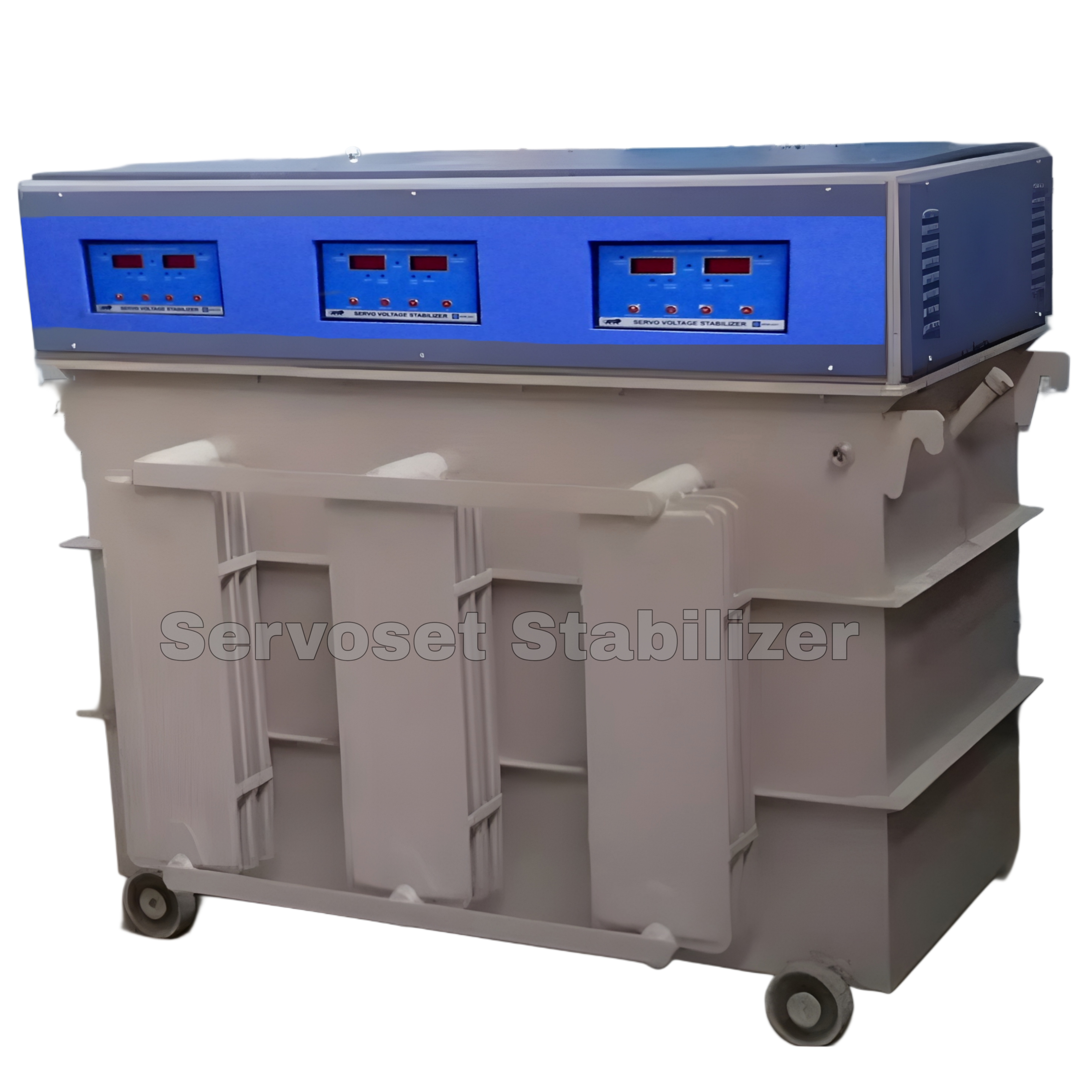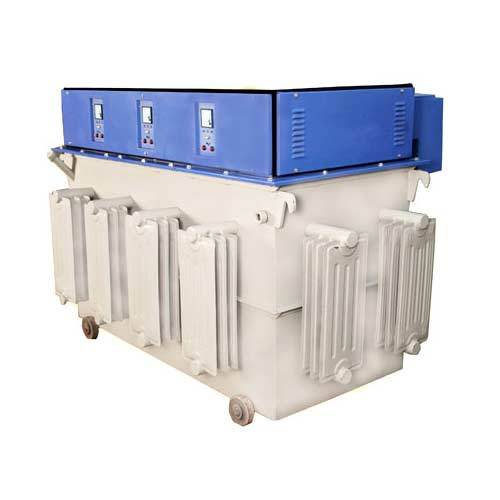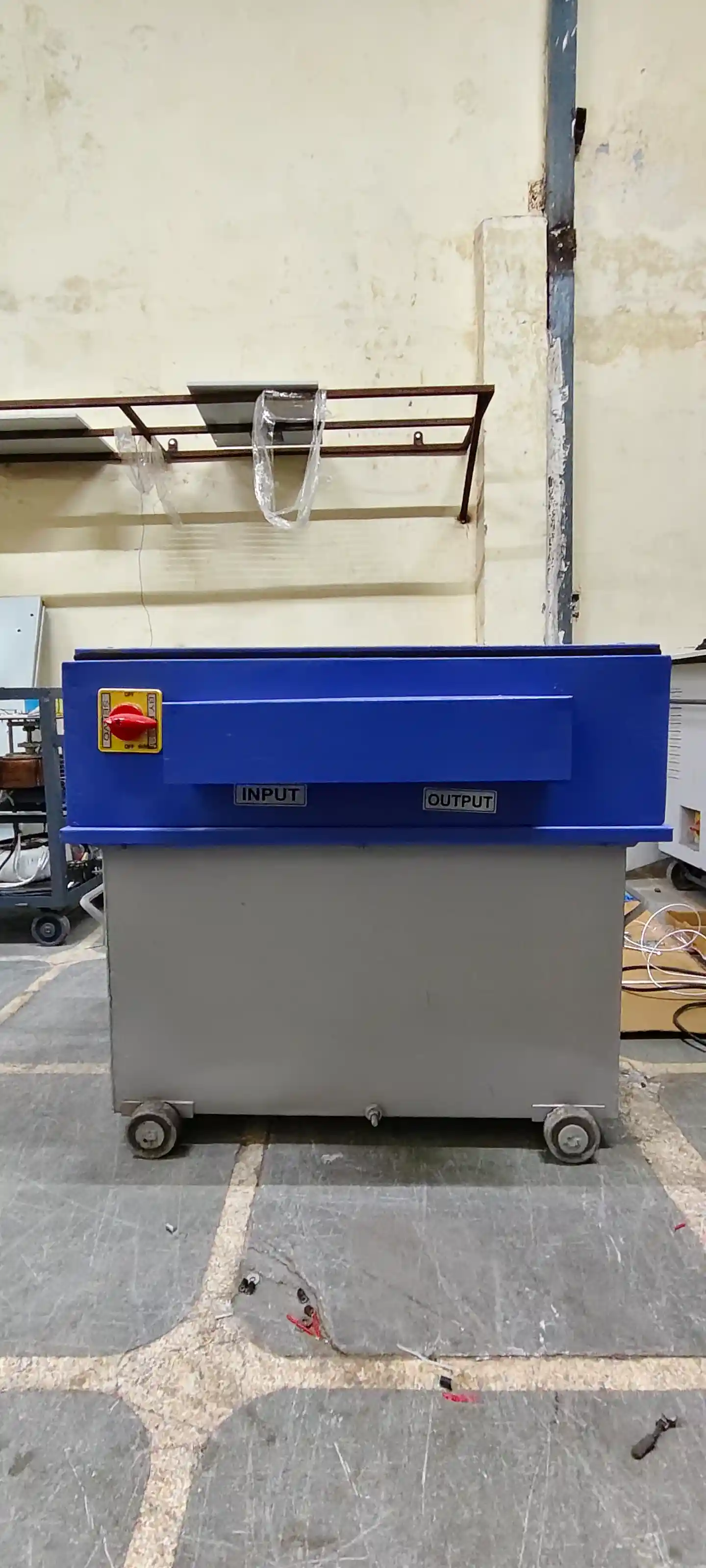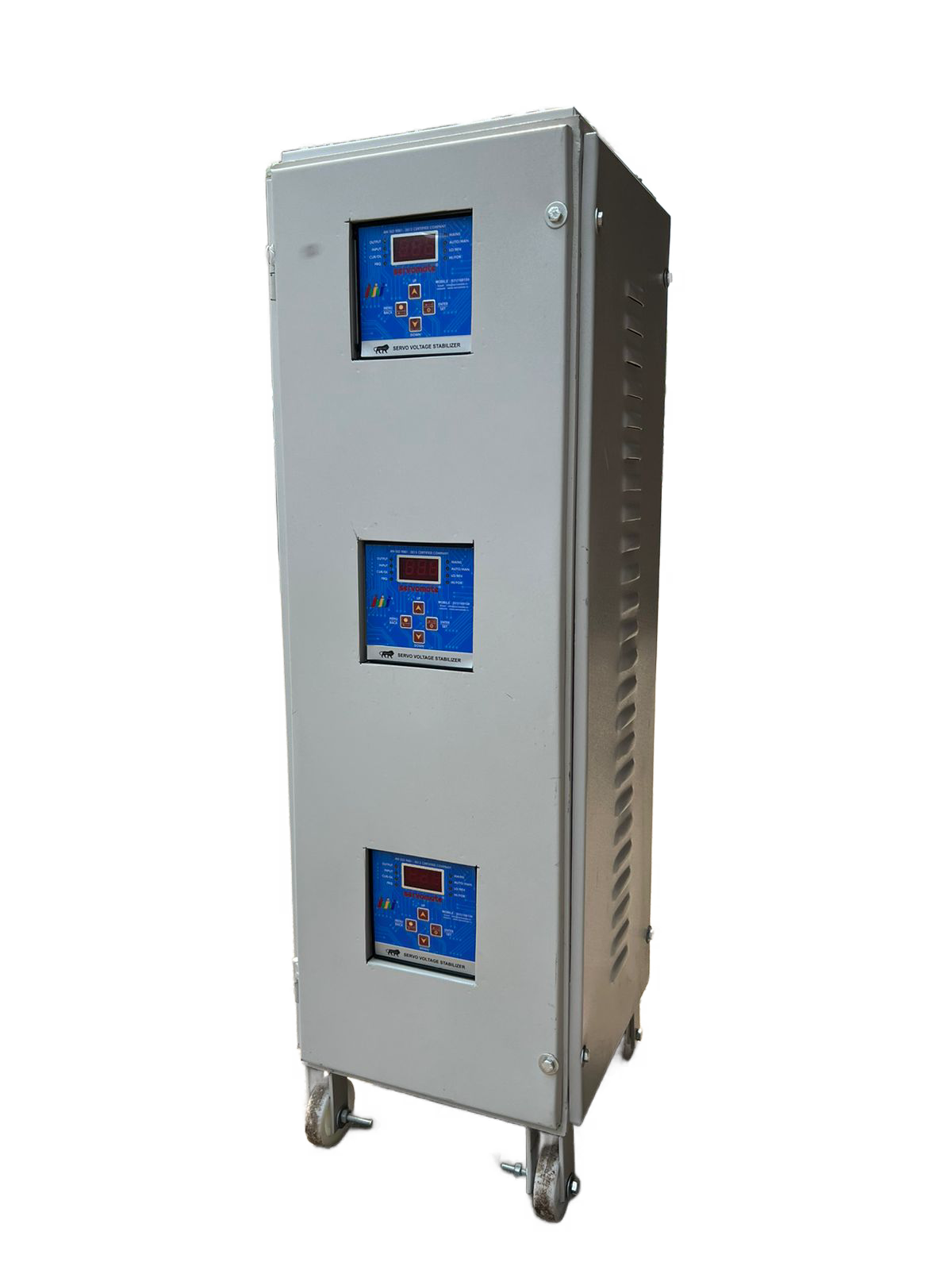
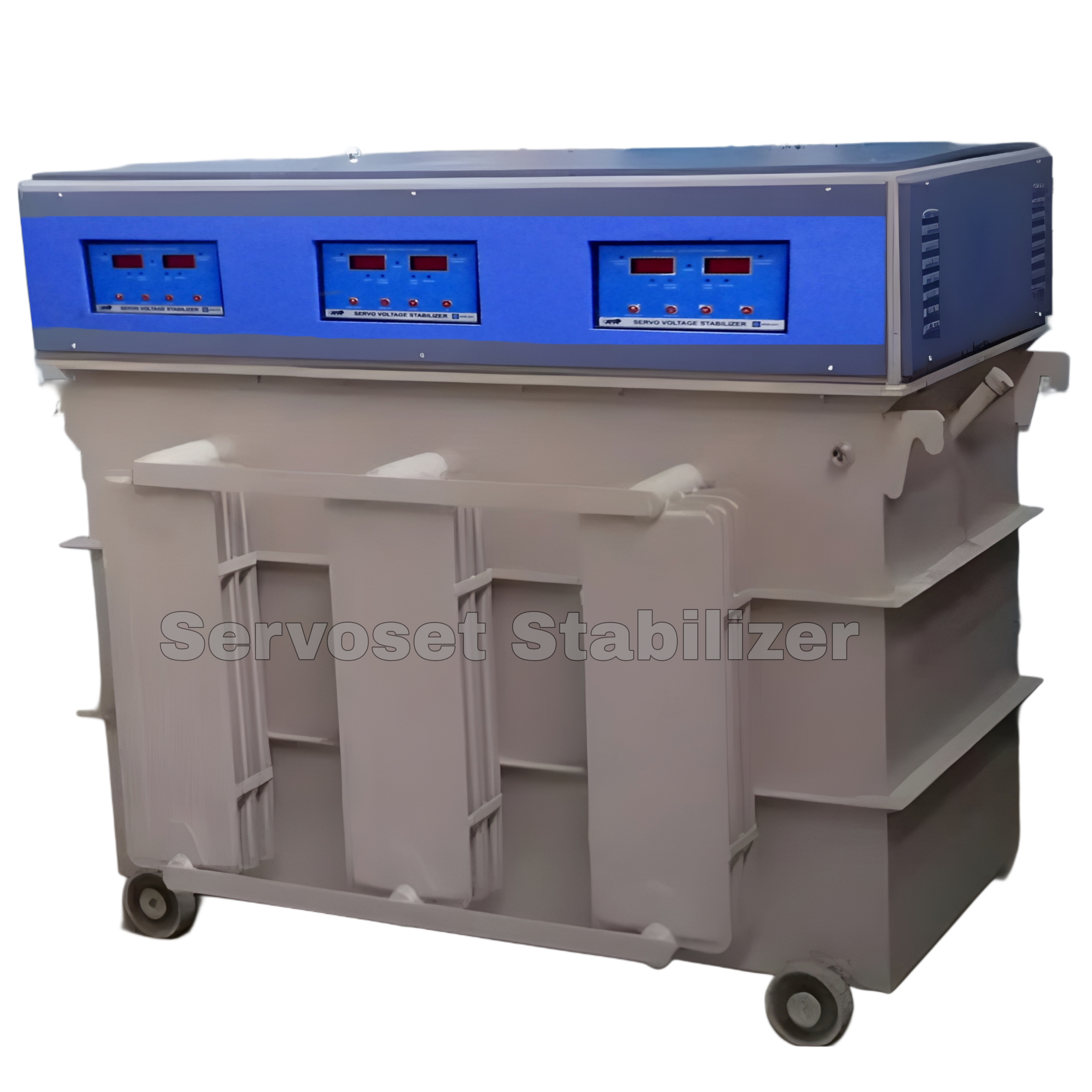
Three Phase Servo Stabilizer: The Backbone of Stable Industrial Power
Every factory floor, processing plant, or large commercial facility runs on one non-negotiable requirement — consistent power across all three phases. A three phase servo stabilizer exists precisely for this: it doesn't just correct voltage on a single line, it monitors and balances all three phases simultaneously, protecting connected machinery from the kind of imbalance and fluctuation that single phase units were never designed to handle.
Single Phase vs Three Phase Servo Stabilizer — What's the Real Difference?
| Aspect | Single Phase Servo Stabilizer | Three Phase Servo Stabilizer |
|---|---|---|
| Power handling | Suited for homes, shops, and small offices | Built for factories, large machinery, and commercial buildings |
| Voltage correction | Corrects one live line | Corrects and balances all three phases independently |
| Load capacity | Typically up to 15-20 KVA | Ranges from 30 KVA to several hundred KVA |
| Common failure risk addressed | Voltage sag or surge on a single circuit | Phase imbalance, phase failure, and unequal load distribution |
| Typical users | Households, retail shops, and clinics | Manufacturing units, hospitals, large hotels, and data centers |
This distinction matters because a three phase system carries a unique risk that single phase setups don't face: phase imbalance. If even one of the three phases drifts out of range while the others remain stable, it can cause motors to overheat, trip, or fail entirely — a problem only a properly designed three phase servo stabilizer can catch and correct.
What Makes Three Phase Servo Stabilizers Technically Different
A three phase servo stabilizer typically operates in one of two configurations — balanced or unbalanced correction. Balanced units correct all three phases together assuming equal load distribution, while unbalanced or independent correction units adjust each phase separately, which is critical for facilities where load isn't evenly split across all three lines. Most modern industrial servo stabilizers now favor independent-phase correction because real-world industrial loads are rarely perfectly balanced.
Internally, these units use servo motor-controlled variable transformers per phase, or a shared mechanism with per-phase sensing depending on the design. They continuously adjust output to stay within a tight voltage band — usually 380-440V for three phase industrial supply in India.
Industries and Facilities That Rely on Three Phase Servo Stabilizers
- Manufacturing and processing plants: Protecting CNC machines, motors, compressors, and production-line electronics from load-induced voltage swings.
- Textile and packaging units: Where continuous machine operation makes even brief voltage dips costly in terms of production downtime.
- Hospitals and diagnostic centers: Safeguarding imaging equipment, HVAC systems, and critical care machinery that cannot tolerate power instability.
- Large hotels and commercial complexes: Supporting centralized AC systems, elevators, and heavy electrical infrastructure.
- Data centers and server facilities: Where three phase power stability directly affects equipment uptime and hardware lifespan.
How to Choose the Right Capacity
Selecting a three phase servo stabilizer isn't just about matching total connected load — it requires accounting for starting current spikes, especially for motor-heavy setups, future expansion needs, and the voltage correction range your local supply actually requires.
As a general approach, consider the following steps:
- Calculate total connected load across all three phases.
- Add 20-25% buffer capacity for motor starting surges and future load additions.
- Confirm the voltage correction range needed based on your area's typical supply fluctuation.
- Choose between balanced or independent-phase correction based on how evenly your load is distributed.
Getting this sizing wrong is one of the most common — and costly — mistakes in industrial power planning, which is why professional load assessment matters more here than with smaller single phase units.
Maintenance Considerations
Three phase servo stabilizers, given their higher load and continuous industrial duty cycles, need more structured maintenance than home-use units.
- Periodic carbon brush inspection and replacement.
- Cooling system checks for oil-cooled or air-cooled units, depending on the model.
- Load testing to confirm correction accuracy hasn't drifted over time.
- Terminal and connection checks to prevent overheating at high current levels.
FAQs
What's the main advantage of a three phase servo stabilizer over three single phase units?
It corrects and balances all phases together, helping prevent the phase imbalance risk that using separate single phase units can't address.
What KVA range does Servoset offer for three phase servo stabilizers?
Servoset offers a range starting from smaller commercial capacities up to large industrial-grade units — contact us for exact specifications.
Can a three phase servo stabilizer handle motor starting surges?
Yes, when sized correctly with adequate buffer capacity, it can manage motor inrush current.
How often does a three phase servo stabilizer need servicing?
Periodic checks every 6-12 months are recommended for industrial units, depending on duty cycle and environment.
Conclusion
For any facility running heavy machinery, centralized systems, or continuous industrial processes, a three phase servo stabilizer isn't just protective equipment — it's operational insurance against downtime, equipment failure, and costly repairs. Getting the sizing, correction type, and maintenance right from the start makes the difference between years of stable performance and recurring power-related issues. Servoset's three phase range is built to match real industrial demand, backed by proper load assessment and after-sales support.