Introduction
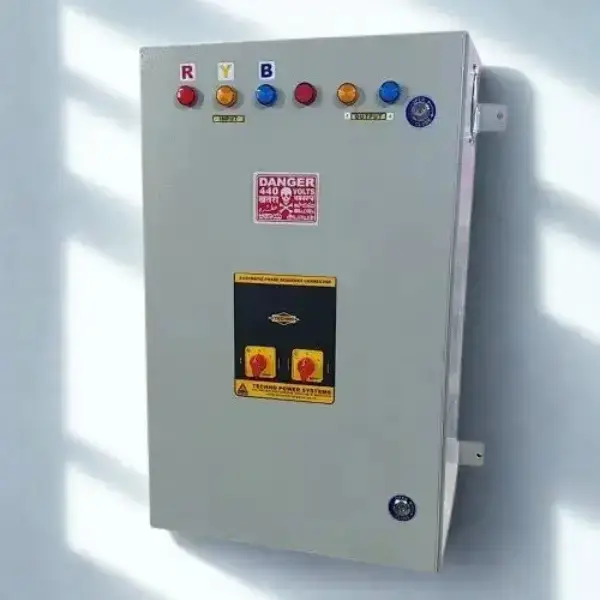
Modern industries depend on electrical equipment that requires a stable and consistent power supply for reliable operation. Voltage fluctuations, sudden overvoltage, undervoltage, and unstable input power can affect the performance and lifespan of industrial machinery. An industrial servo stabilizer is designed to regulate fluctuating voltage and provide a controlled output voltage to connected equipment.
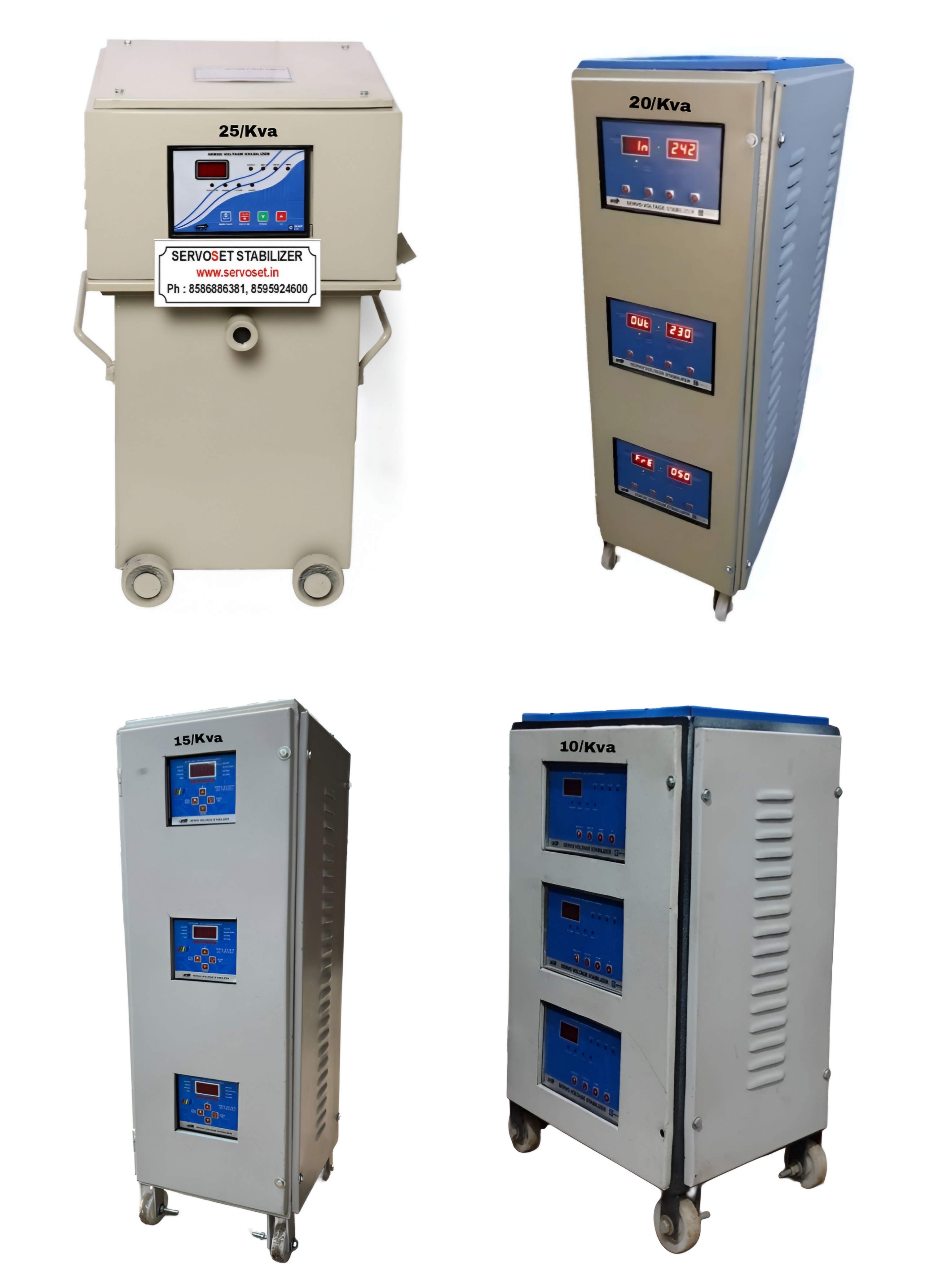
From CNC machines and manufacturing equipment to textile machinery, packaging systems, printing machines, motors, and industrial automation, industrial servo voltage stabilizers are used in applications where consistent voltage is important. Depending on the electrical load, stabilizers are available in different capacities such as 10 KVA, 25 KVA, 40 KVA, 100 KVA, 300 KVA, and 400 KVA, along with other customized capacities.
What Is an Industrial Servo Stabilizer?
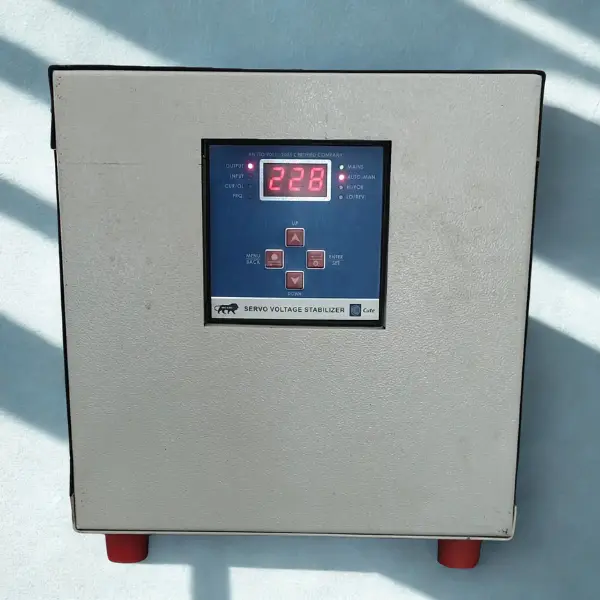
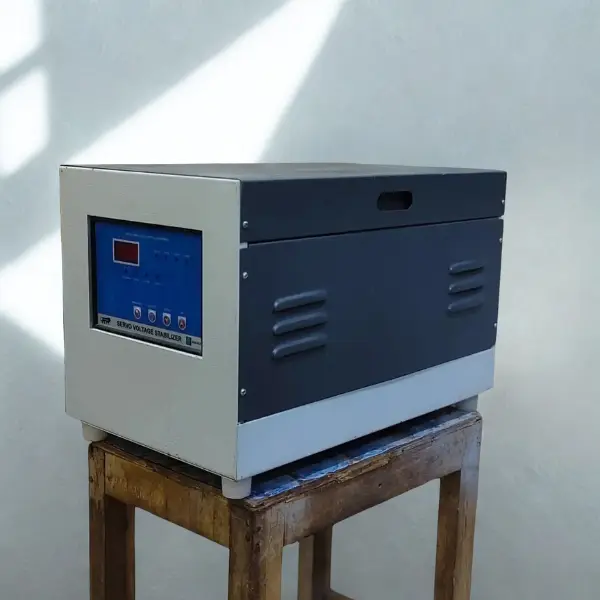
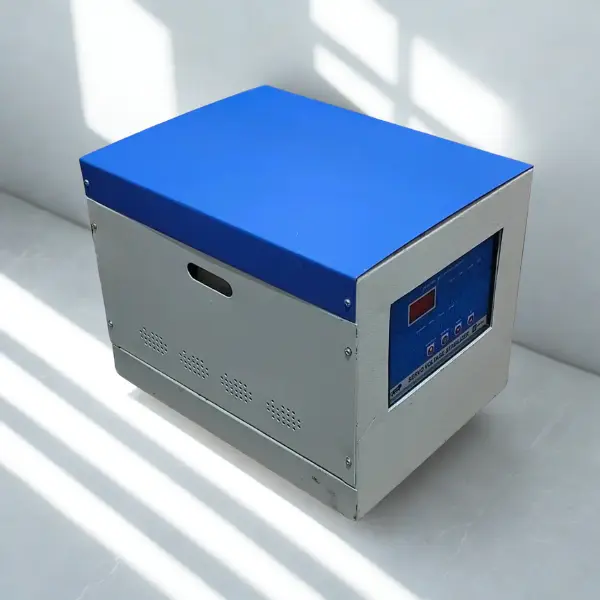
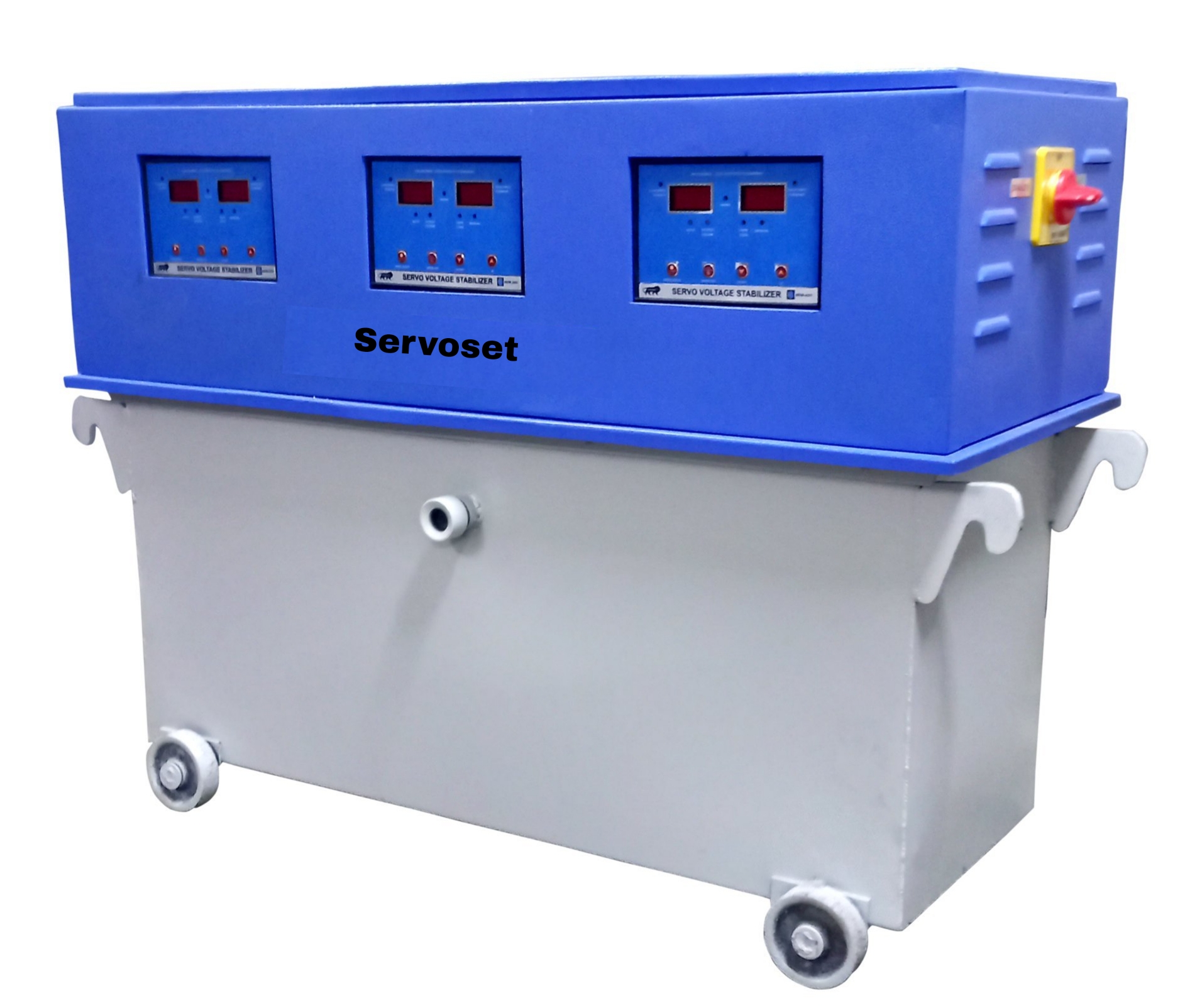
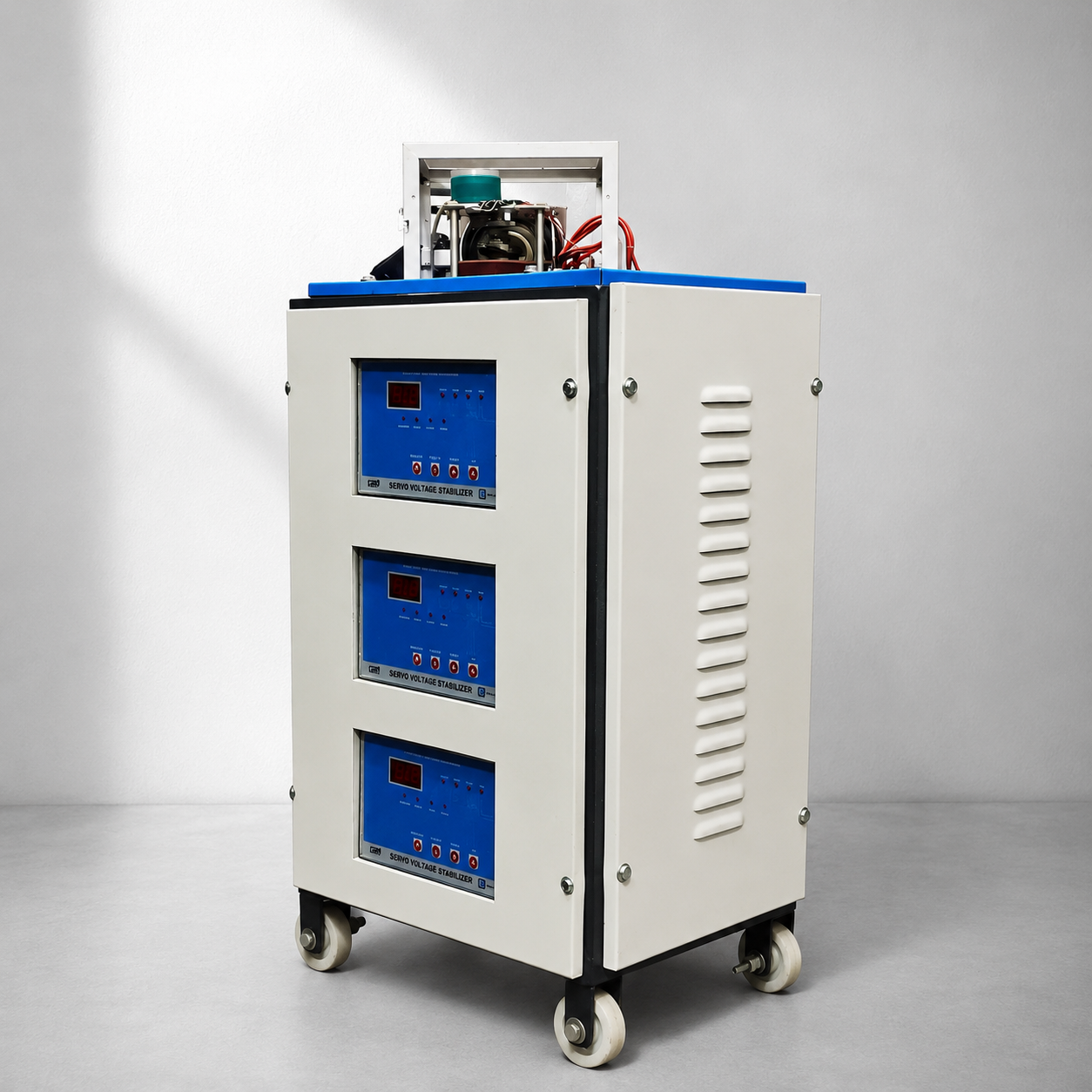
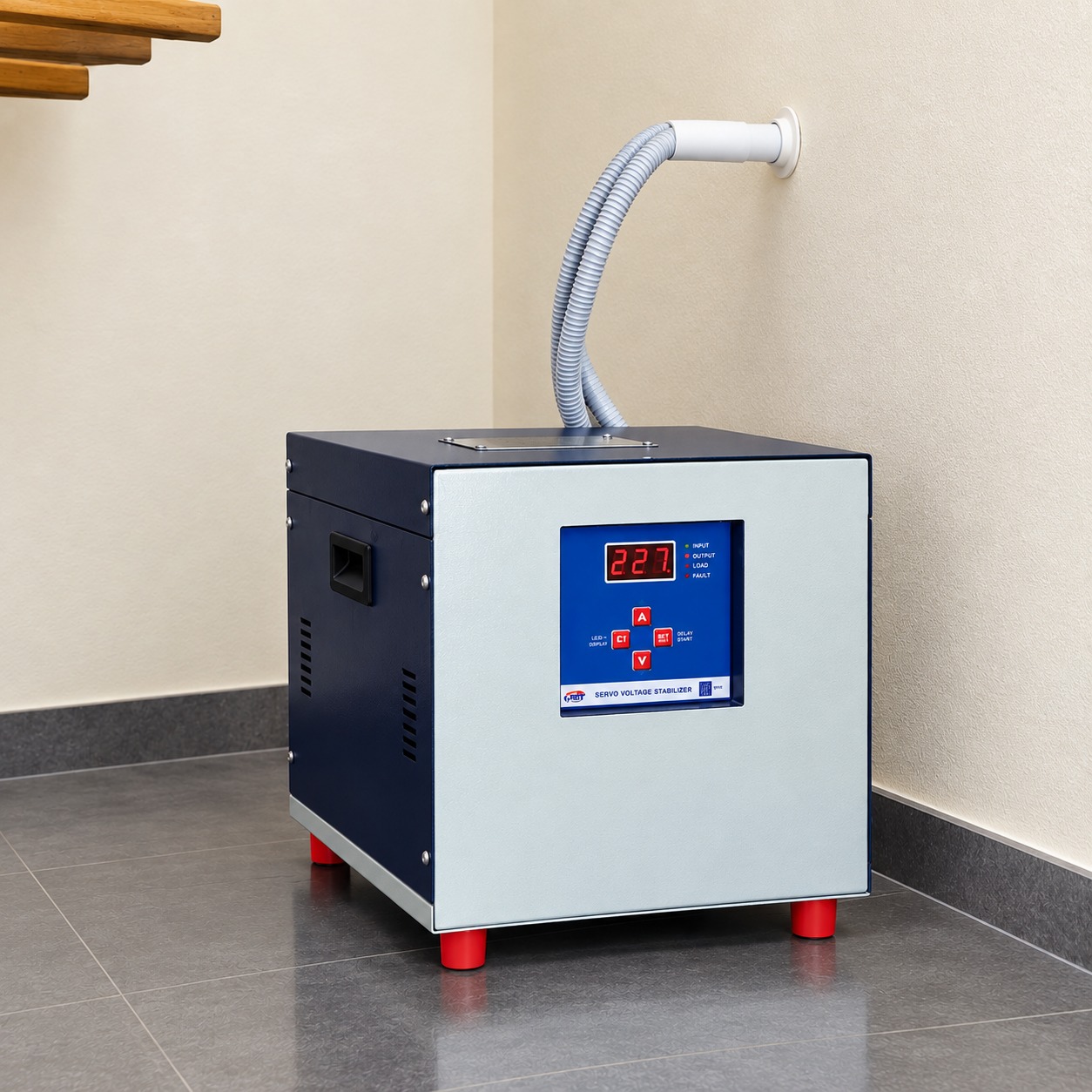
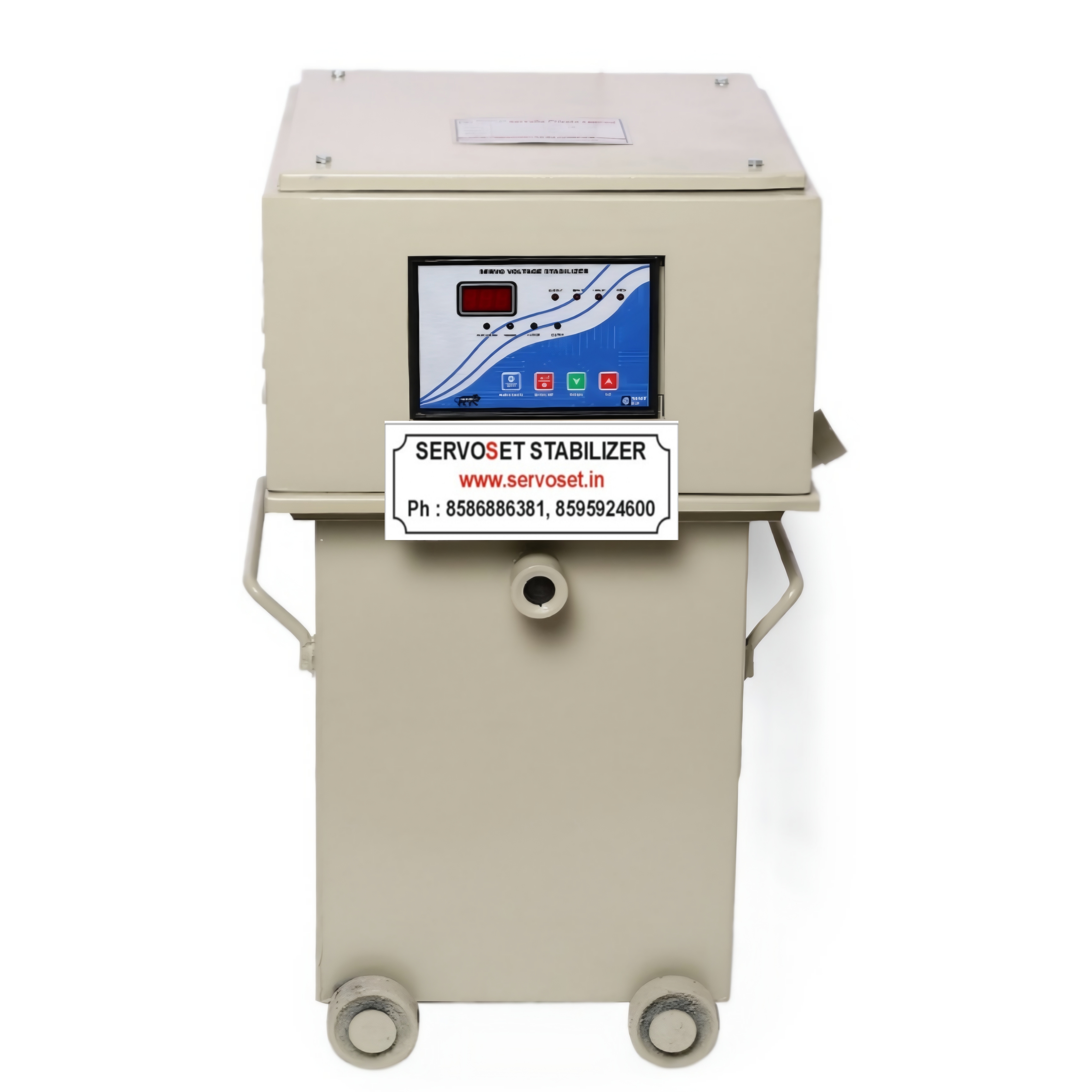
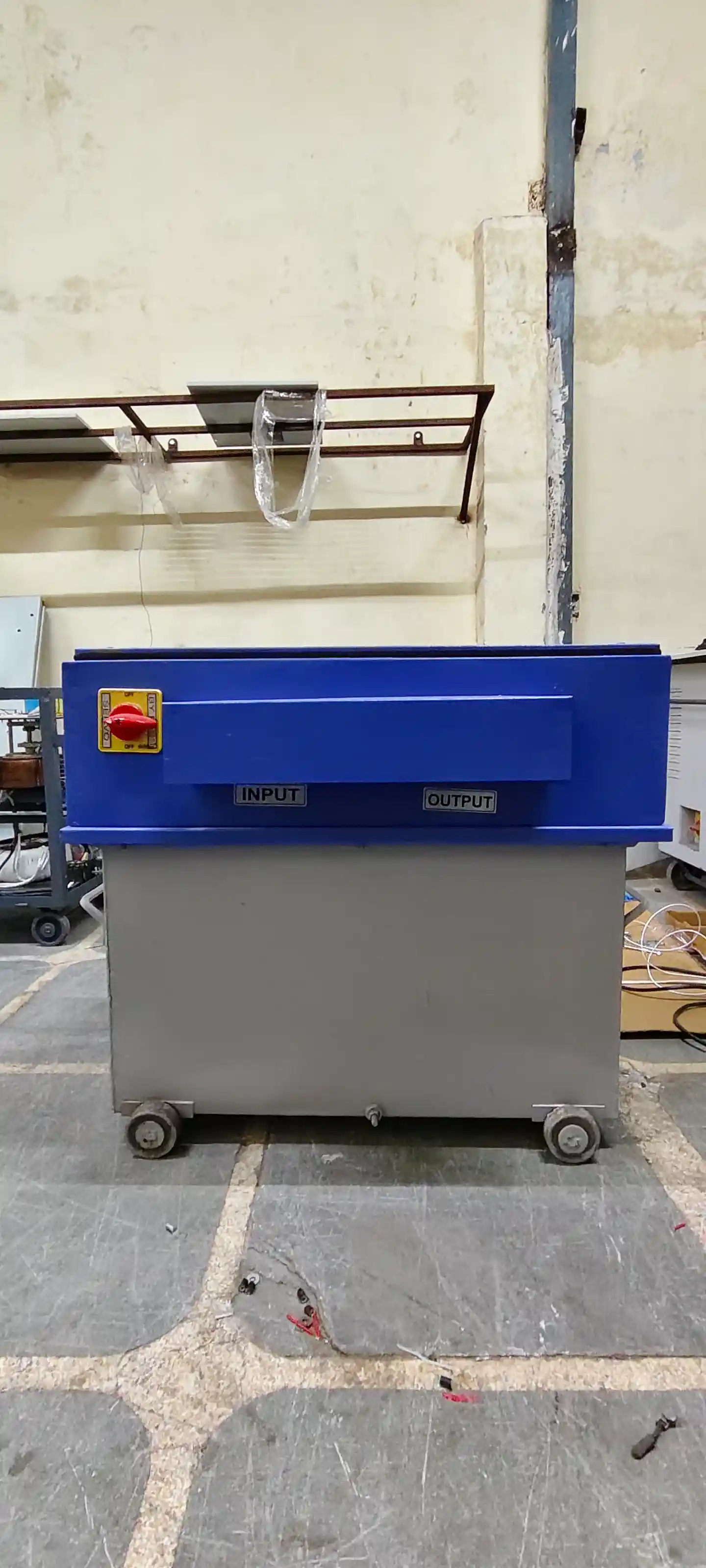
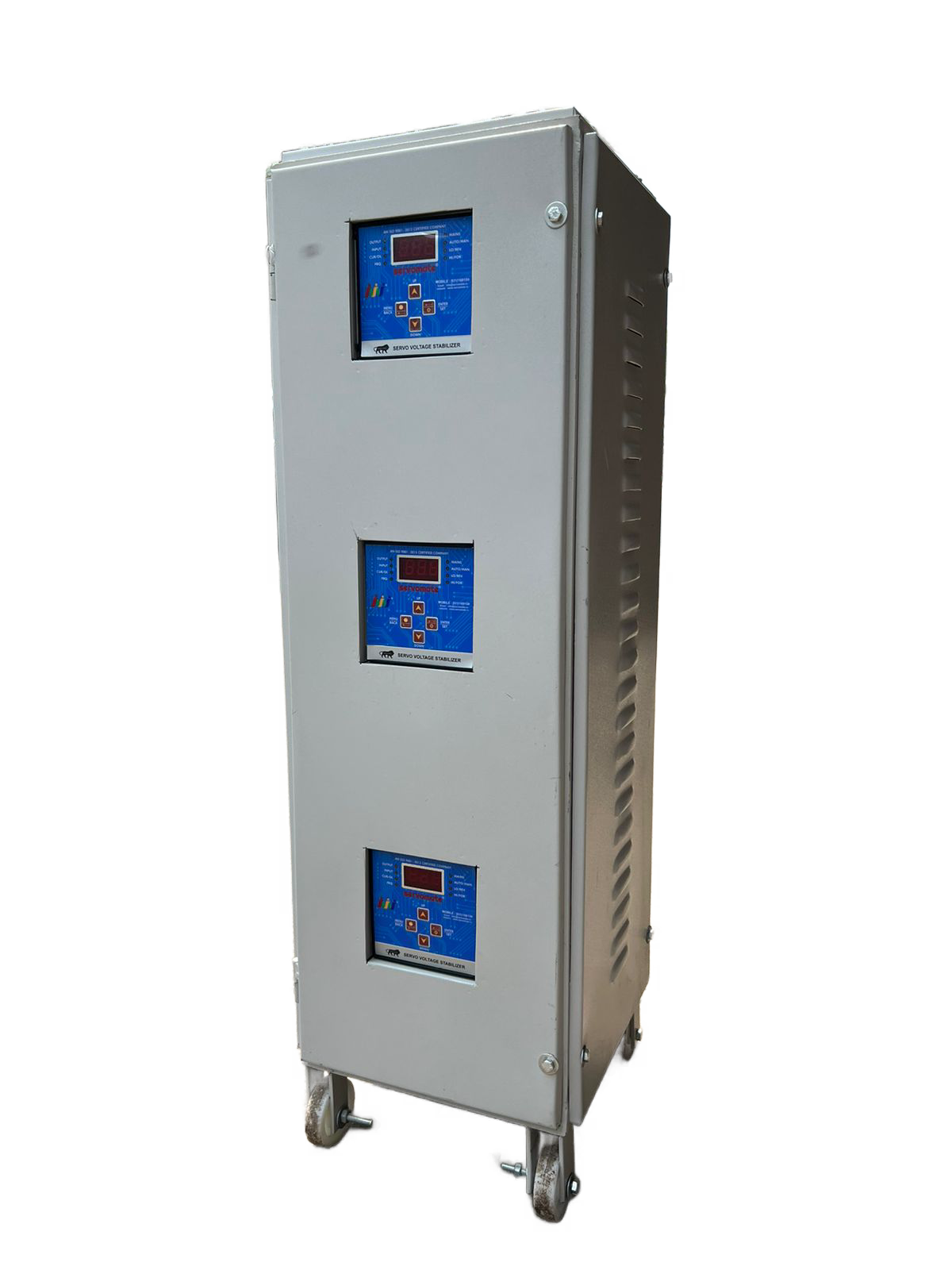
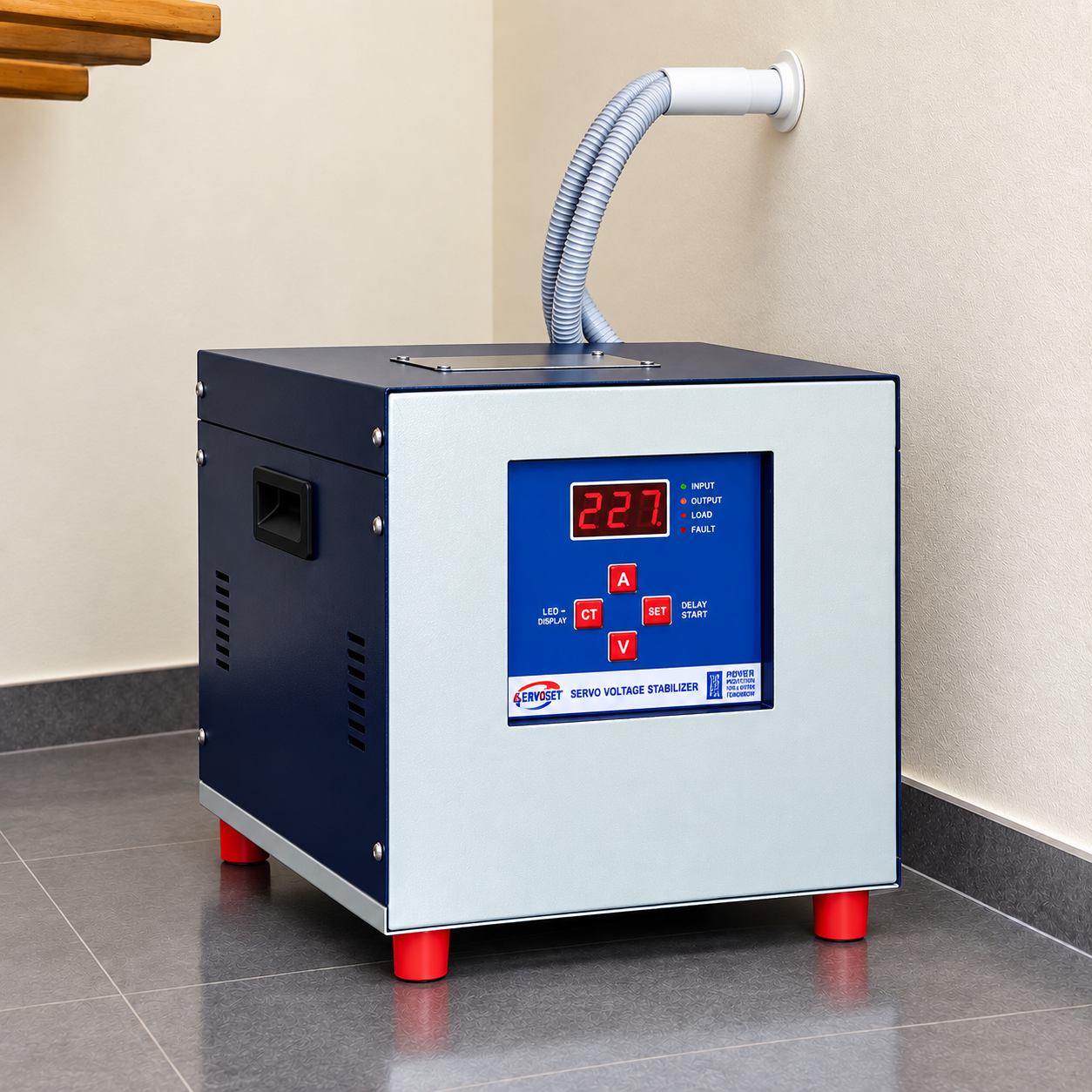
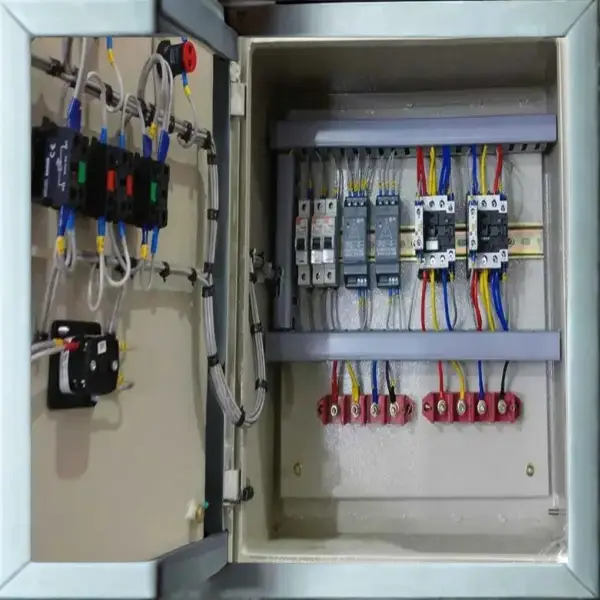
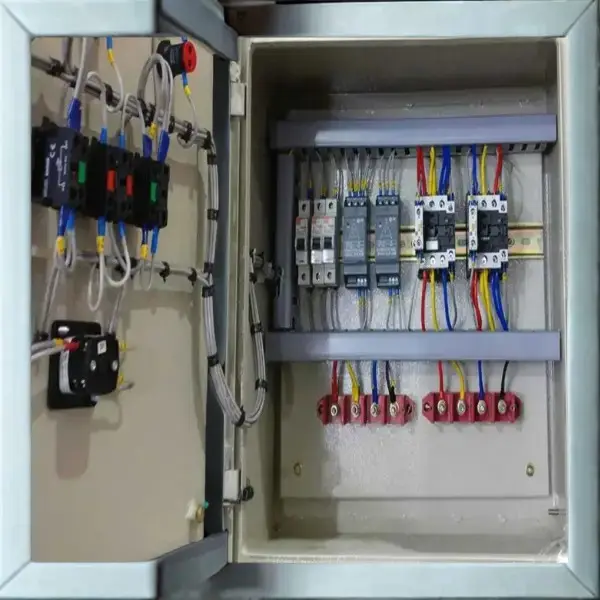
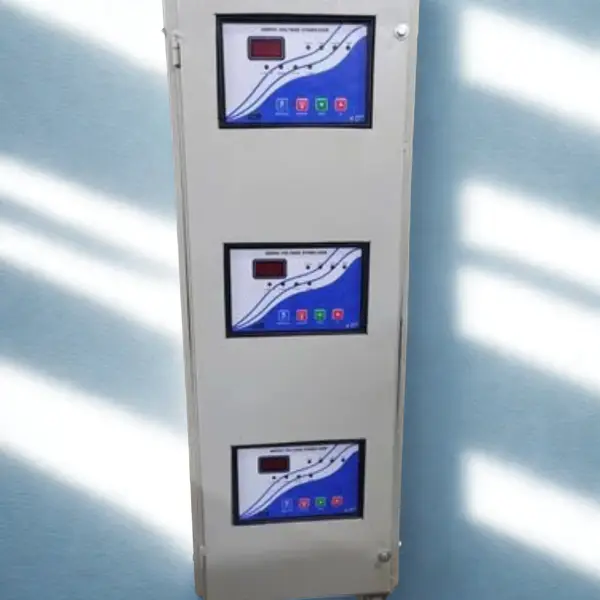
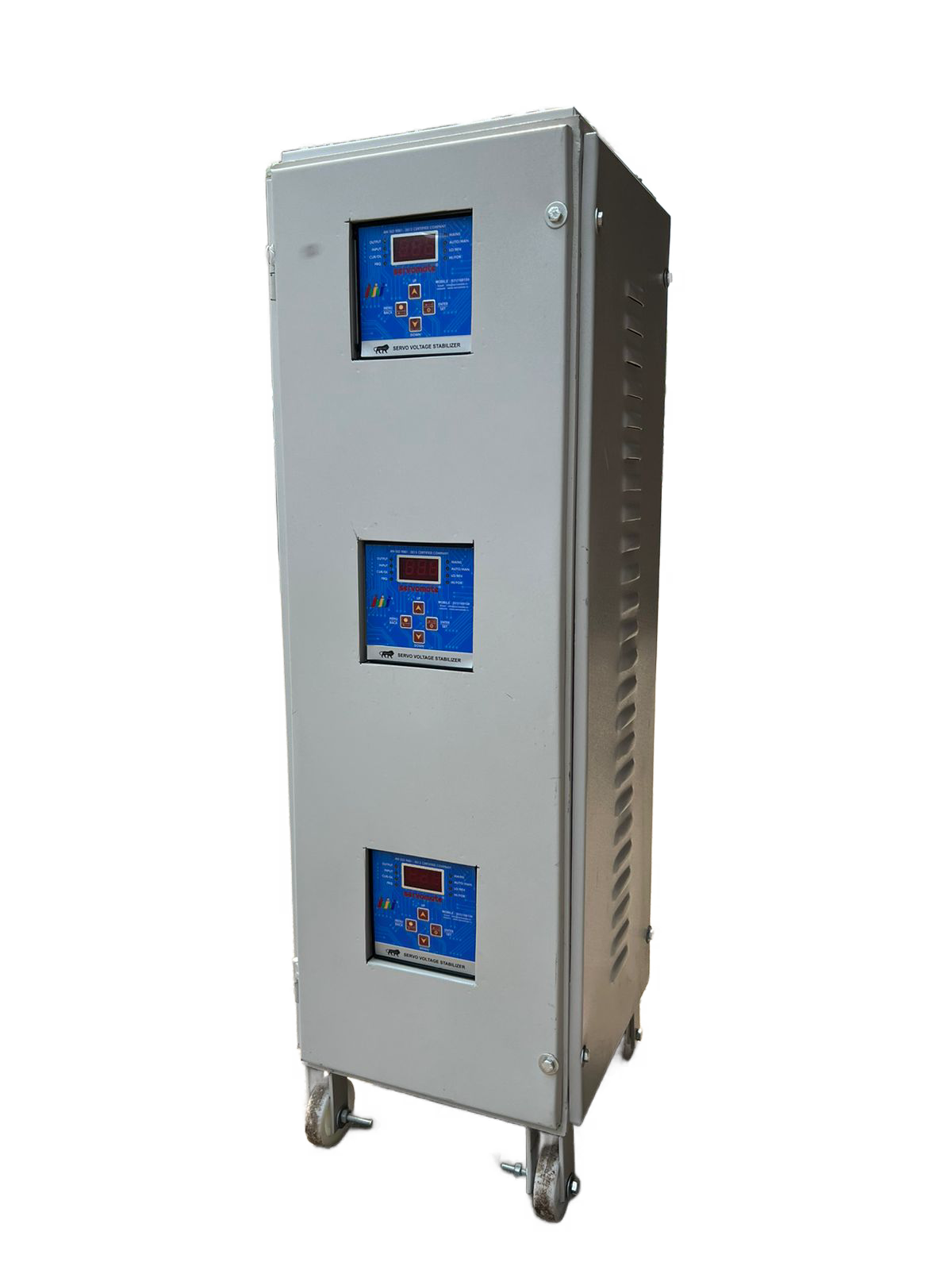
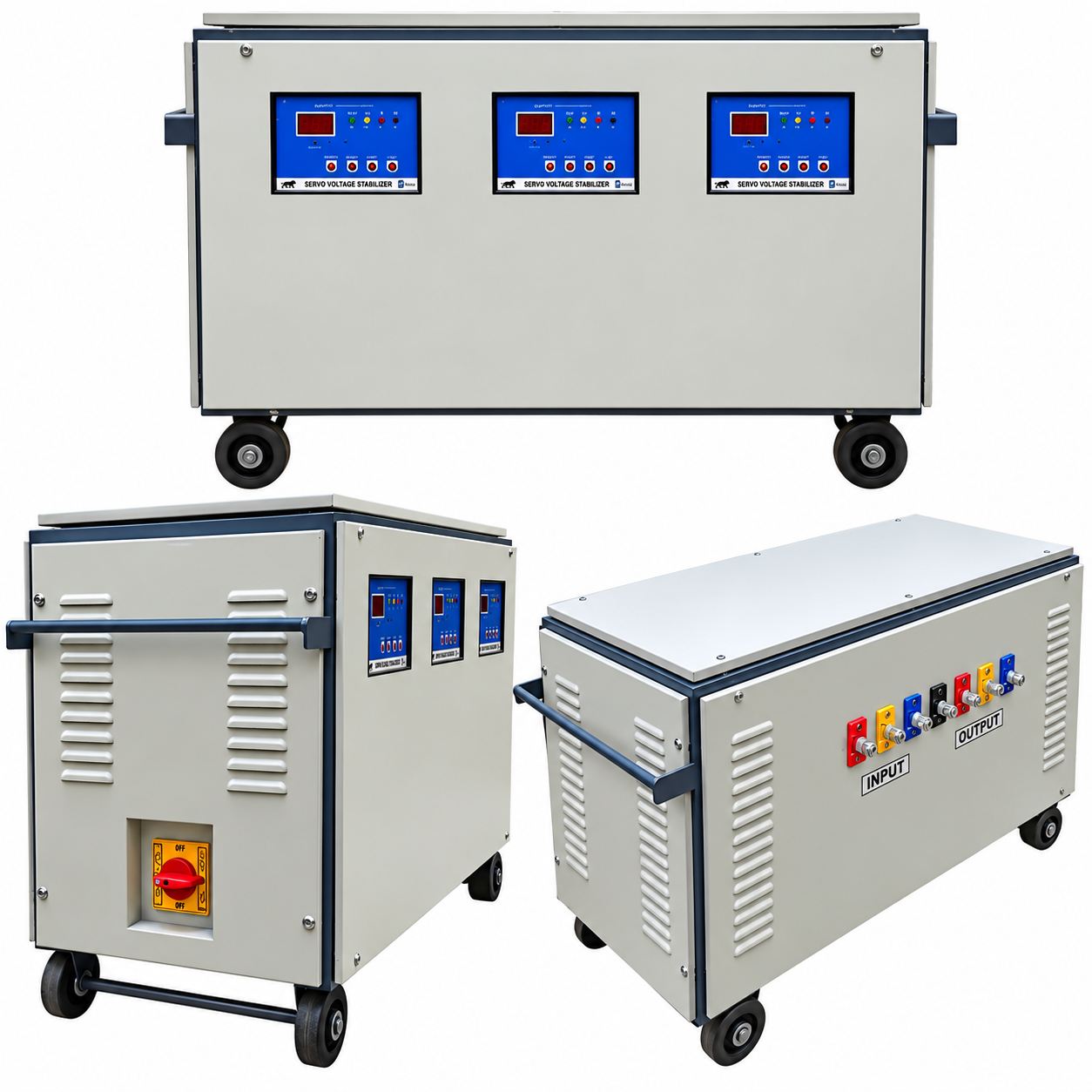
An industrial servo stabilizer is an automatic voltage regulation system that corrects variations in incoming electrical voltage and maintains the output within a specified range. It uses a servo motor-controlled mechanism to make continuous voltage corrections according to changes in the input supply.
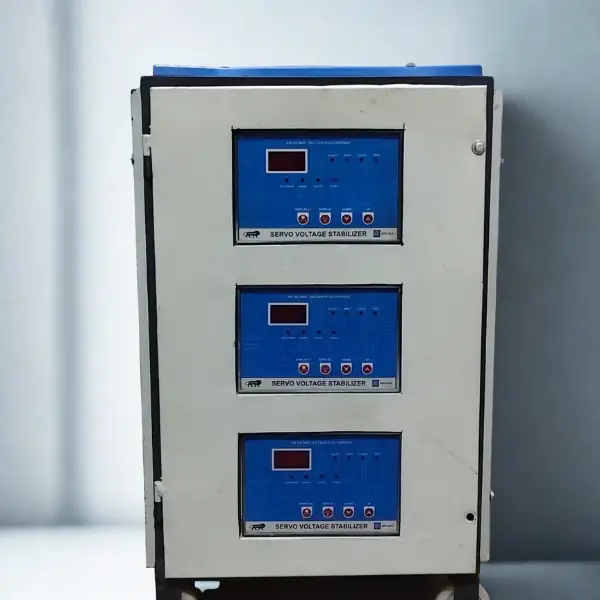
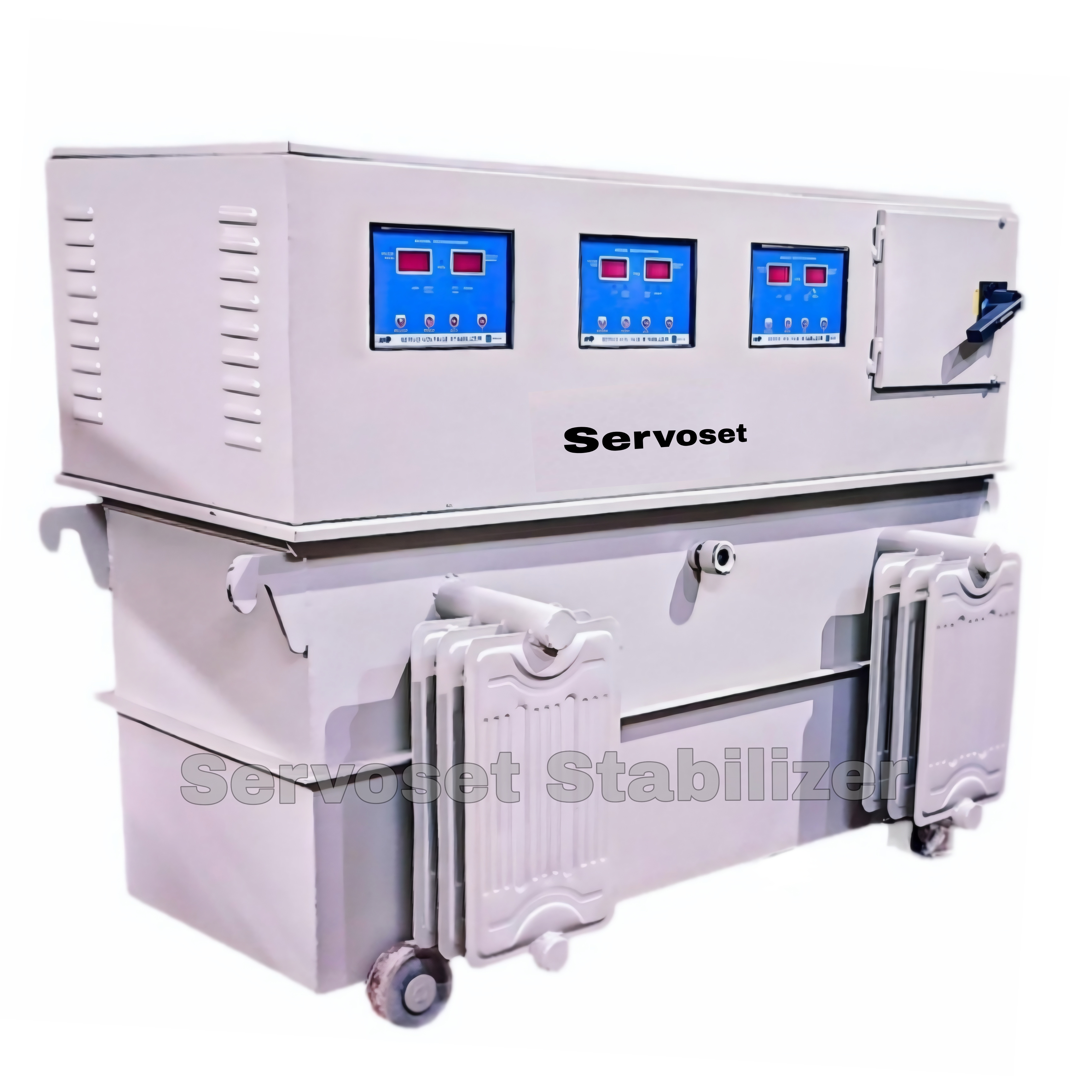
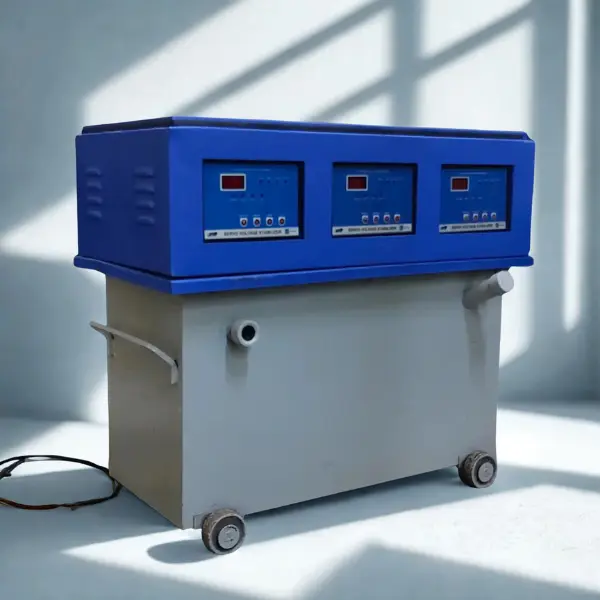
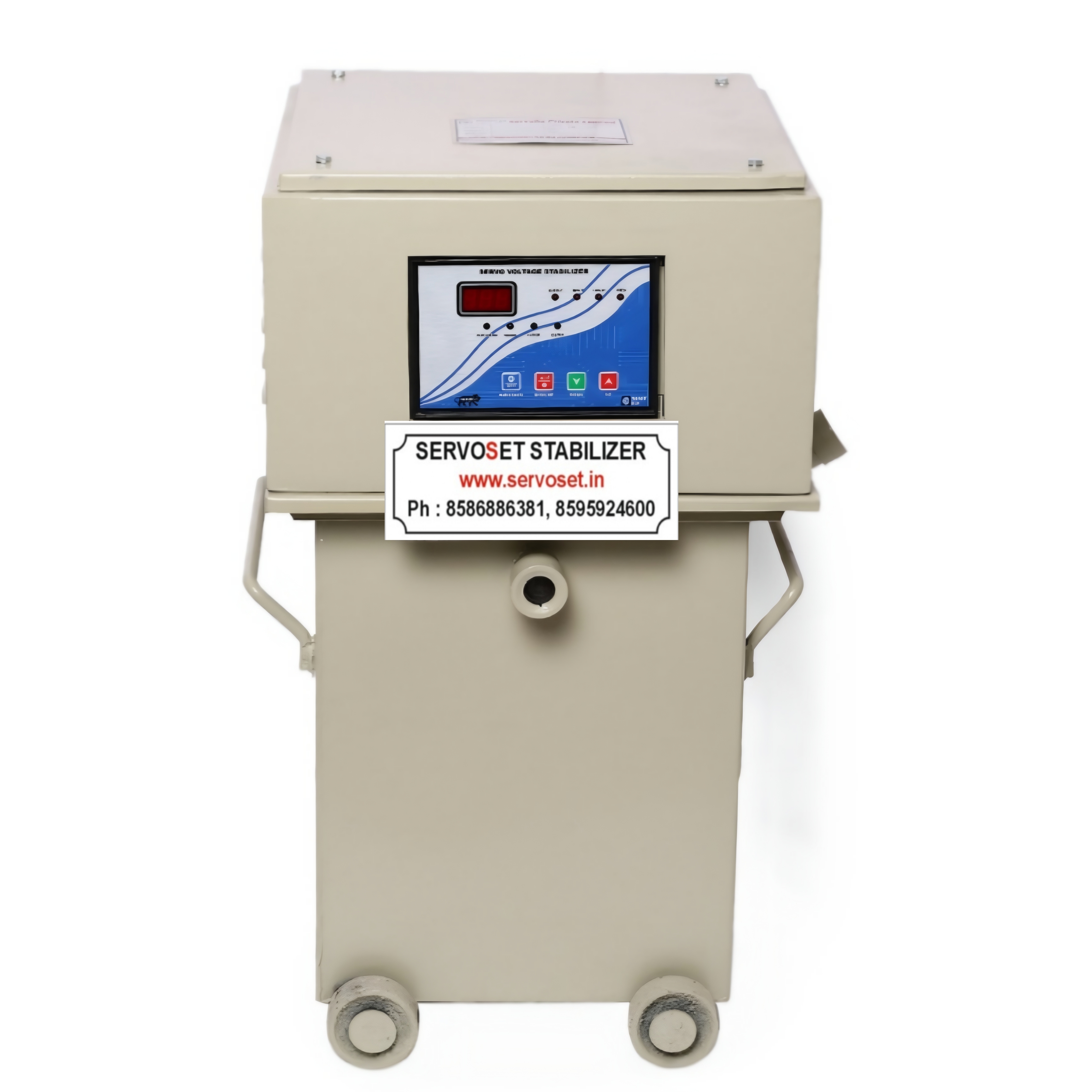
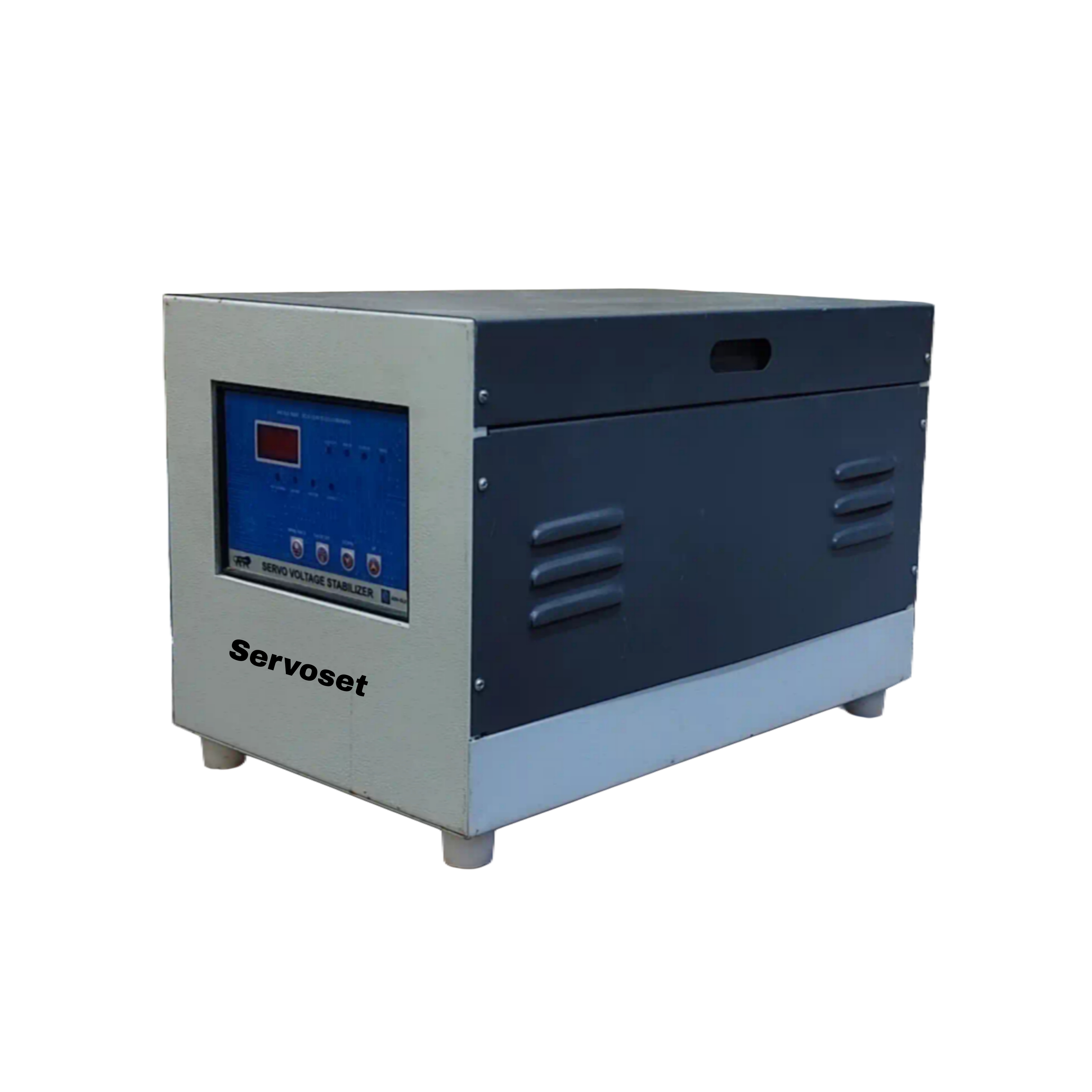
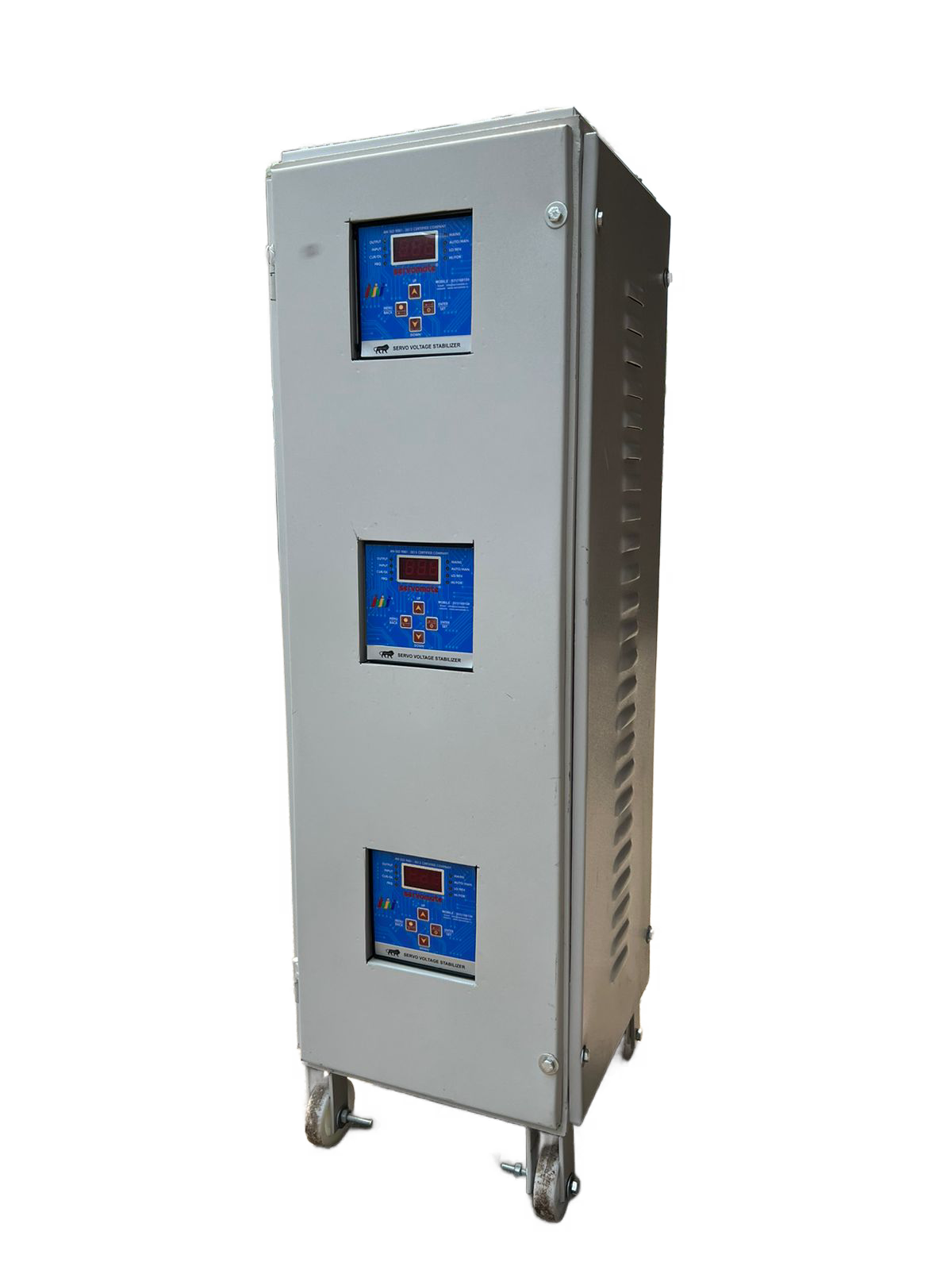
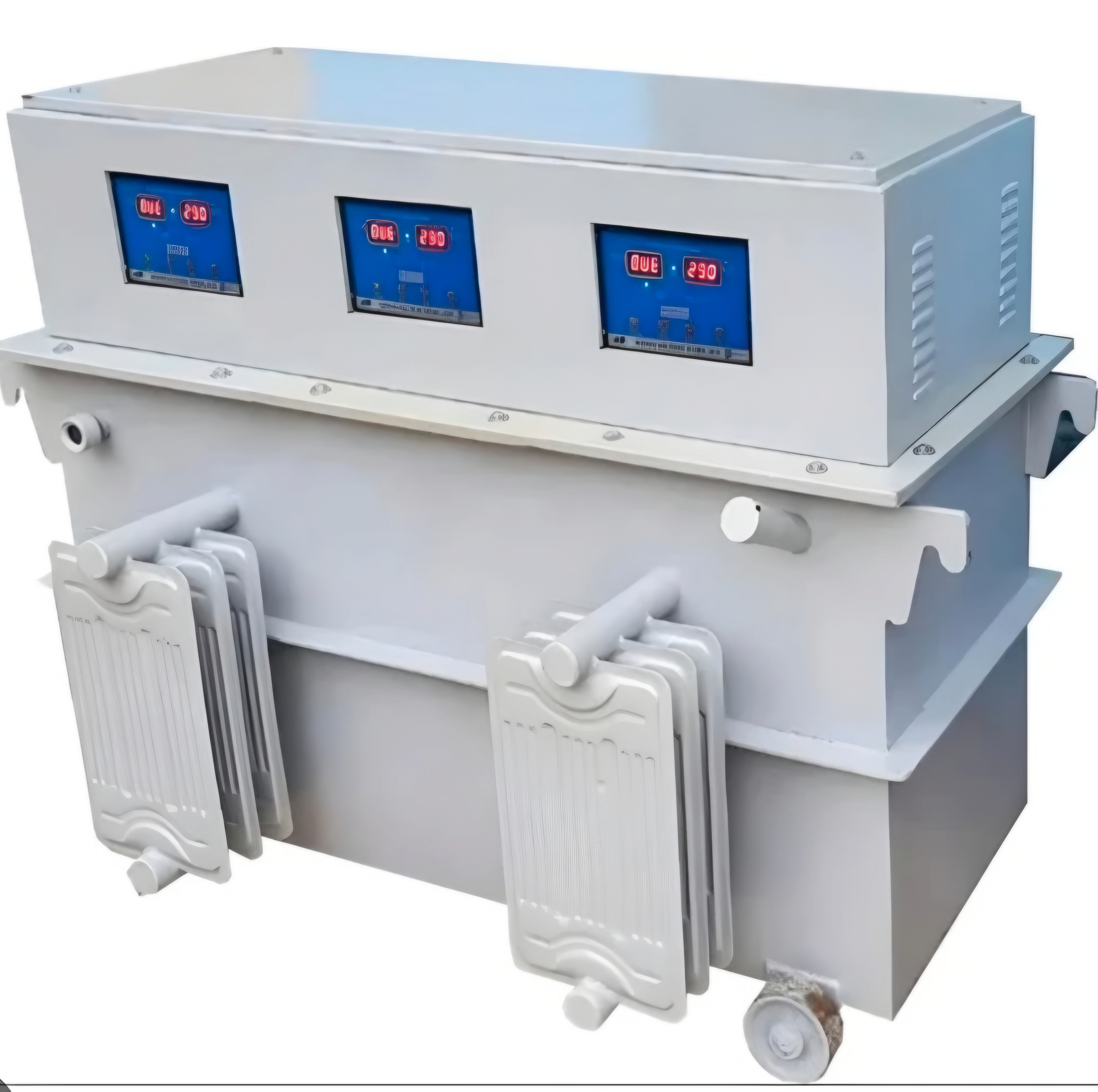
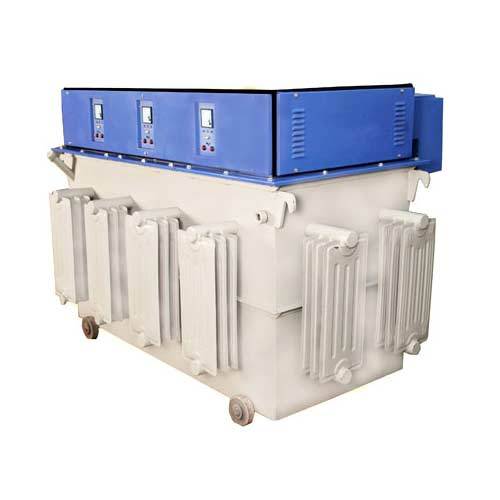
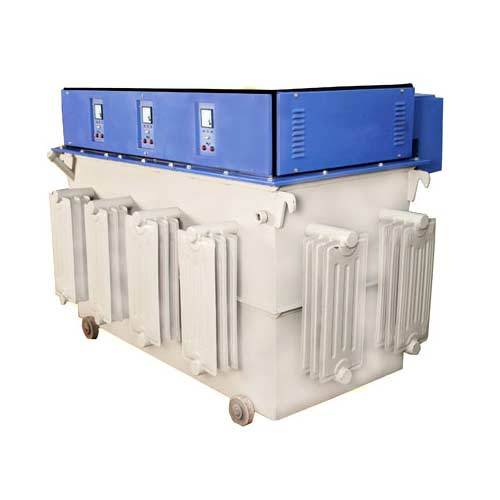
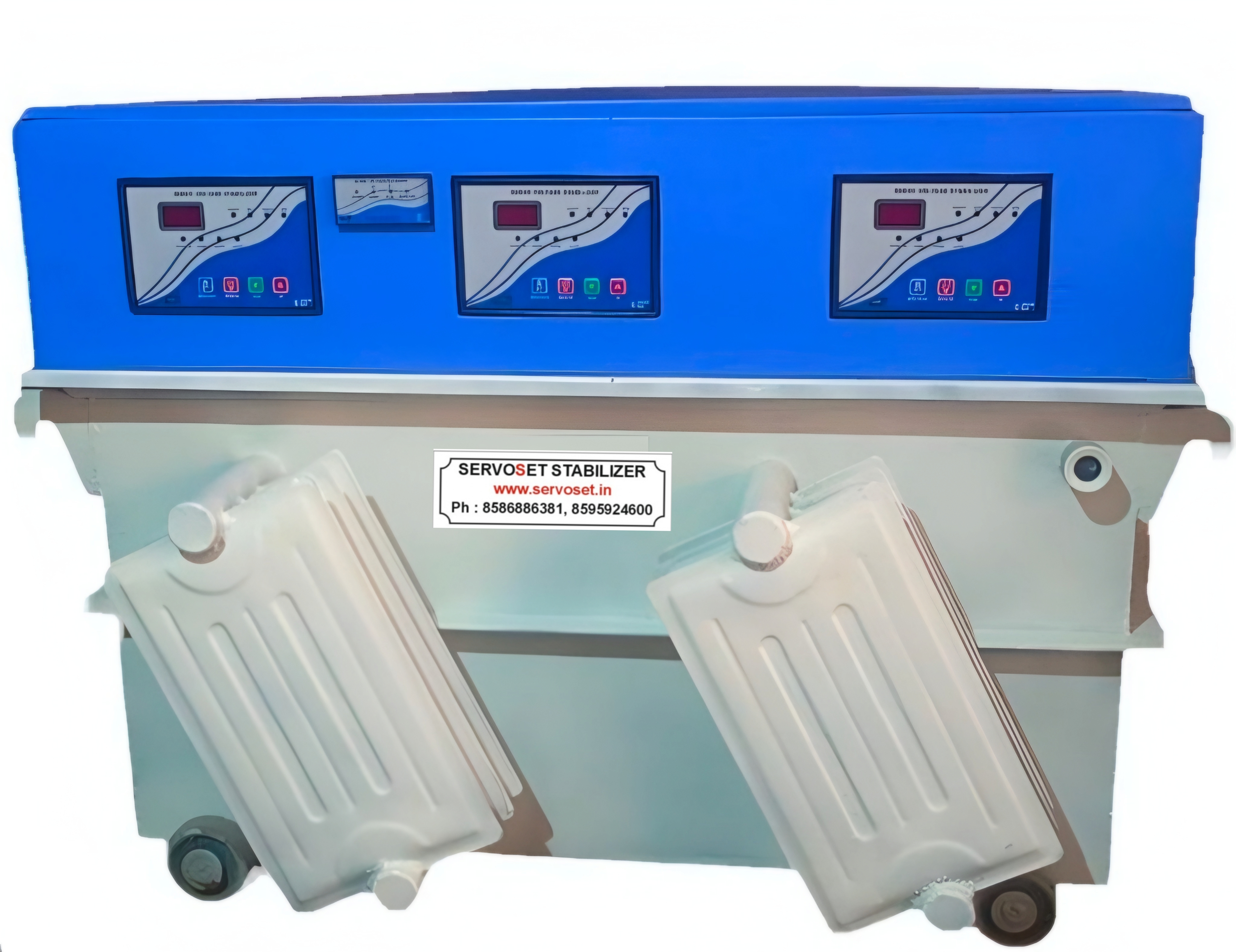
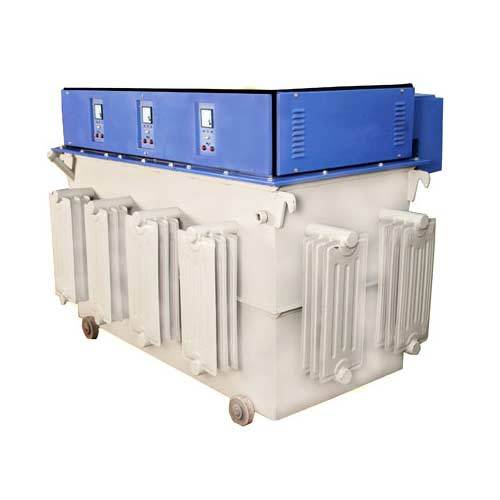
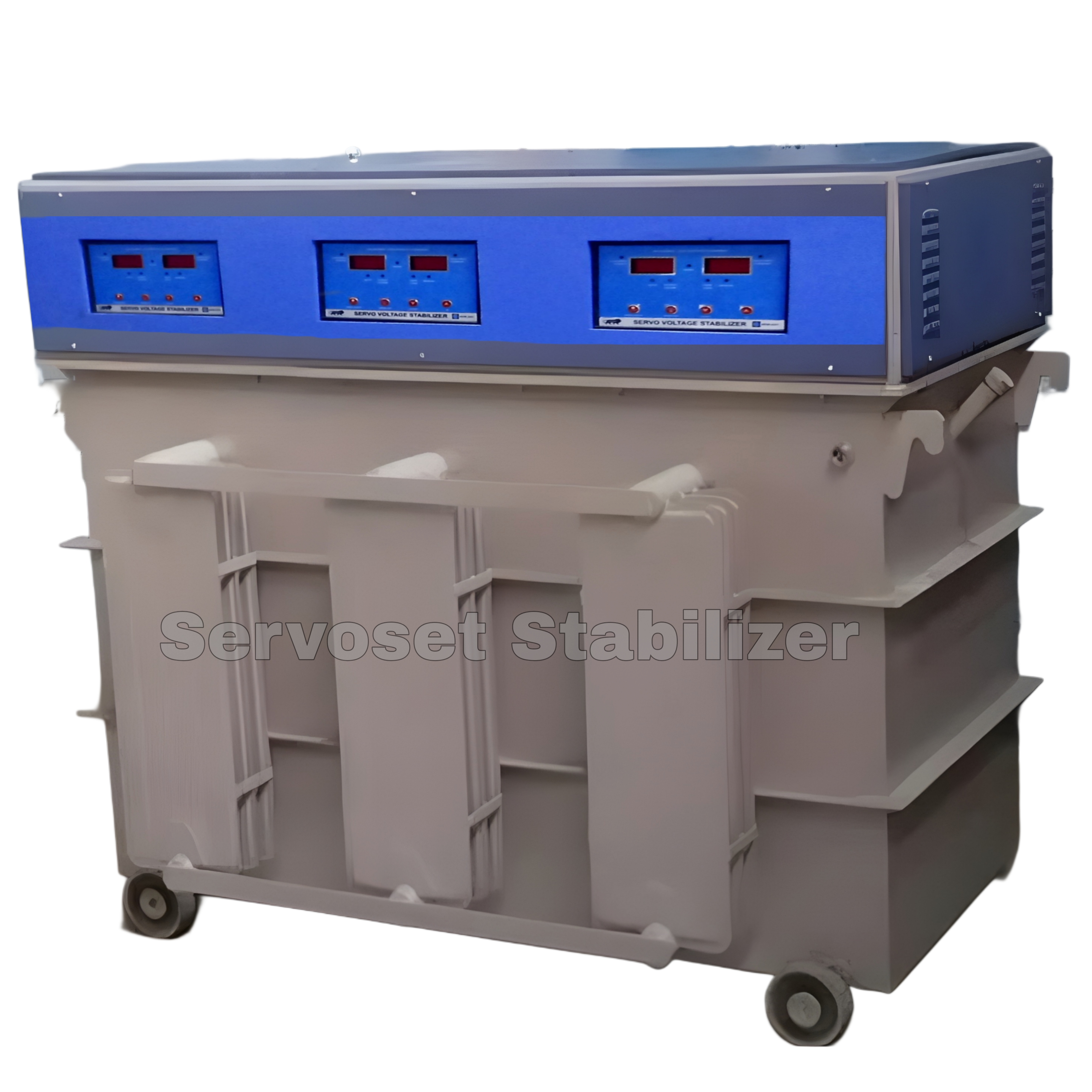
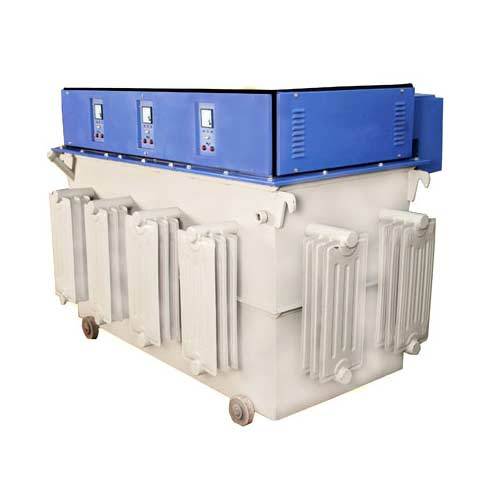
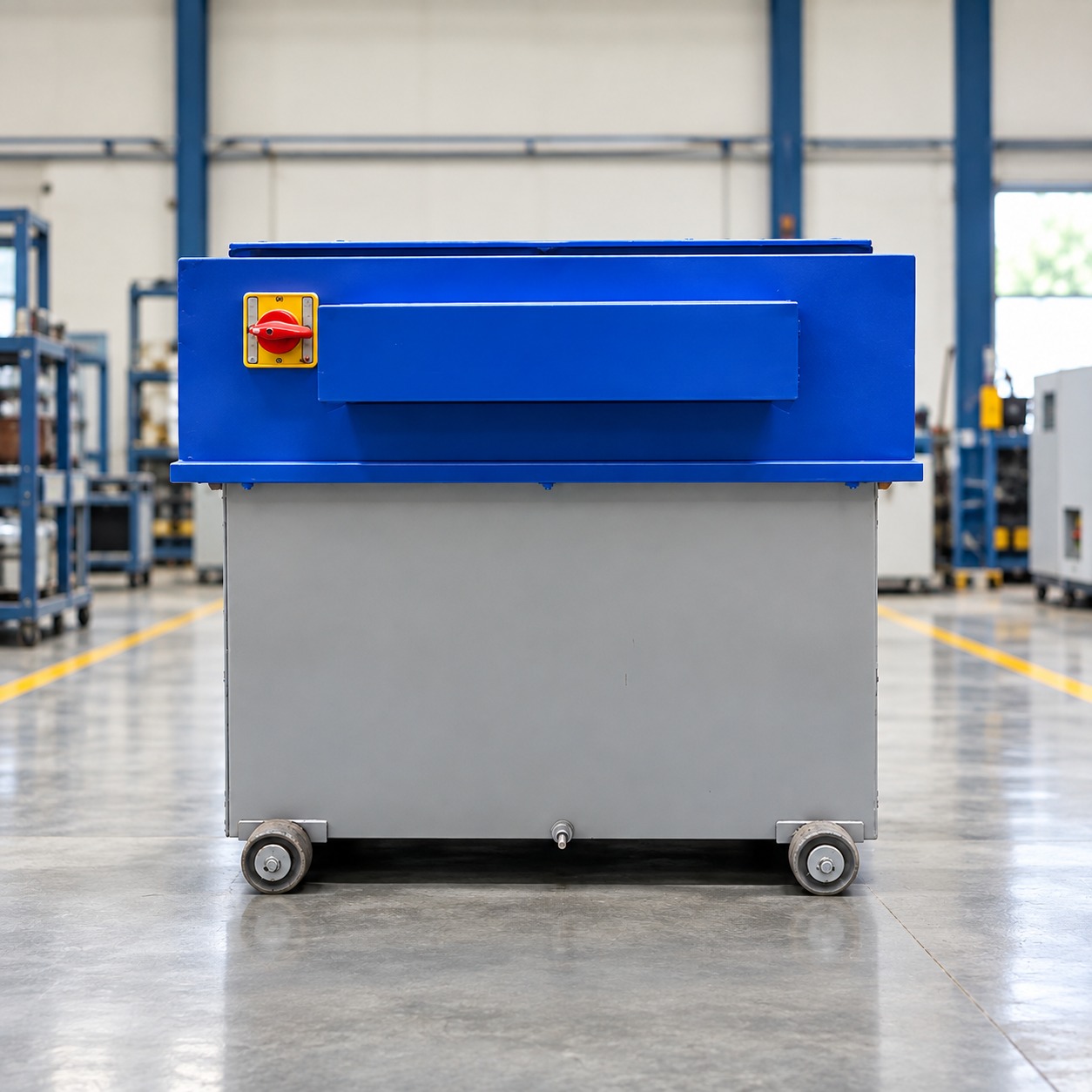
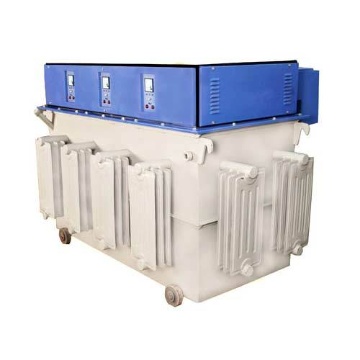
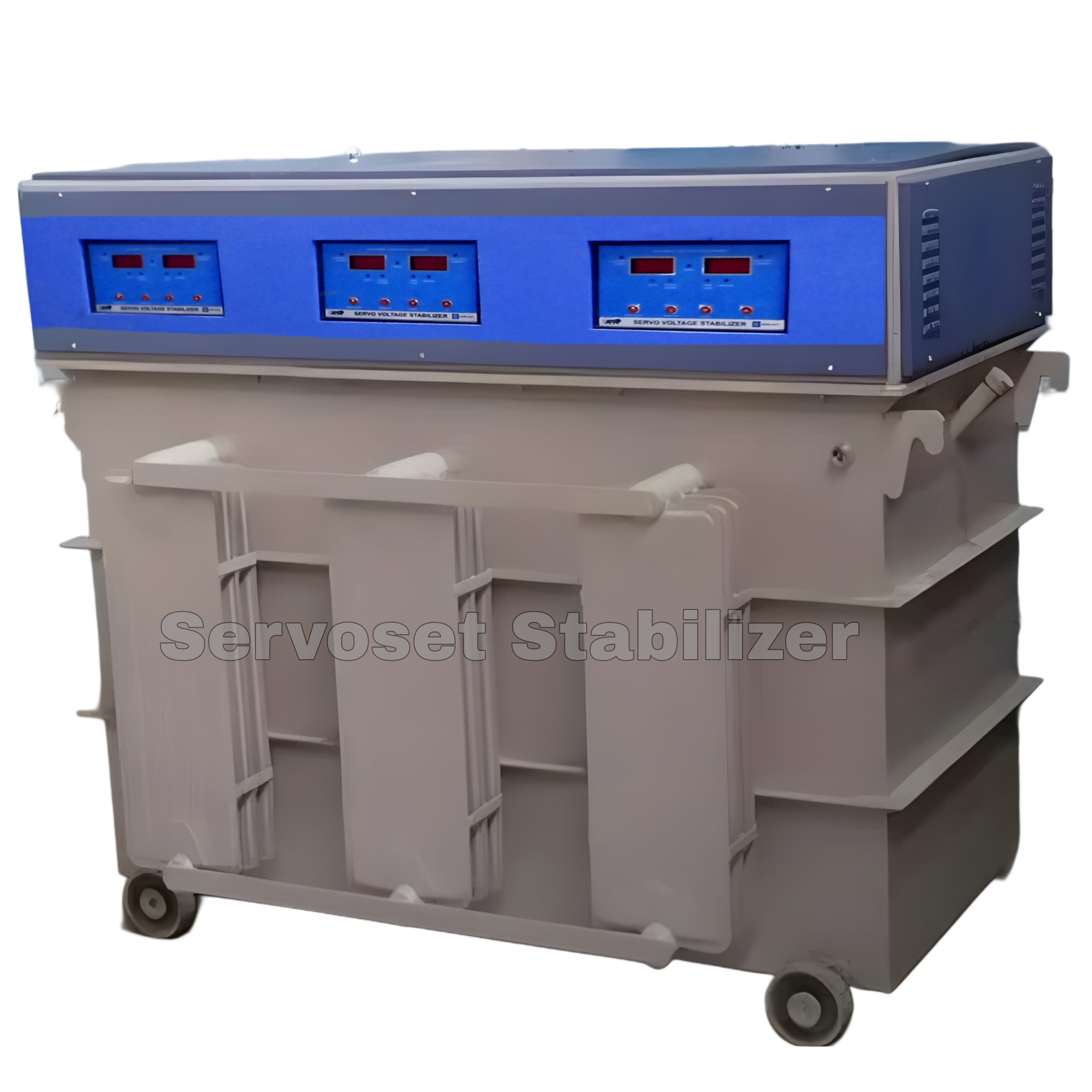
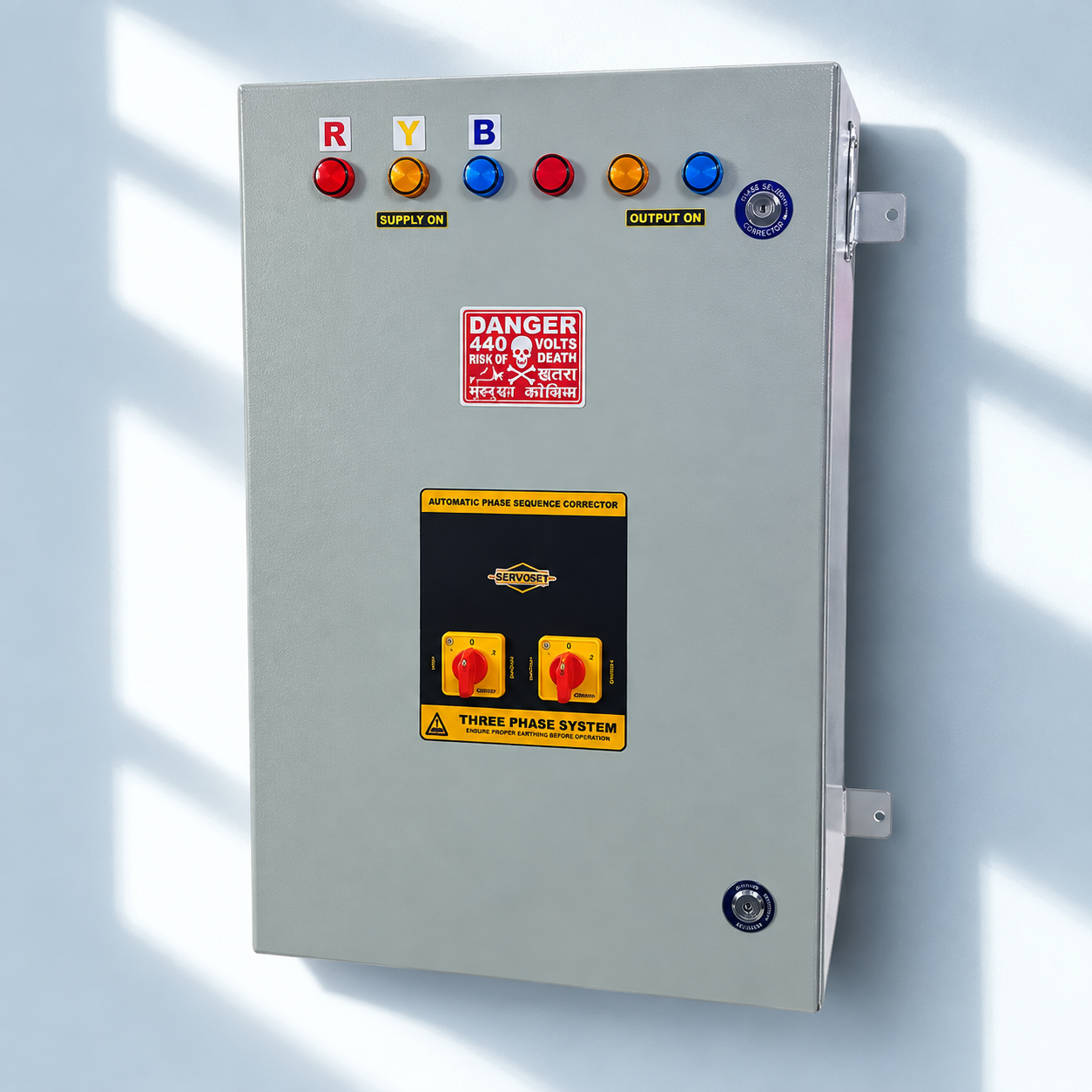
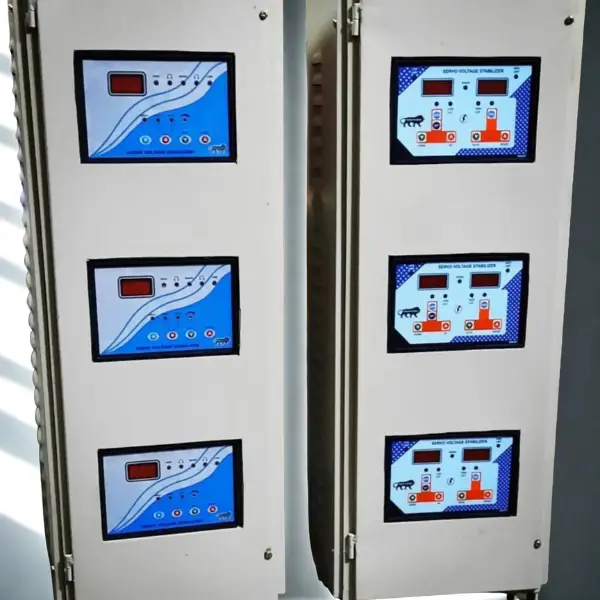
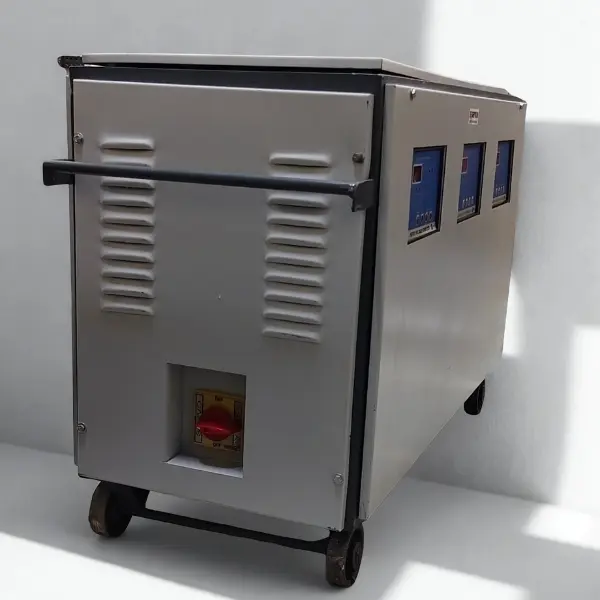
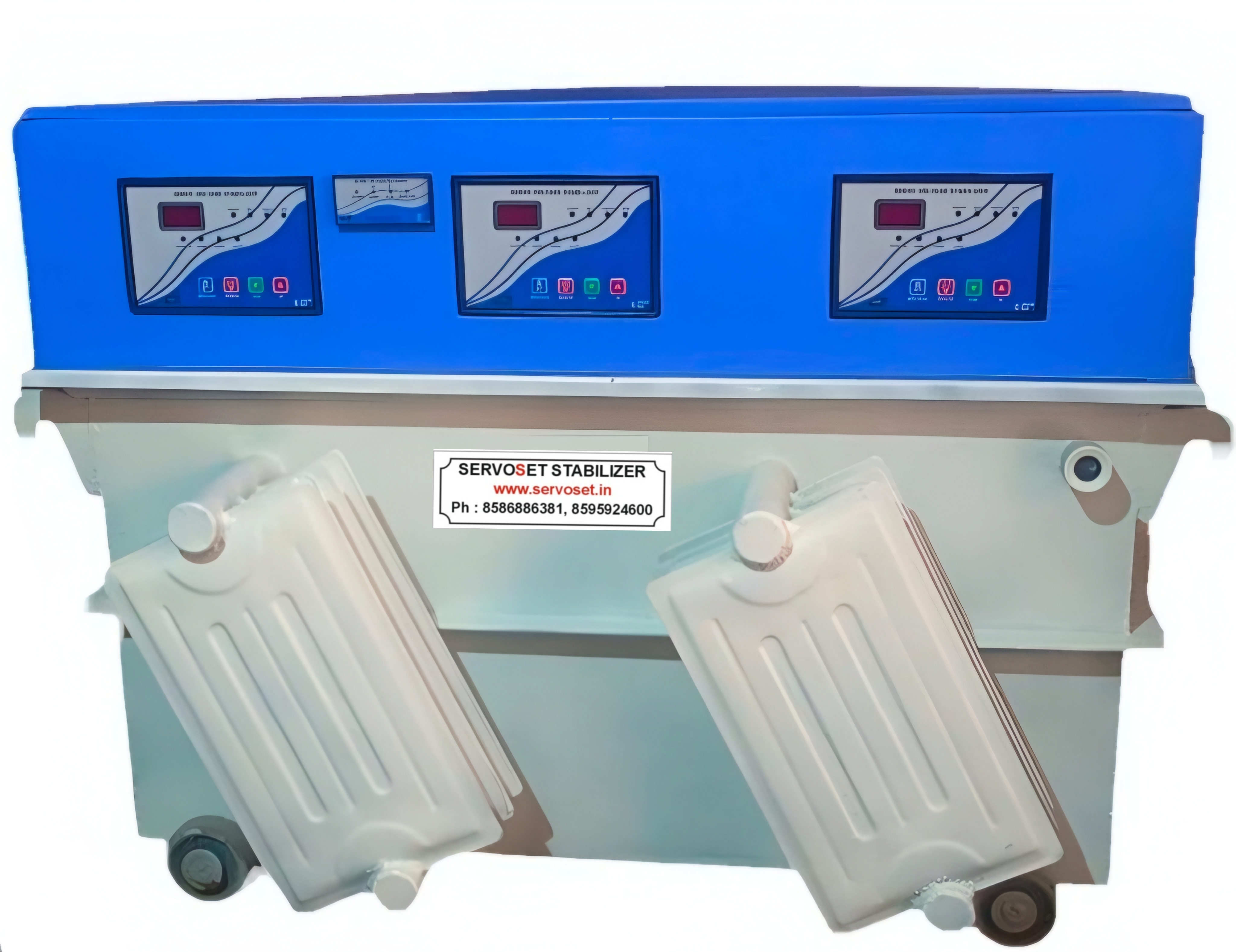
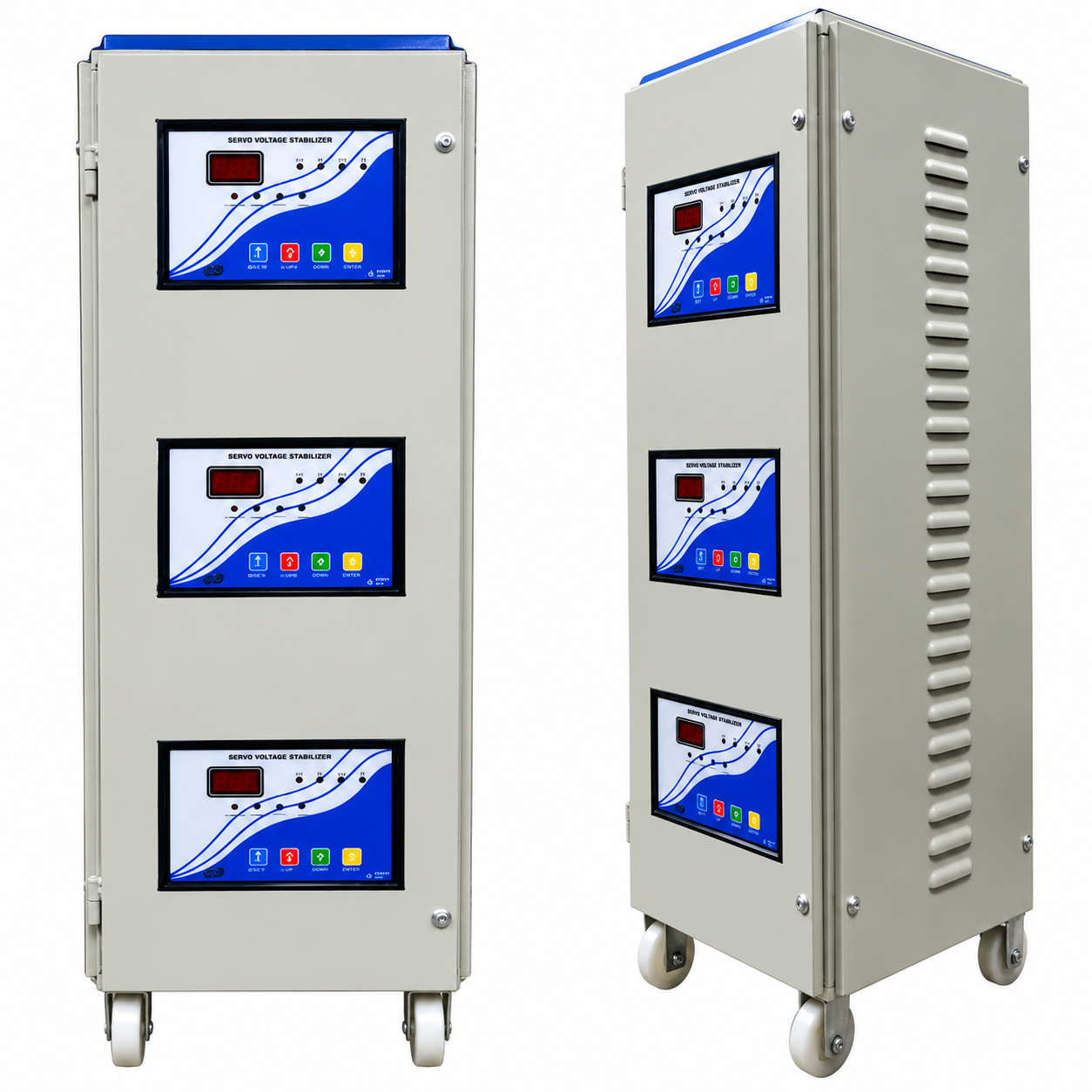
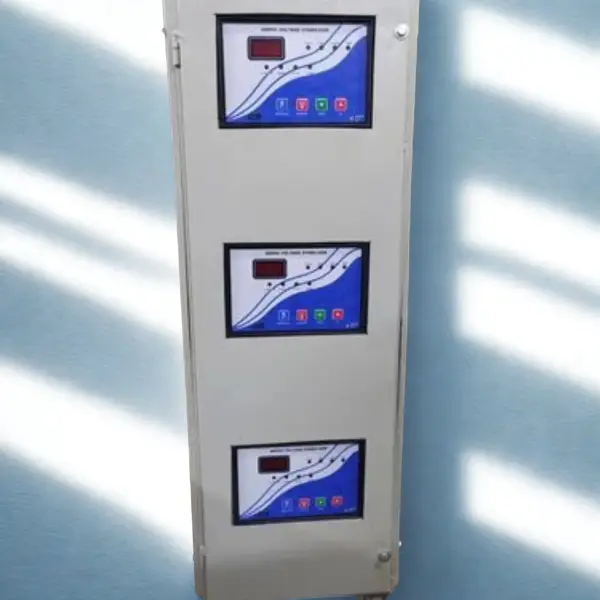
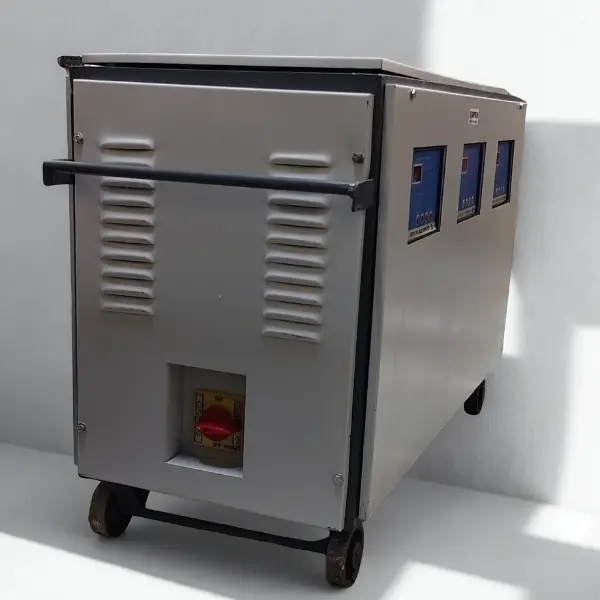
For industrial applications, a three phase servo voltage stabilizer is commonly used because many heavy machines and industrial systems operate on three-phase power. Depending on the application, both air cooled servo stabilizers and oil cooled servo stabilizers can be selected.
How Does an Industrial Servo Stabilizer Work?
The basic working principle of a servo voltage stabilizer involves continuously monitoring the incoming voltage and correcting it when it moves above or below the desired level.
- Input voltage monitoring: The stabilizer continuously monitors the incoming electrical supply.
- Voltage sensing: The control circuit detects deviations from the required output voltage.
- Servo motor operation: The servo mechanism adjusts the voltage through the regulating transformer arrangement.
- Voltage correction: The system increases or decreases the voltage as required.
- Stable output: The corrected voltage is supplied to connected industrial equipment.
This automatic process allows the stabilizer to respond to changing supply conditions without requiring continuous manual adjustment.
Technical Specifications of Industrial Servo Stabilizers
The specifications of an industrial servo voltage stabilizer depend on its capacity, electrical configuration, input voltage range, cooling system, and application.
| Parameter | Typical Industrial Specification |
|---|---|
| Capacity | 10 KVA to 400 KVA and higher depending on load |
| Phase | Single Phase / Three Phase |
| Input Voltage | Examples include 240–470 V, 300–470 V or 300–460 V depending on model |
| Output Voltage | 230 V or 415 V depending on configuration |
| Output Accuracy | Approximately ±0.5% to ±1% on applicable models |
| Cooling | Air Cooled / Oil Cooled |
| Efficiency | More than 96% on applicable models |
| Operation | Automatic and manual modes |
| Monitoring | Digital input/output voltage display |
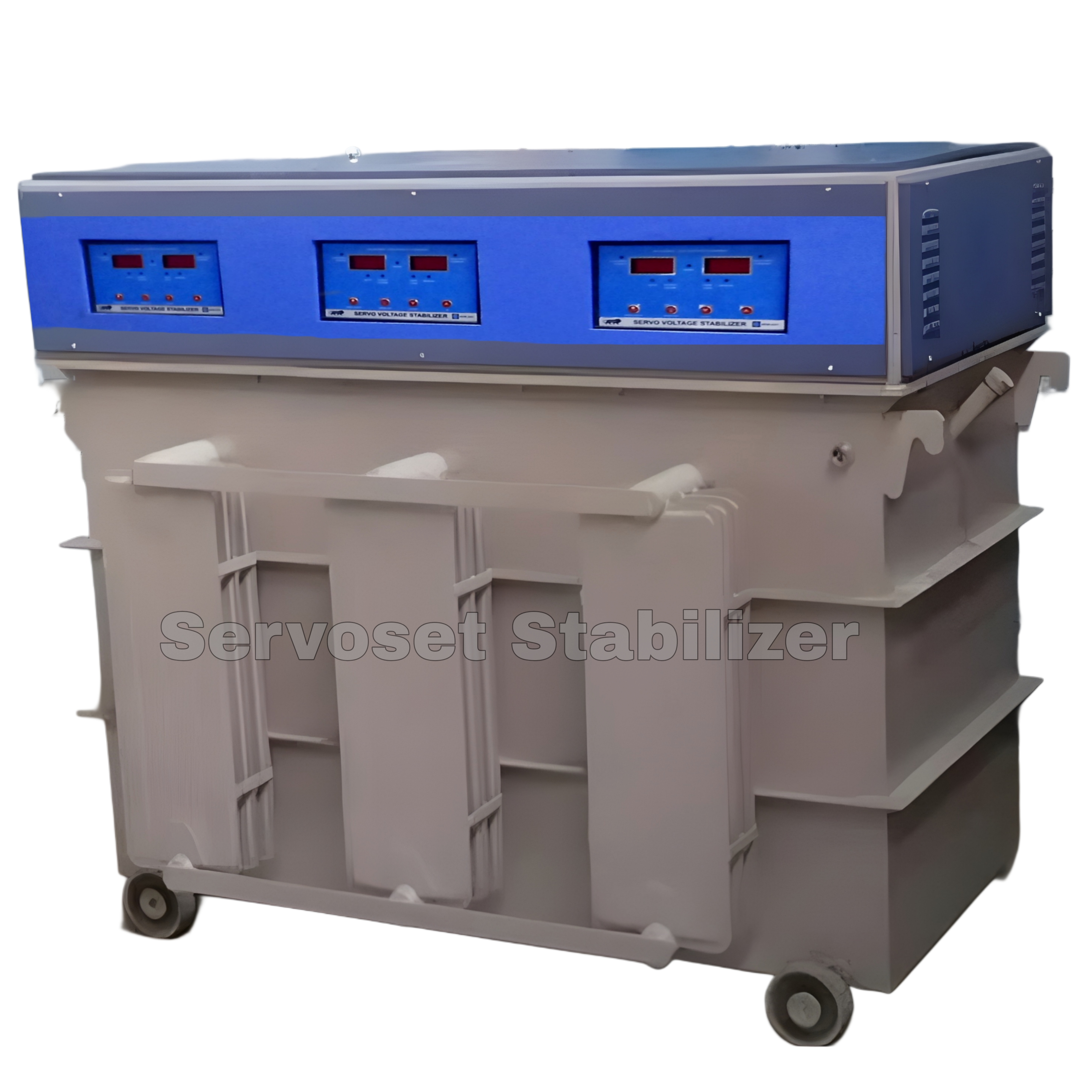
For example, Servoset lists a 100 KVA three-phase oil-cooled servo stabilizer with input ranges of 300–460 V or 360–480 V depending on the selected range, and an output of 415 V ±1%.
Understanding KVA in Industrial Servo Stabilizers
KVA, or kilovolt-ampere, represents the apparent power capacity of an electrical system. Selecting the correct KVA rating is important because the stabilizer must be capable of handling the connected electrical load.
Industrial stabilizers may be available in capacities such as 25 KVA, 40 KVA, 100 KVA, 300 KVA, and 400 KVA. Smaller capacities can be suitable for relatively lower loads, while high-capacity stabilizers are designed for larger industrial installations. Servoset, for example, lists 25 KVA, 40 KVA, 100 KVA, 300 KVA and 400 KVA three-phase models.
For a three-phase system, the approximate relationship between apparent power, line voltage, and current is:
KVA = √3 × Voltage × Current ÷ 1000
This relationship can help electrical professionals estimate the required capacity, although actual stabilizer selection should consider the equipment's connected load, starting current, power factor, expansion requirements, and manufacturer recommendations.
Key Features of Industrial Servo Stabilizers
1. High Voltage Regulation Accuracy
A major advantage of an industrial servo voltage stabilizer is its ability to maintain controlled output voltage. Applicable Servoset models specify voltage regulation accuracy ranging from approximately ±0.5% to ±1%.
2. Wide Input Voltage Range
Industrial power supplies can experience considerable voltage variation. Servo stabilizers can be designed with different input voltage ranges to suit specific site conditions. For example, Servoset's 100 KVA oil-cooled model lists input ranges of 300–460 V and 360–480 V configurations.
3. Stepless Voltage Correction
Stepless voltage correction allows the stabilizer to continuously adjust the voltage instead of relying on large discrete switching steps. This is useful for equipment that requires controlled and consistent voltage.
4. Digital Monitoring
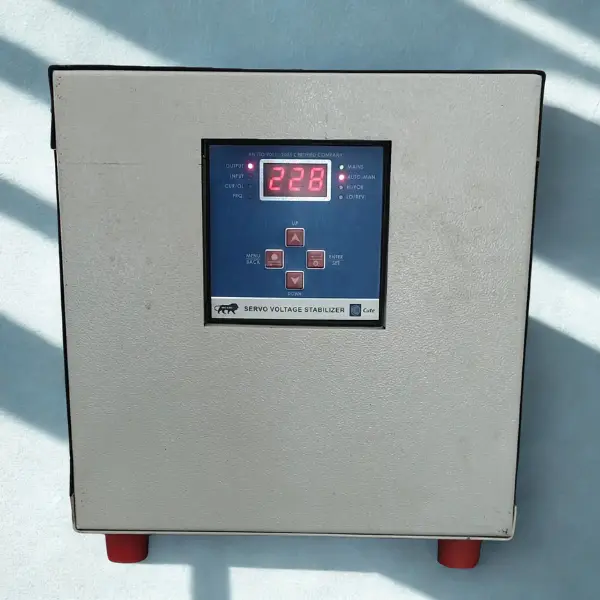
Many modern industrial servo stabilizers include digital displays for monitoring electrical parameters such as input and output voltage, allowing operators to observe operating conditions more easily.
5. Automatic and Manual Operation
Industrial servo stabilizers can provide automatic voltage regulation while also allowing manual operation or adjustment where required. Servoset models include automatic and manual operating modes.
6. Protection Features
Depending on the model and configuration, industrial stabilizers can include high-low voltage cut-off, overload protection, single-phase prevention, and bypass facilities. These features can provide additional protection for connected equipment.
Air Cooled vs Oil Cooled Industrial Servo Stabilizer
Industrial servo stabilizers can use different cooling methods. Air cooled servo stabilizers dissipate heat through air circulation and are commonly suitable for applications where the thermal load and installation conditions permit air cooling.
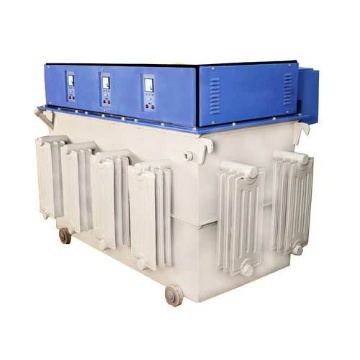
Oil cooled servo stabilizers use insulating oil for heat dissipation and are often selected for heavy-duty applications. For example, Servoset offers oil-cooled three-phase models including 25 KVA, 100 KVA, and 400 KVA configurations.
| Feature | Air Cooled | Oil Cooled |
|---|---|---|
| Cooling Method | Air circulation | Insulating oil |
| Typical Application | Industrial and commercial loads | Heavy-duty industrial applications |
| Heat Dissipation | Through air | Through insulating oil |
| Maintenance | Generally simpler | Requires oil-related maintenance |
Benefits of Using an Industrial Servo Stabilizer
- Improved voltage stability for connected machinery
- Protection against voltage fluctuations
- Better operating conditions for sensitive industrial equipment
- Reduced electrical stress caused by unstable voltage
- Support for reliable operation of automated machinery
- High voltage regulation accuracy
- Availability of multiple KVA capacities
- Automatic voltage correction
- Options for air-cooled and oil-cooled configurations
- Additional protection features depending on configuration
Applications of Industrial Servo Stabilizers
CNC Machines
CNC machines require controlled electrical conditions for reliable operation. Voltage fluctuations can affect machine performance and electronic components, making voltage stabilization an important consideration.
Manufacturing Plants
Manufacturing facilities often operate multiple machines simultaneously. A suitable industrial servo stabilizer can help regulate the incoming supply for connected loads.
Textile Industries
Textile machinery can include motors, automation systems, and electronic controls that benefit from a stable electrical supply.
Printing and Packaging Industries
Printing machines and packaging equipment may use electronic control systems that require consistent voltage for reliable operation.
Medical Equipment
Hospitals and medical facilities can use voltage stabilization for equipment where reliable electrical conditions are important. Servoset lists medical equipment among the applications of its servo stabilizers.
Motors and Industrial Automation
Industrial motors, automation systems, air-conditioning plants, elevators, escalators, and industrial RO plants are among the applications listed for Servoset servo stabilizers.
How to Select the Right Industrial Servo Stabilizer
Choosing the correct industrial servo stabilizer requires more than simply selecting a KVA rating. Consider the total connected load, operating voltage, phase configuration, input voltage fluctuations, starting current, power factor, installation environment, and future load expansion.
For example, a 25 KVA unit may be appropriate for a smaller industrial load, while larger installations may require 100 KVA, 300 KVA, 400 KVA, or higher-capacity servo stabilizers. The final selection should be based on an accurate electrical load assessment.
Why Voltage Regulation Matters in Industry
Industrial equipment can contain motors, controllers, sensors, PLCs, drives, and other electronic components. Frequent voltage fluctuations can create unfavorable operating conditions. A properly selected industrial voltage stabilizer helps maintain the required voltage level and can contribute to more reliable equipment operation.
For industries where production continuity is important, maintaining a stable electrical supply can be an important part of overall power-quality management.
Frequently Asked Questions
1. What is an industrial servo stabilizer?
An industrial servo stabilizer automatically regulates fluctuating input voltage to provide a controlled output for industrial equipment.
2. What KVA ratings are available for industrial servo stabilizers?
Industrial servo stabilizers are available in capacities such as 25 KVA, 40 KVA, 100 KVA, 300 KVA, and 400 KVA, with higher capacities also possible.
3. What is the typical accuracy of a servo stabilizer?
Depending on the model, voltage regulation accuracy can be approximately ±0.5% to ±1%.
4. What is the difference between air cooled and oil cooled stabilizers?
Air cooled stabilizers dissipate heat through air, while oil cooled models use insulating oil for heat dissipation.
5. Where are industrial servo stabilizers used?
They are used for CNC machines, manufacturing equipment, textile machinery, printing machines, packaging systems, motors, medical equipment, and automation systems.
6. Can a servo stabilizer protect against voltage fluctuations?
Yes, a properly selected servo voltage stabilizer regulates fluctuating input voltage and can include additional protection features depending on the model.
7. How do I select the right KVA rating?
The required KVA rating should be determined from the connected load, starting current, power factor, operating voltage, and future expansion requirements.
Conclusion
An industrial servo stabilizer is an important power-quality solution for industries that depend on stable electrical performance. With features such as automatic voltage regulation, stepless correction, digital monitoring, ±0.5% to ±1% regulation accuracy, overload protection, and high-low voltage cut-off, these systems can be configured for a wide range of industrial requirements.
From 25 KVA and 40 KVA systems for smaller industrial loads to 100 KVA, 300 KVA, 400 KVA and higher-capacity stabilizers for larger installations, selecting the correct configuration is essential. Air-cooled and oil-cooled options further allow businesses to choose a solution according to their load and operating environment.
For industries using CNC machines, manufacturing equipment, textile machinery, packaging systems, motors, medical equipment, and automation systems, a properly specified industrial servo voltage stabilizer can be an effective part of a reliable power-management strategy.