Introduction
Reliable voltage is essential wherever electrical equipment operates continuously. In Faridabad, homes, commercial establishments, clinics, workshops, offices, and small manufacturing units can experience variations in supply voltage depending on local load conditions and the type of electrical equipment being used nearby.
For equipment that cannot tolerate prolonged overvoltage or undervoltage, a single phase servo voltage stabilizer provides a practical way to maintain a controlled output voltage. Instead of allowing fluctuations from the incoming supply to reach connected equipment, the stabilizer automatically adjusts the voltage and maintains a much more consistent output.
What Is a Single Phase Servo Voltage Stabilizer?
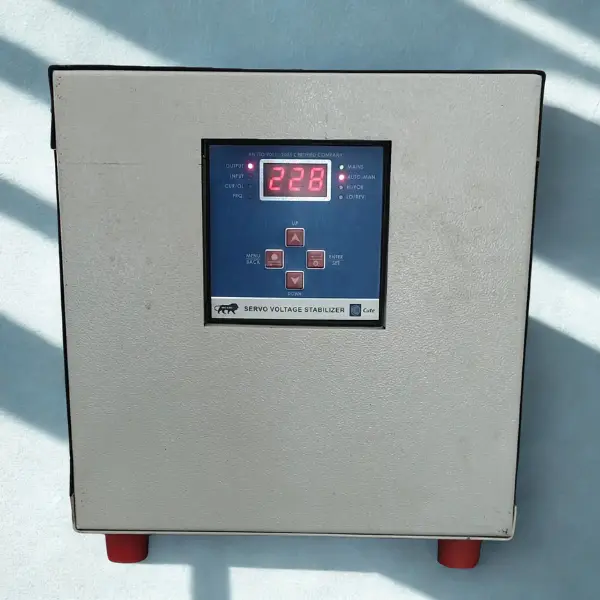
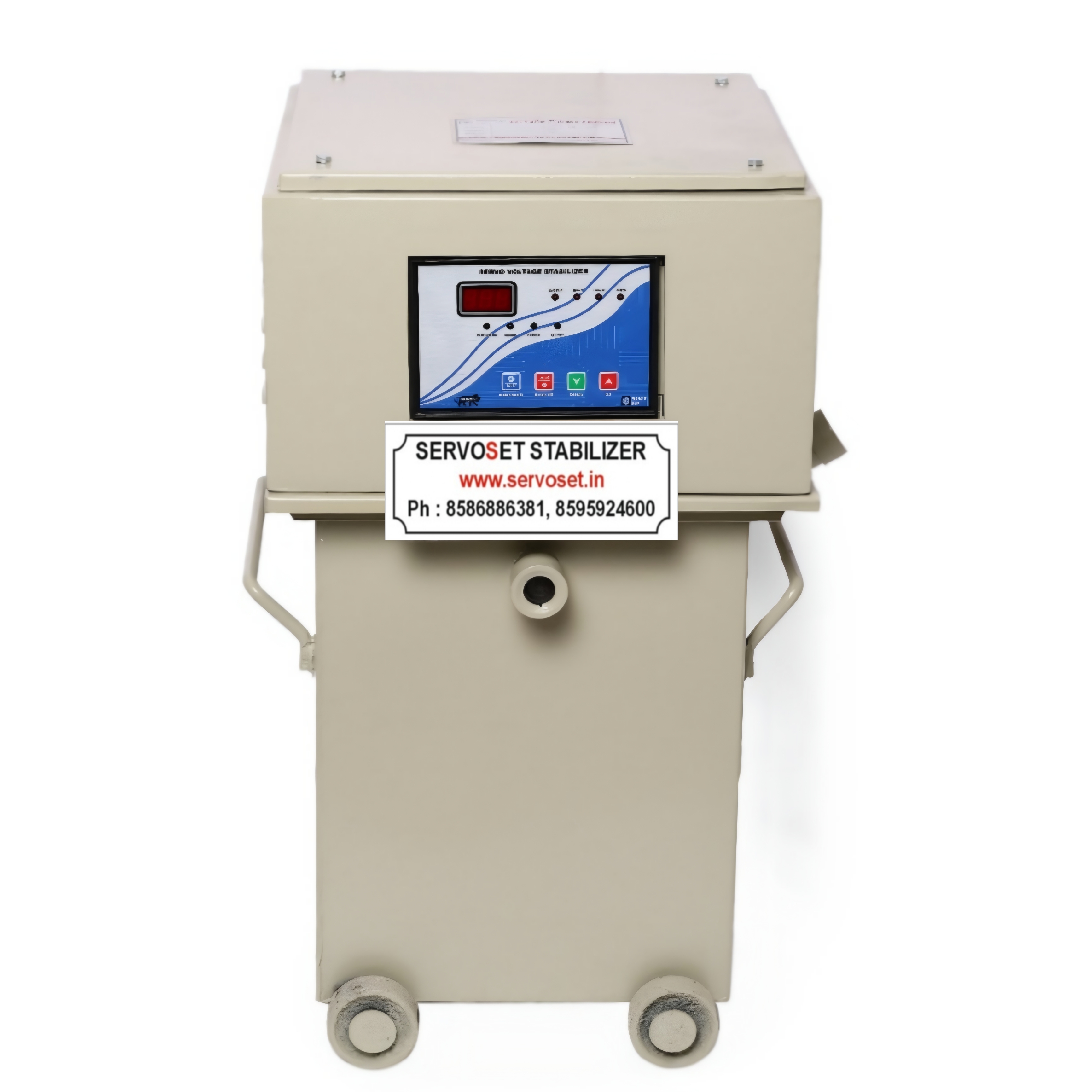
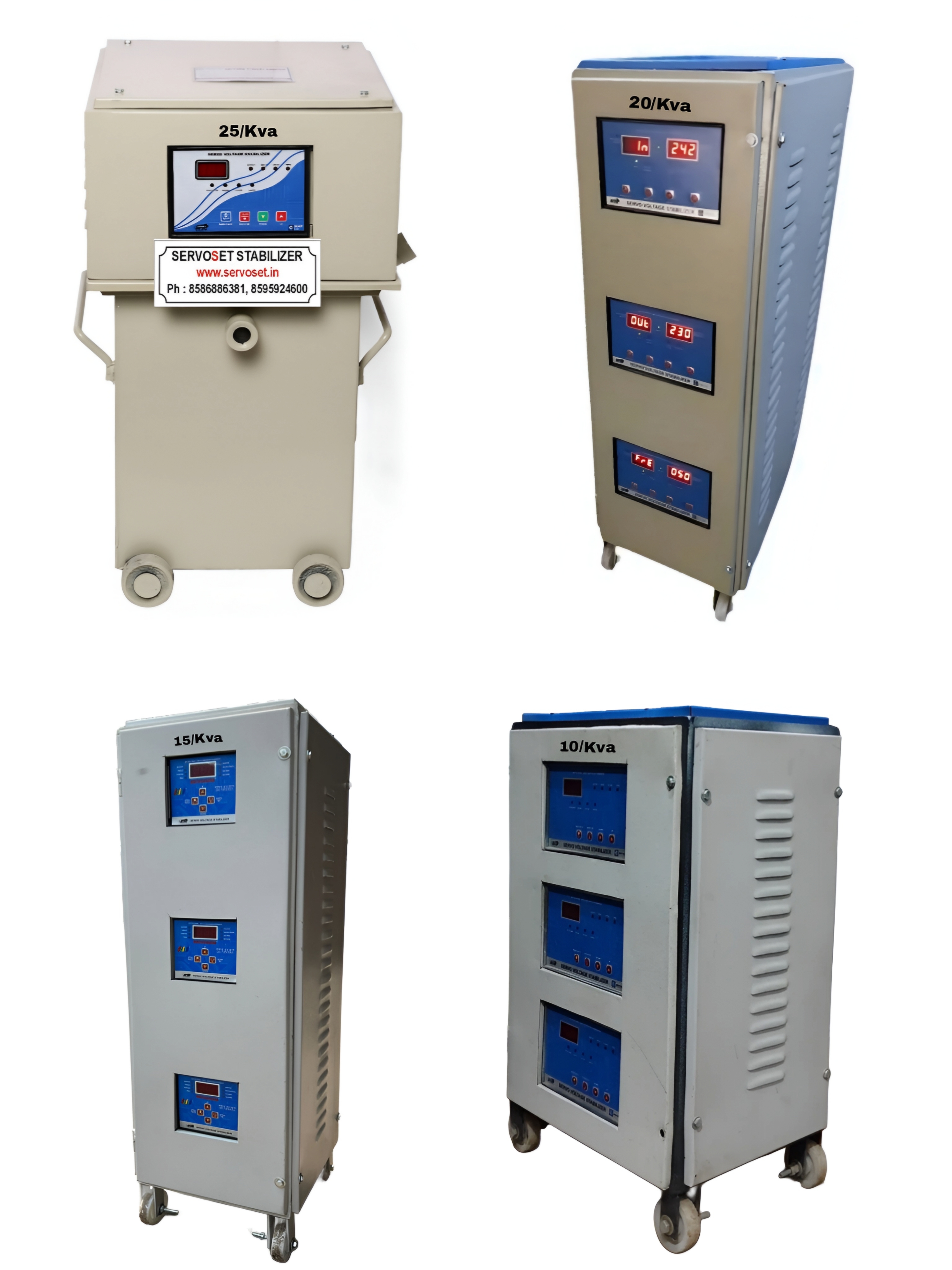
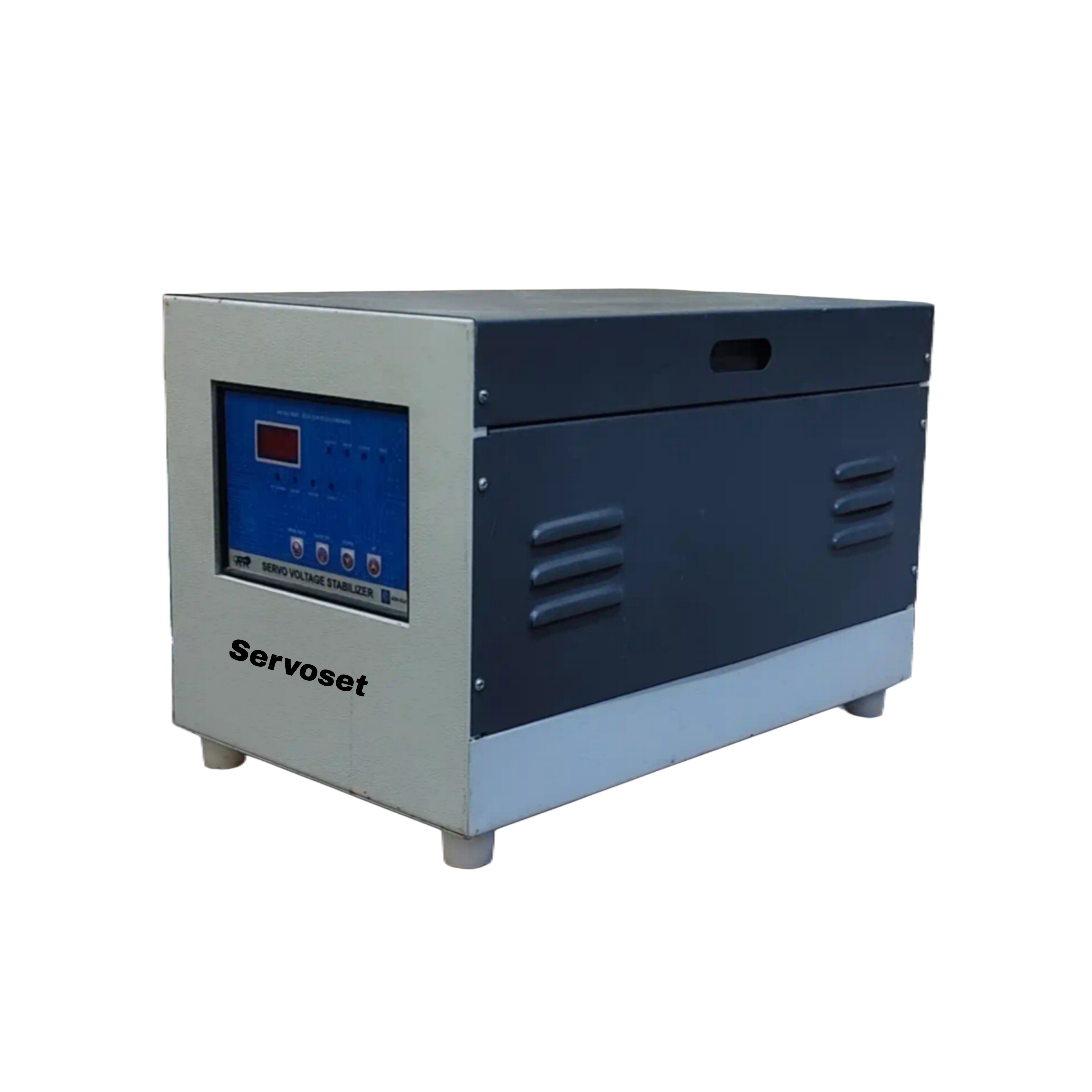
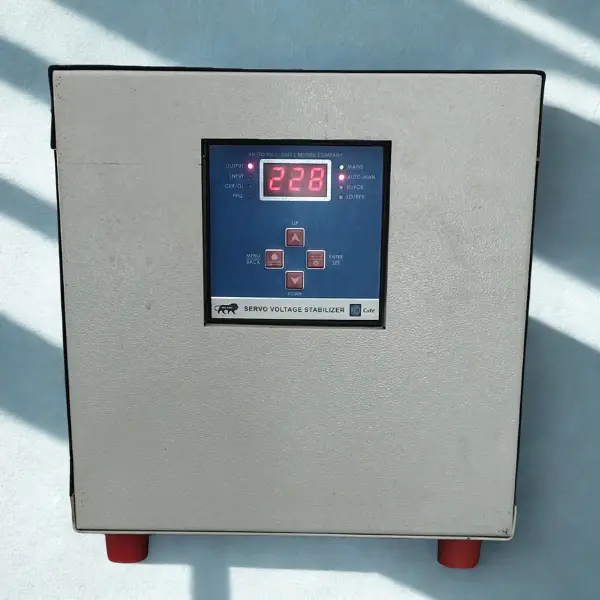
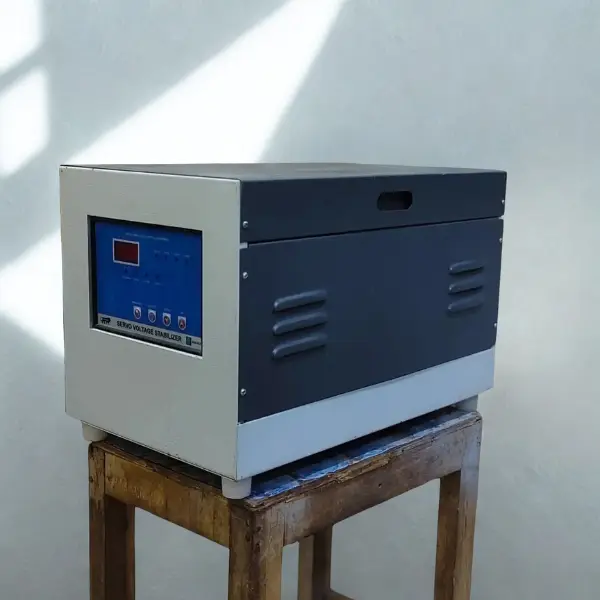
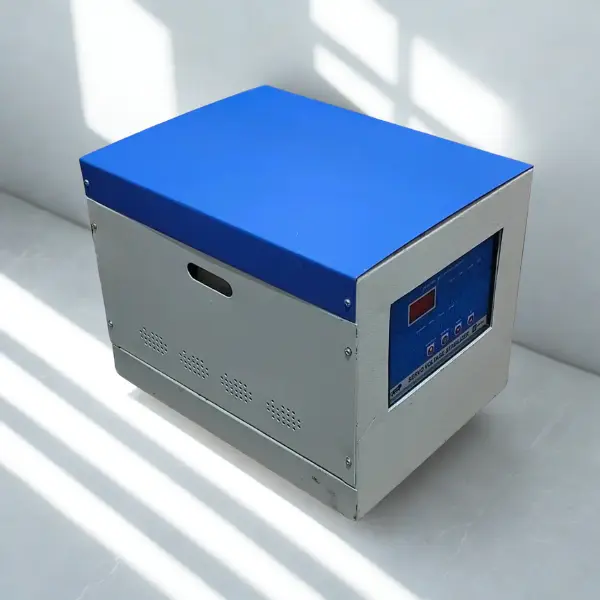
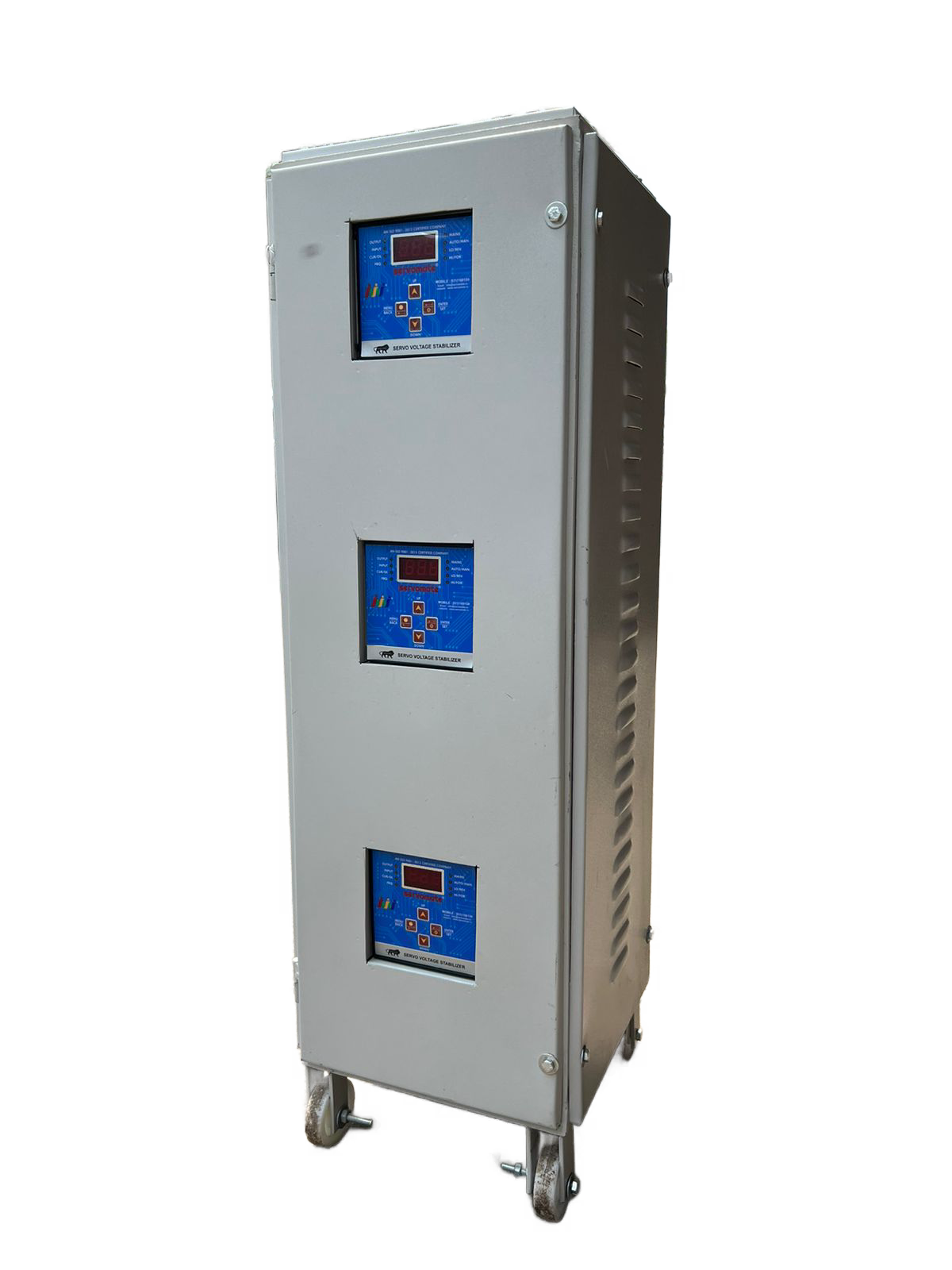
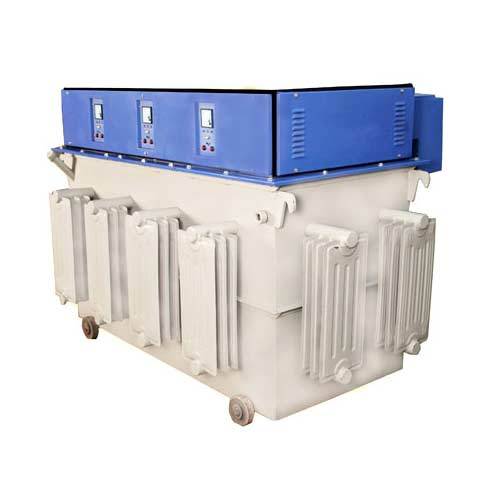
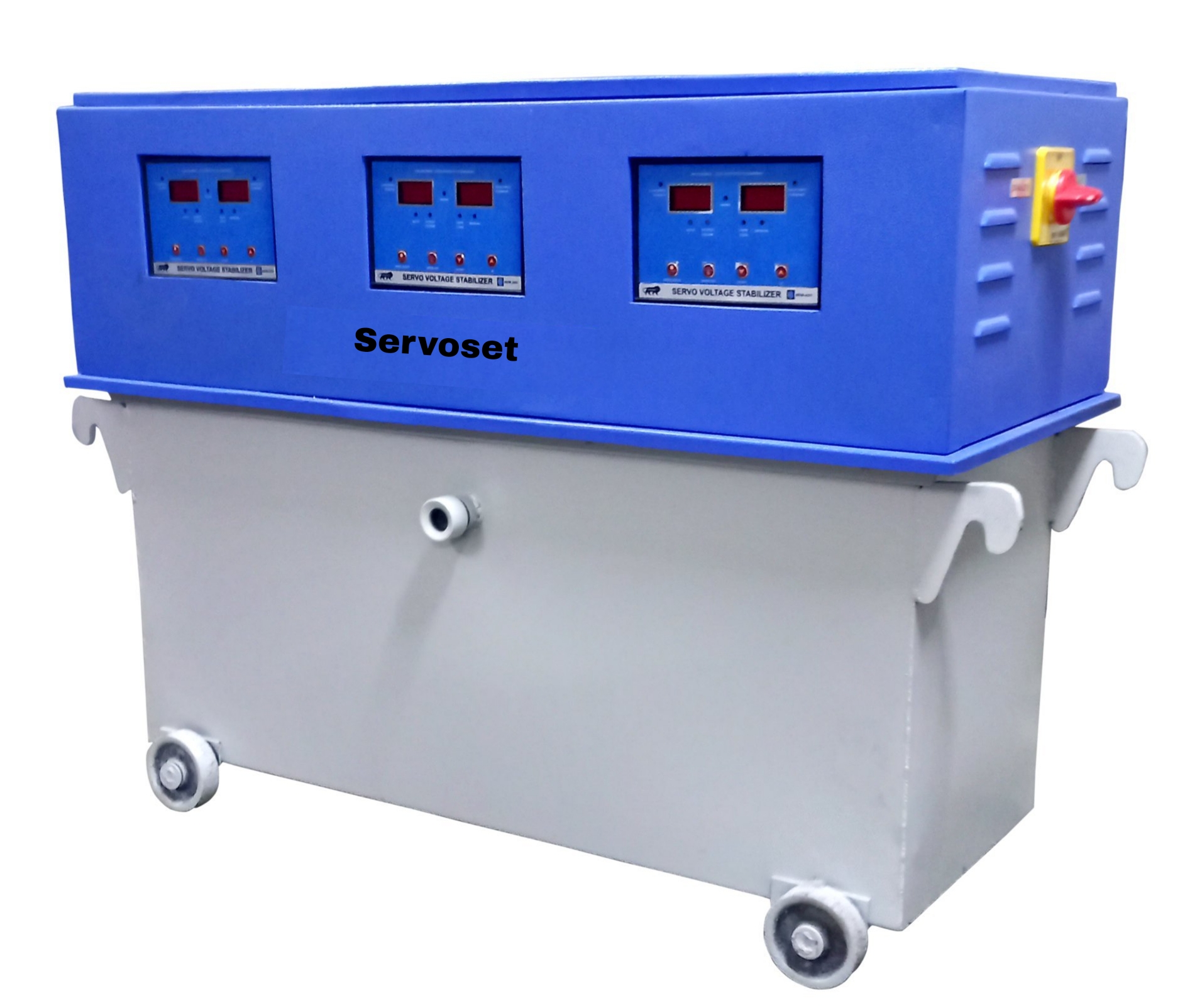
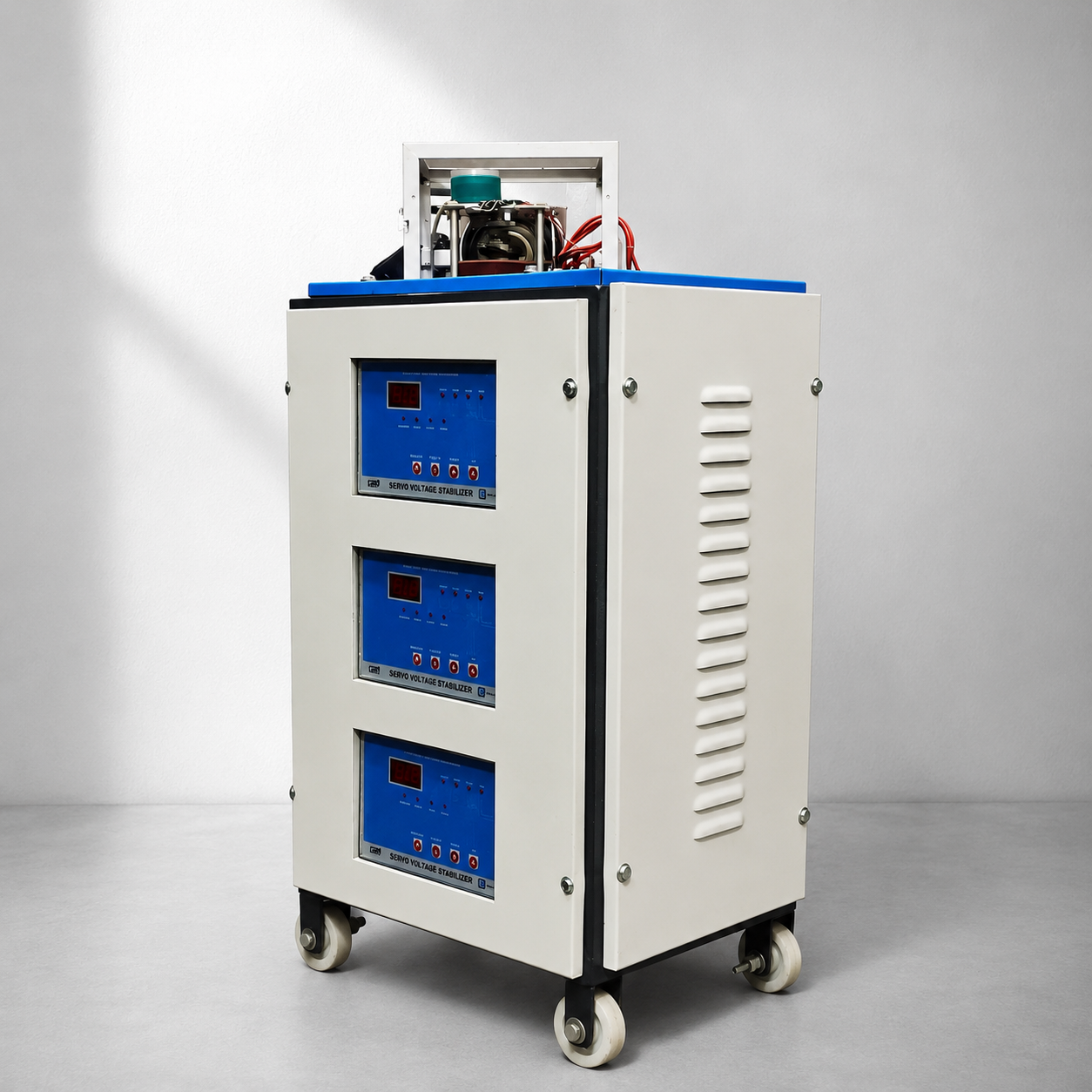
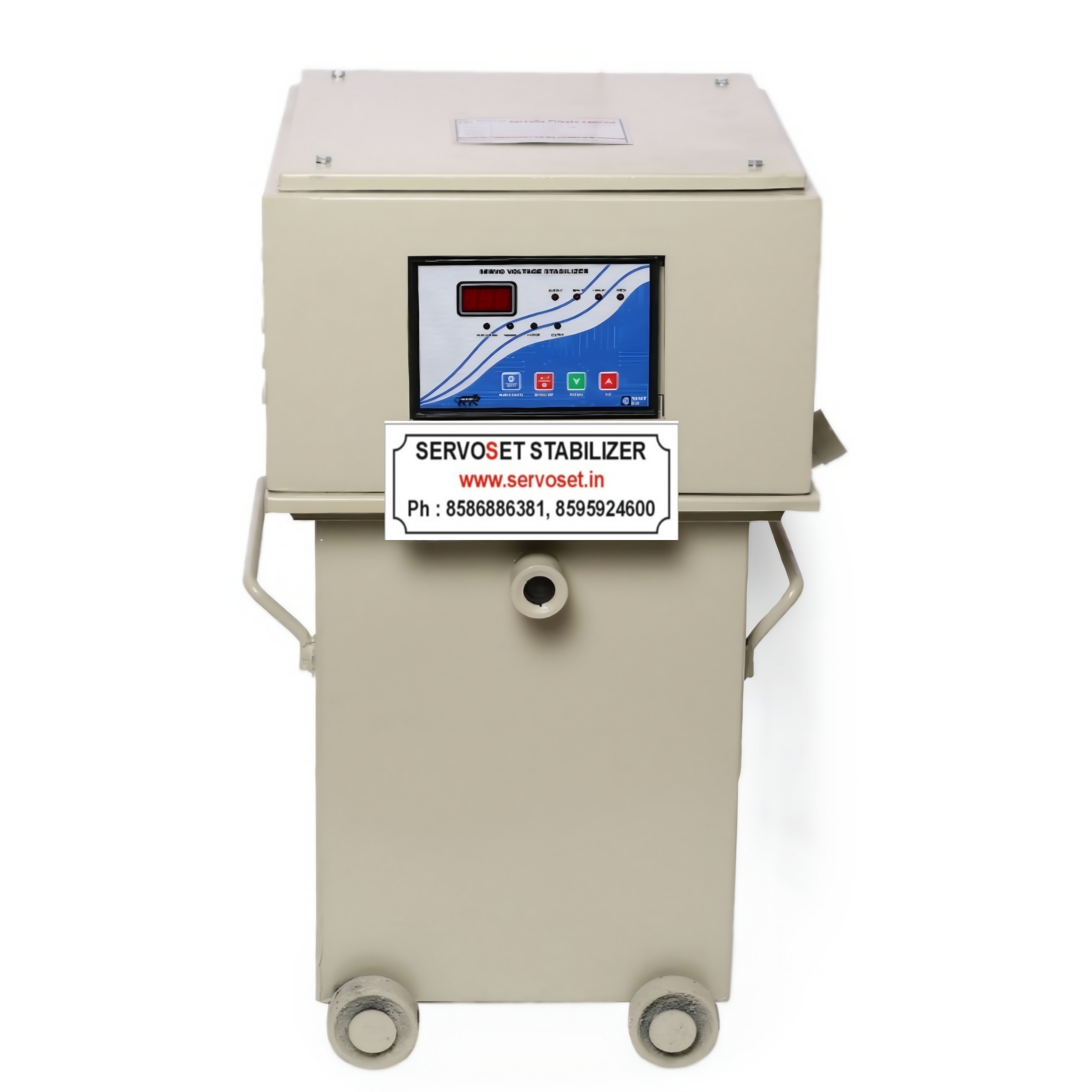
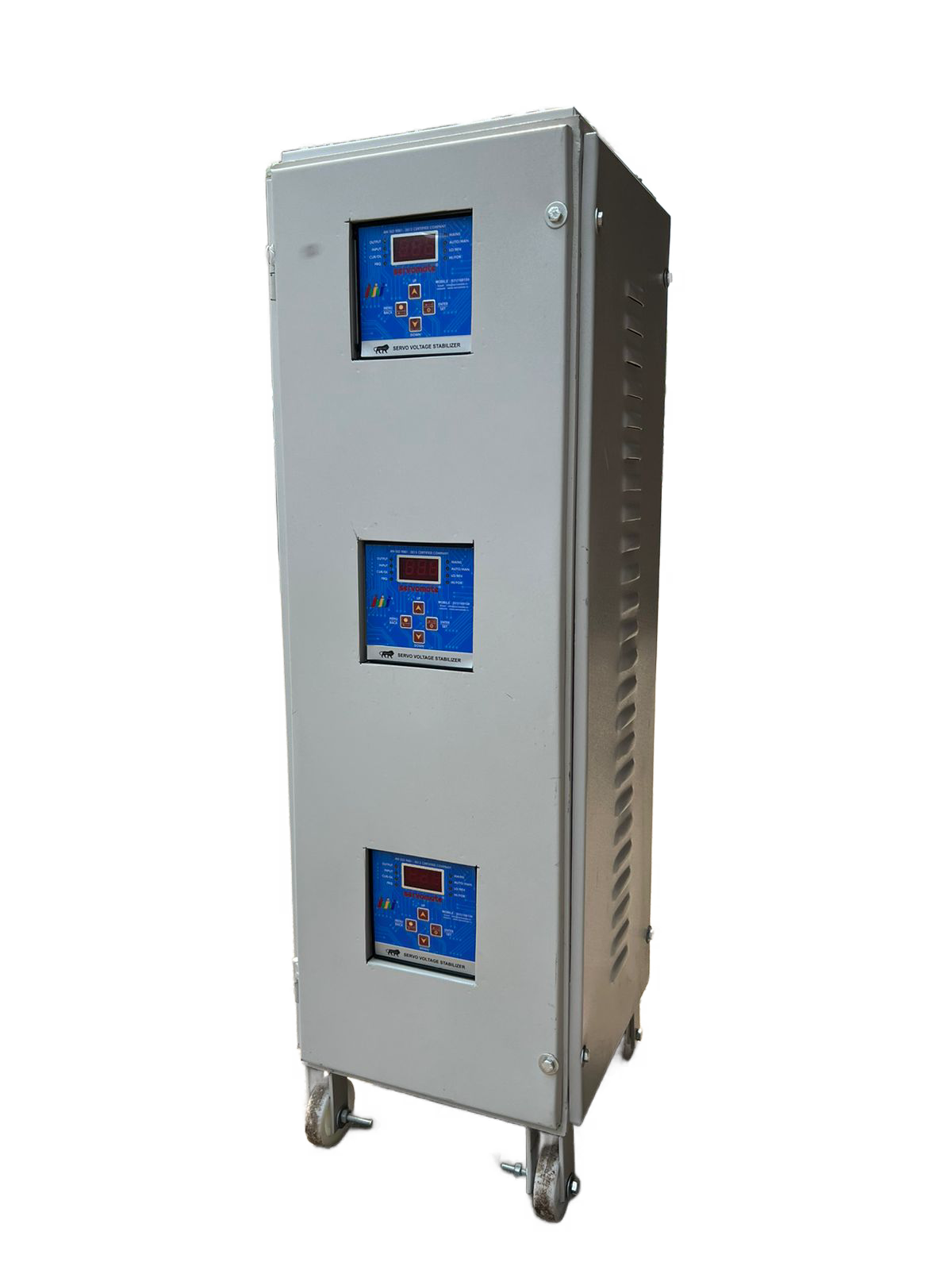
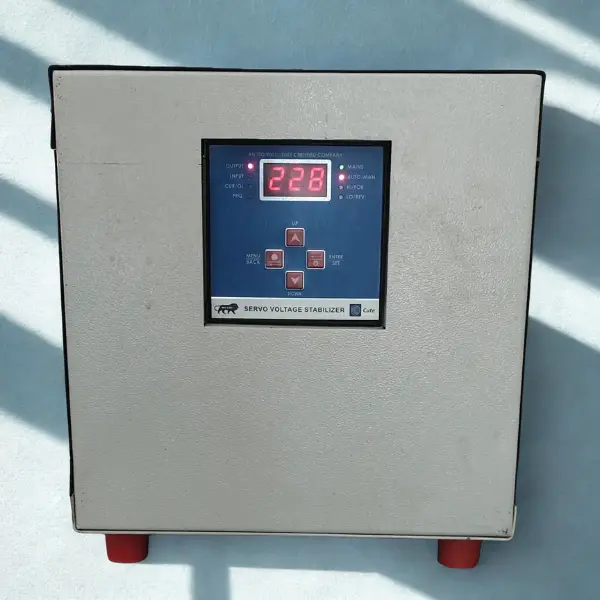
A single phase servo voltage stabilizer is an automatic voltage correction system designed for electrical installations receiving a single-phase supply. It continuously monitors the incoming voltage and, when the supply moves above or below the desired level, a servo motor operates the voltage correction mechanism to compensate for the variation. The corrected voltage is then supplied to the connected equipment.
The main components generally include a servo motor, control circuit, buck-boost transformer, sensing mechanism, and voltage correction arrangement. This continuous correction distinguishes a servo stabilizer from conventional relay-based stabilizers, which generally regulate voltage by switching between predetermined steps. For applications involving motors, compressors, electronic equipment, laboratory instruments, or other voltage-sensitive loads, smoother voltage regulation can be particularly useful.
Why Voltage Stabilization Matters in Faridabad
Faridabad has a combination of residential neighbourhoods, commercial markets, institutional facilities, workshops, and industrial areas. This creates very different electrical requirements from one installation to another. A business running compressors or motors, for example, may have very different stabilization requirements from a residential property operating computers and household appliances.
Voltage variations can become particularly noticeable when large electrical loads are switched on or off in the surrounding network, motors and other high-starting-current equipment operate, local distribution infrastructure is heavily loaded, industrial and residential loads share nearby electrical networks, seasonal electricity demand increases, or equipment is located at the end of a distribution line or on a long internal electrical run.
The effect on equipment depends on the severity and duration of the voltage variation. Undervoltage can cause motors to draw higher current and operate inefficiently, while excessive voltage can place additional stress on electrical and electronic components. A properly selected servo stabilizer helps keep the equipment supply within a controlled voltage range.
Important Specifications to Compare
Before purchasing a single-phase servo stabilizer for a Faridabad installation, it is important to look beyond the KVA number printed on the specification sheet. Input voltage range, output voltage regulation, KVA capacity, correction speed, and protection functions should all be considered according to the actual electrical requirements.
1. Input Voltage Range
The input range defines how much variation the stabilizer can correct. For locations with substantial fluctuations, a wider operating range may be preferable. A commonly specified range for demanding applications can be around 90V to 285V, although the appropriate range should be determined from actual site measurements.
If the incoming voltage regularly falls below or rises above the stabilizer's correction limits, the unit may not be able to provide the required regulated output. Therefore, measuring the site's minimum and maximum voltage before ordering is strongly recommended.
2. Output Voltage Regulation
Output regulation tells you how closely the stabilizer maintains the desired voltage. For applications requiring relatively precise voltage control, ±1% regulation is a commonly selected specification. The actual requirement depends on the equipment being protected, as sensitive machinery and electronic equipment may justify tighter regulation than ordinary household loads.
3. KVA Capacity
KVA selection is one of the most important decisions when purchasing a servo stabilizer. The stabilizer should be selected according to the actual electrical load rather than simply matching the connected appliance's nominal wattage. Motors, pumps, compressors, refrigerators, air conditioners, and other inductive loads can require significantly higher current during starting, making a reasonable capacity margin important.
As a general approach, the stabilizer can be selected with approximately 25–30% additional capacity above the calculated operating requirement, with further consideration given to motor-starting loads. For installations containing several motors, it is advisable to have the starting characteristics evaluated rather than relying only on the running load.
4. Correction Speed
Correction speed indicates how quickly the stabilizer responds when the input voltage changes. Faster correction can be useful in environments where voltage changes occur frequently. However, correction speed should be considered alongside the stabilizer's control system, operating range, load characteristics, and overall construction. A specification sheet should be checked for the manufacturer's stated correction rate rather than comparing products solely on marketing terminology.
5. Protection Functions
A stabilizer should do more than regulate voltage. Depending on the model and application, useful protection features can include high-voltage cut-off, low-voltage cut-off, overload protection, short-circuit protection, time-delay output, thermal protection, and MCB or equivalent protective arrangements. The exact protection package should be matched to the equipment and installation.
How to Calculate the Required KVA
A simple starting point is to determine the total operating load of all equipment that will be connected to the stabilizer. For resistive loads, the relationship between watts and VA is relatively straightforward. For motors and other inductive equipment, power factor and starting current need to be considered.
For example, if an installation has a calculated running requirement of approximately 4 KVA, selecting a stabilizer at exactly 4 KVA may leave little room for starting current or future load additions. A higher-rated unit may therefore be more appropriate.
For installations containing multiple air conditioners, compressors, pumps, motors, or machinery, professional load assessment is preferable before finalizing the capacity.
Air-Cooled or Oil-Cooled: Which Is Better for Faridabad?
There is no universal winner between air-cooled and oil-cooled construction. The correct choice depends on the application, load requirement, operating duration, installation environment, and overall electrical conditions.
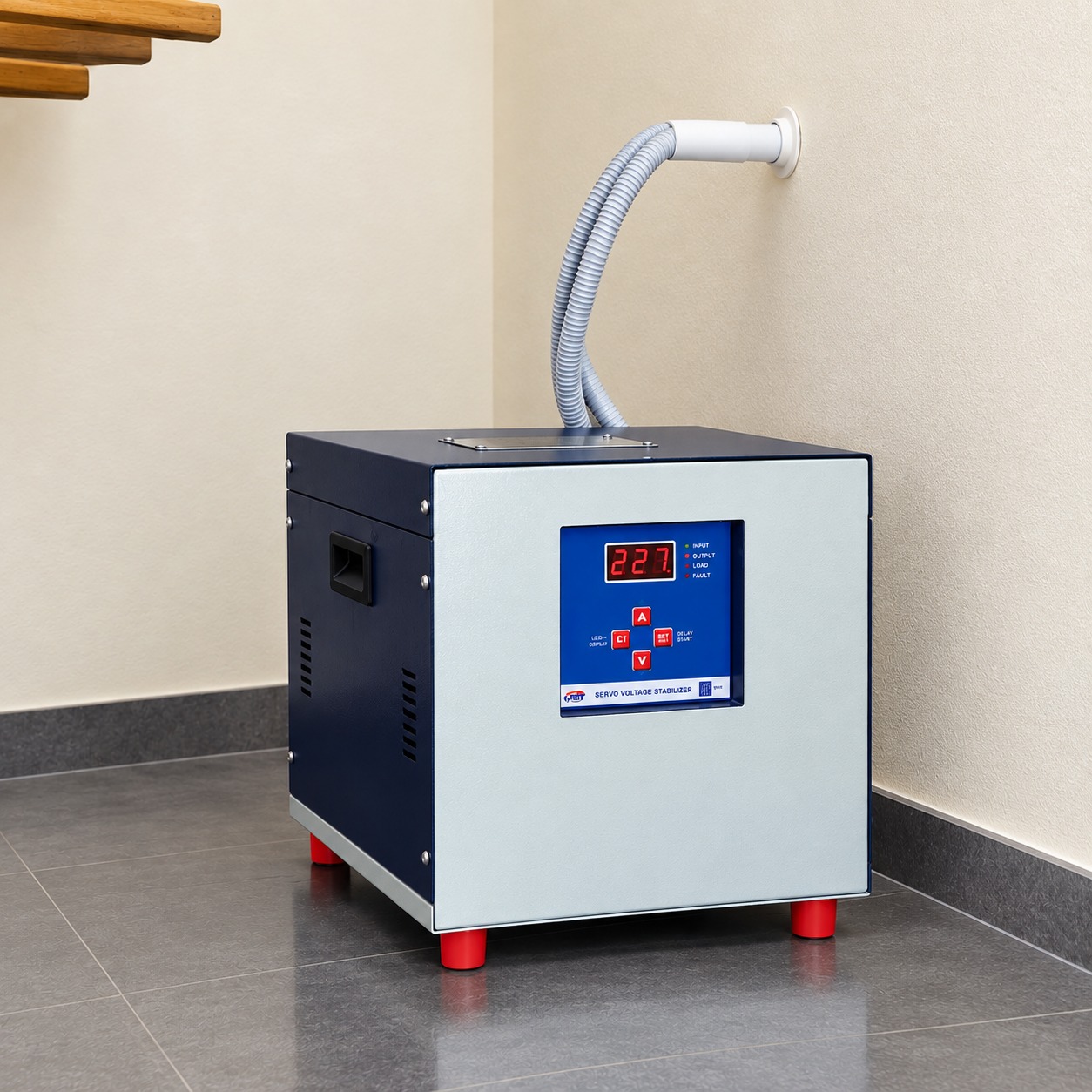
Air-Cooled Servo Stabilizers
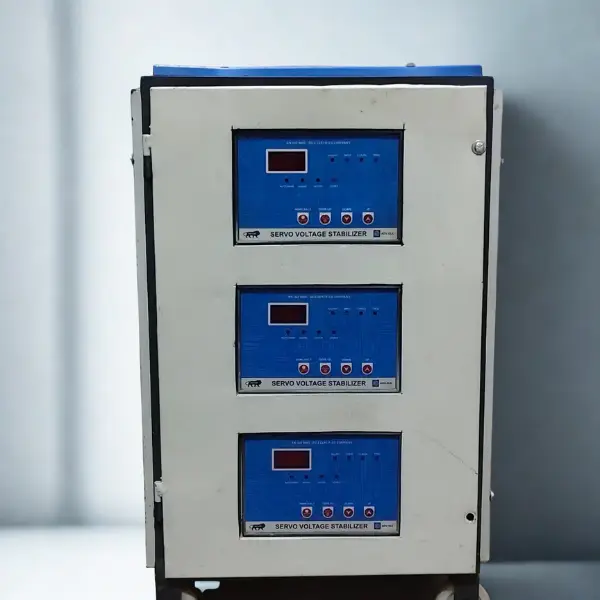
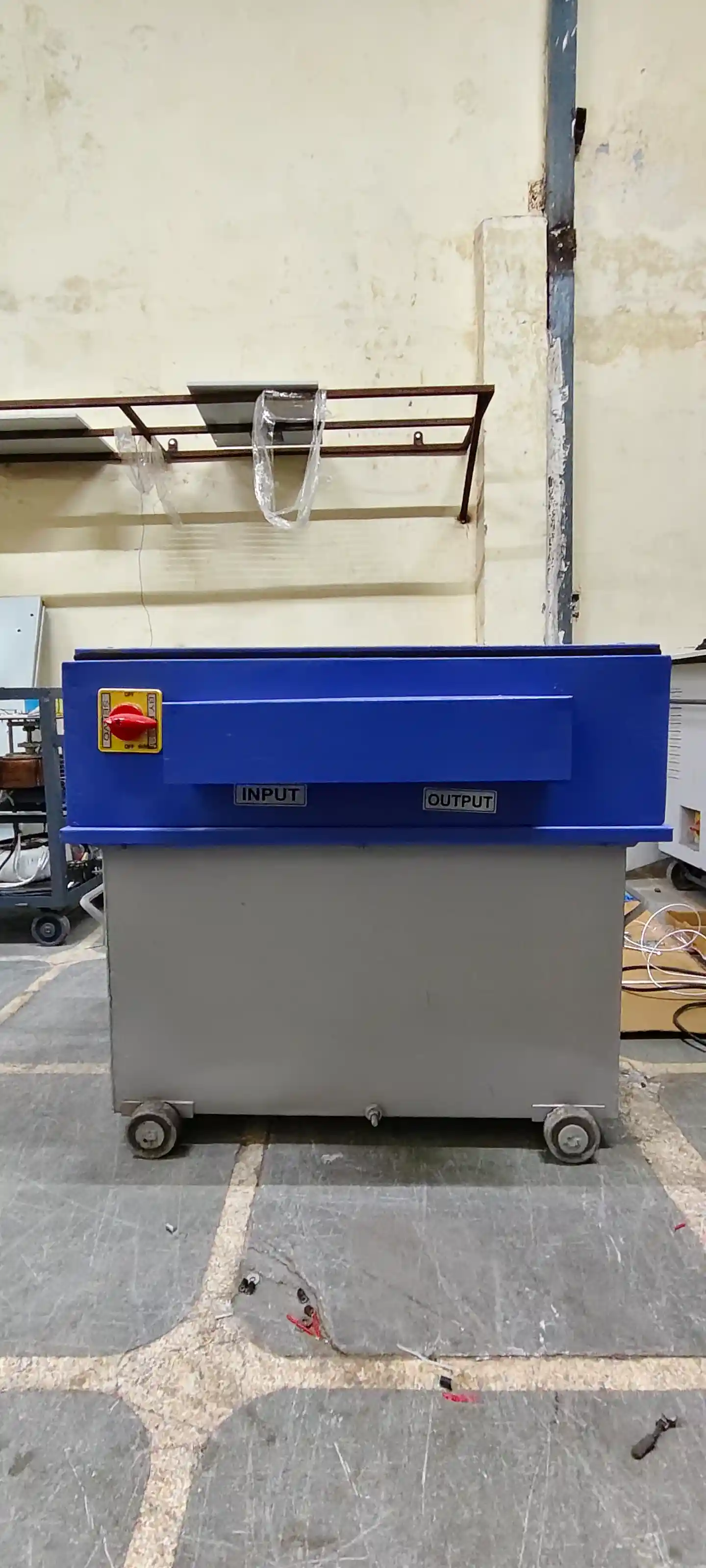
Air-cooled models are commonly suitable for houses, offices, retail outlets, clinics, small commercial establishments, computer rooms, light workshops, and general single-phase equipment. They generally offer a compact installation, straightforward maintenance, and practical operation for moderate loads. For many single-phase installations, an appropriately sized air-cooled stabilizer is sufficient.
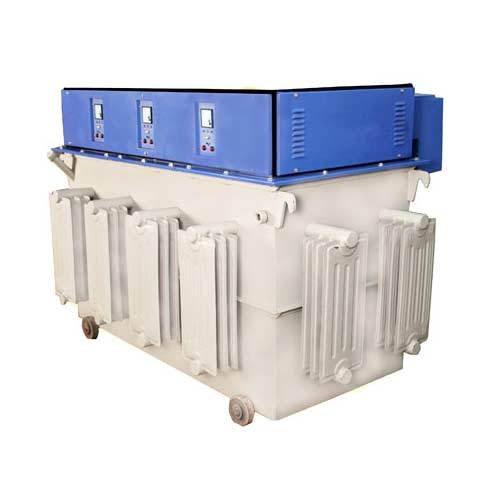
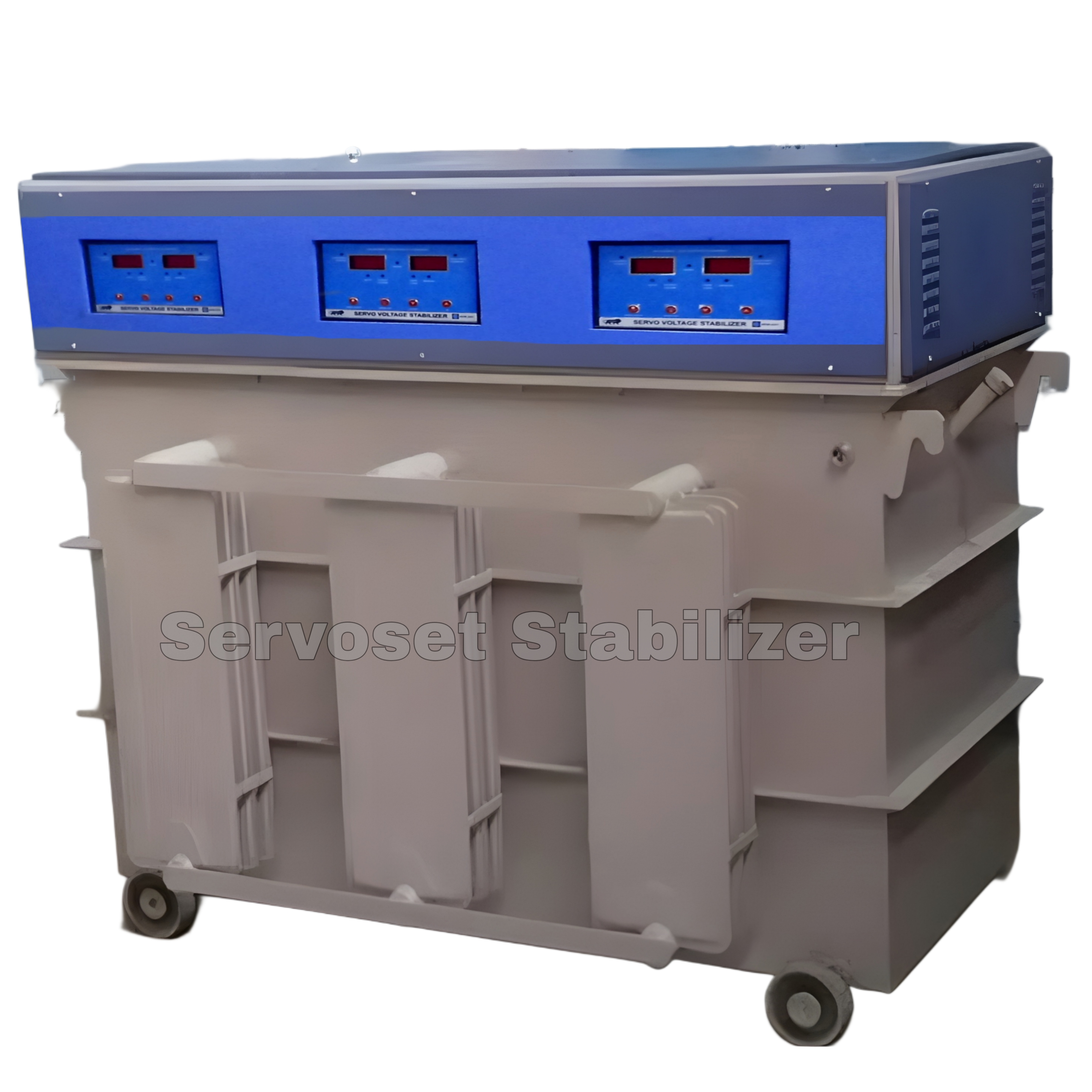
Oil-Cooled Servo Stabilizers
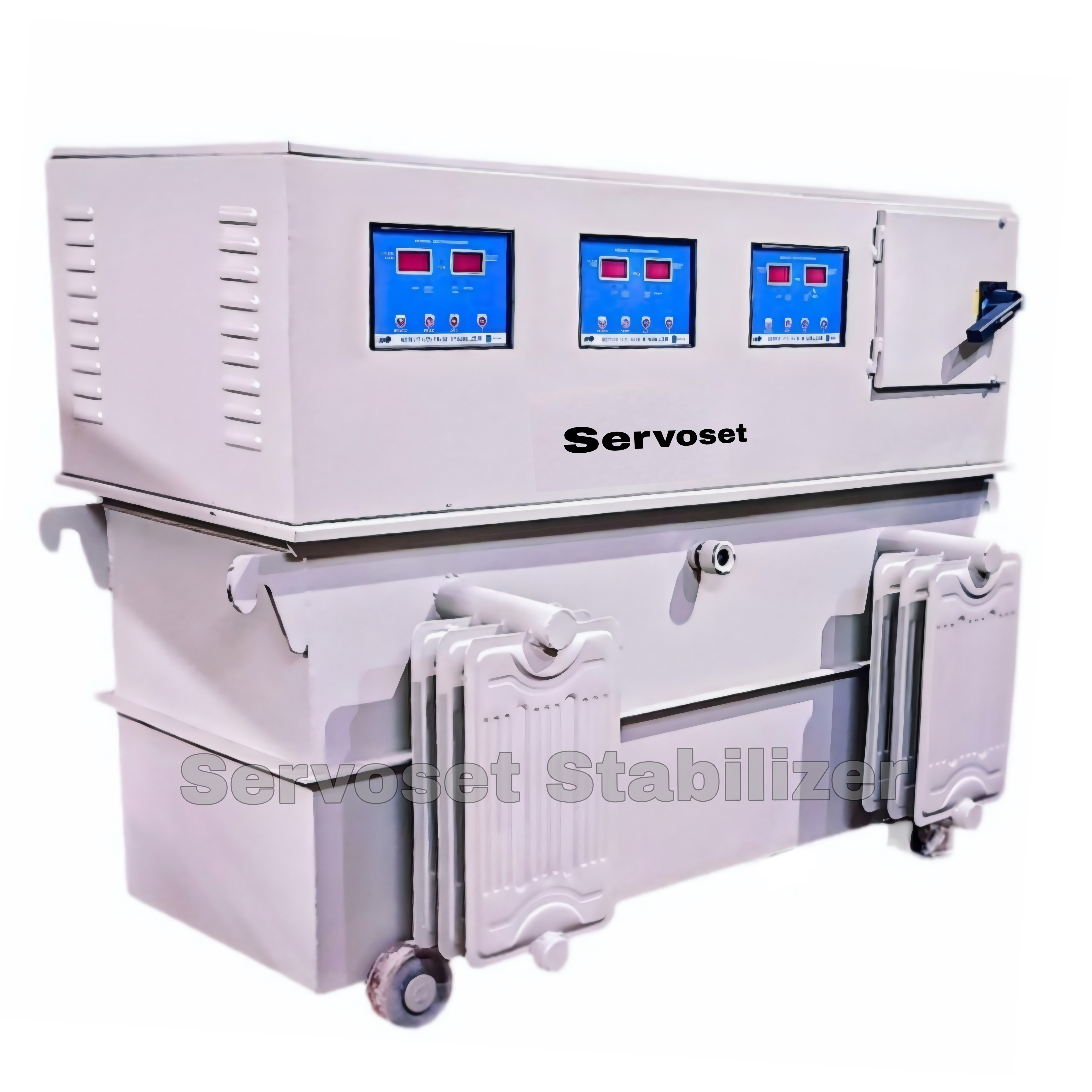
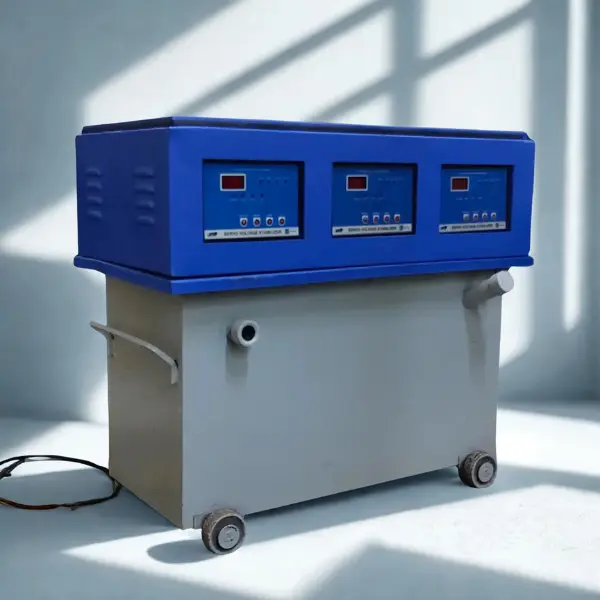
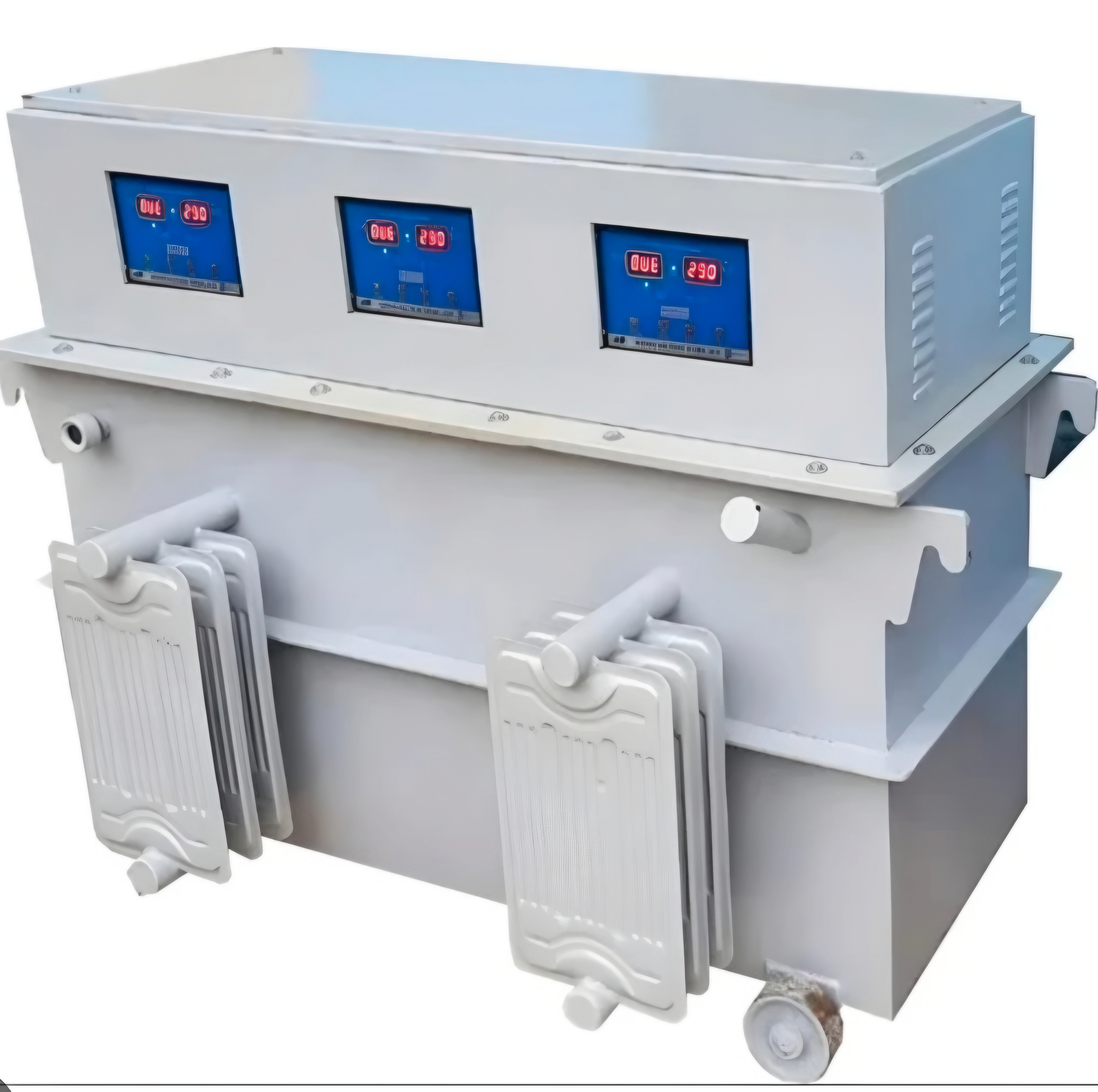
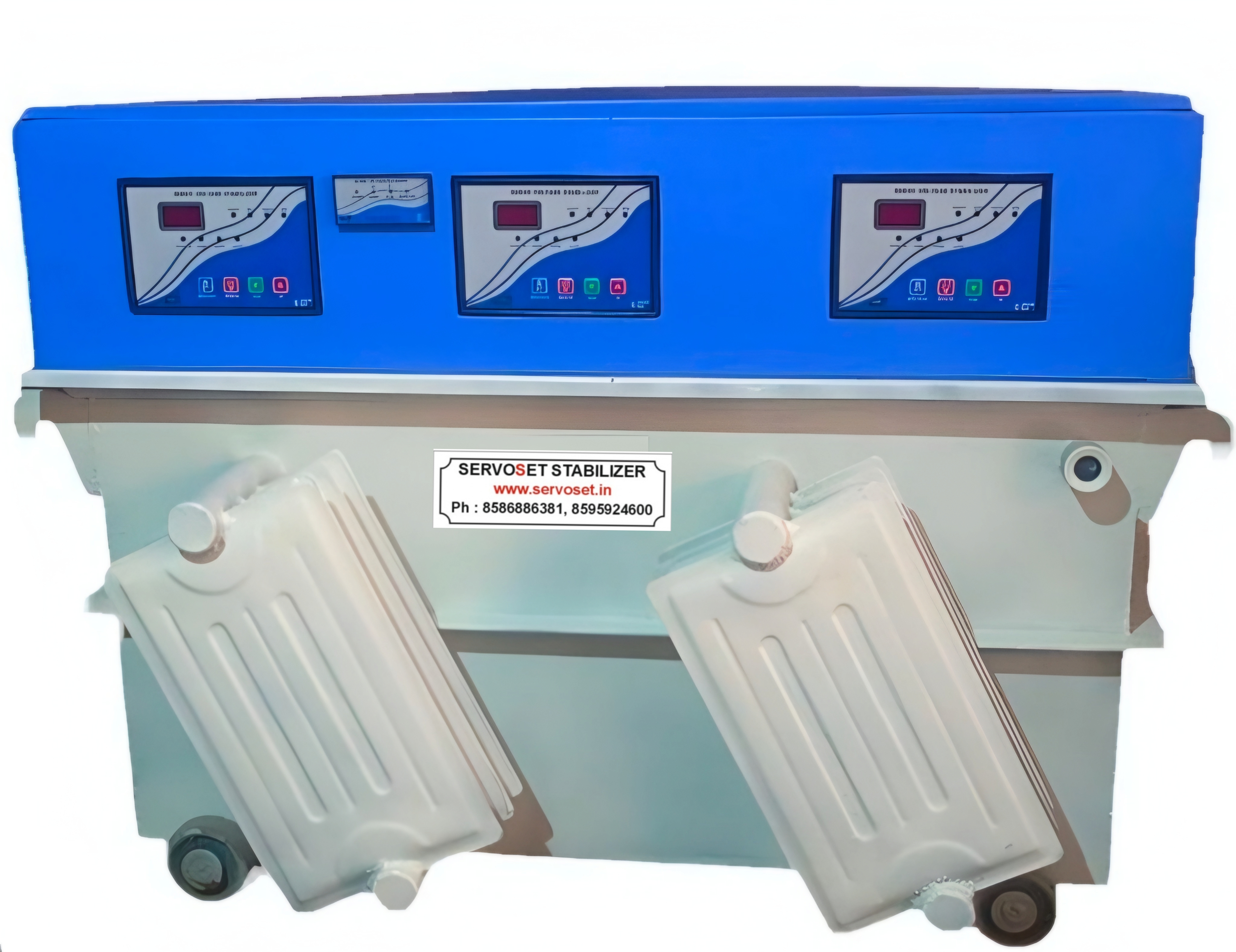
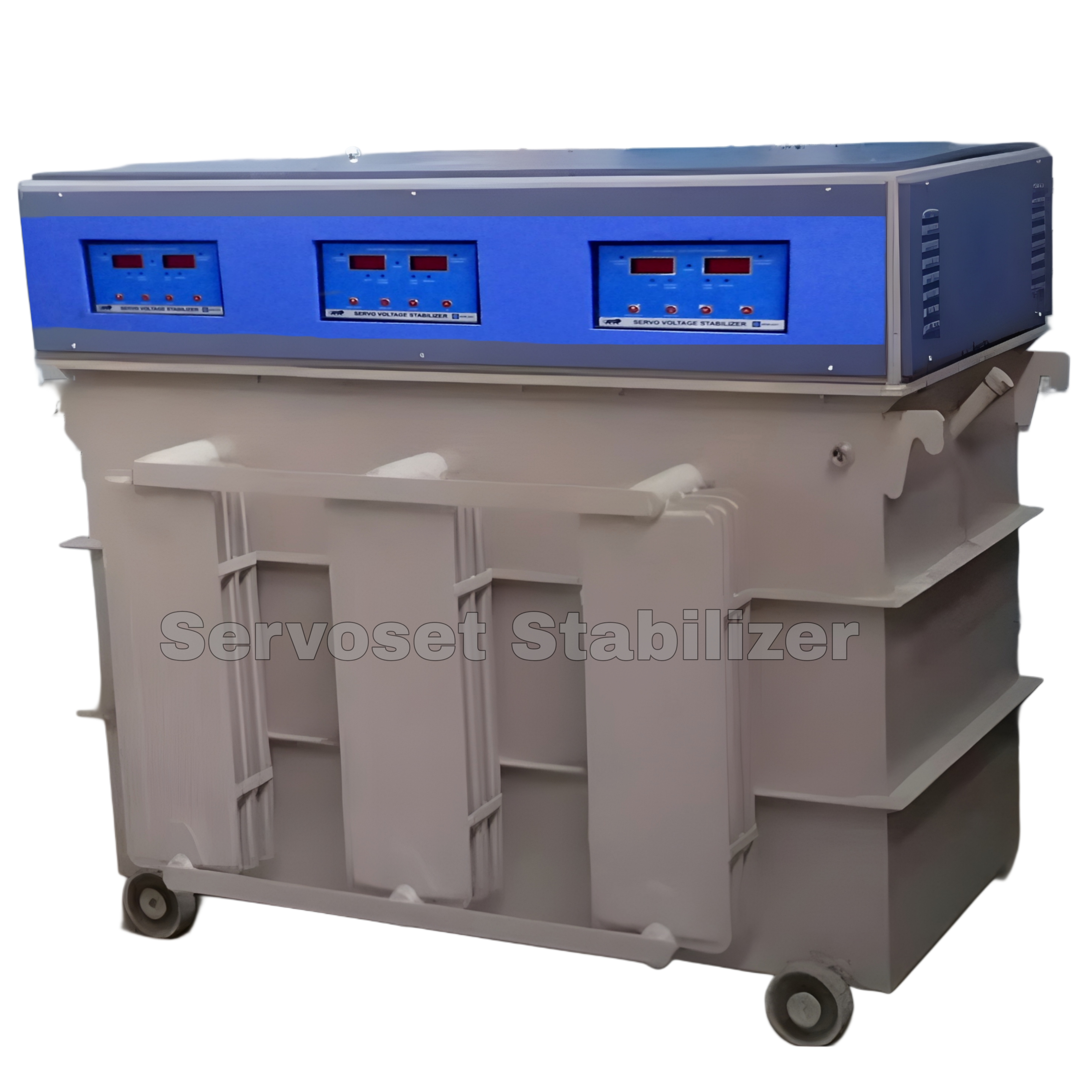
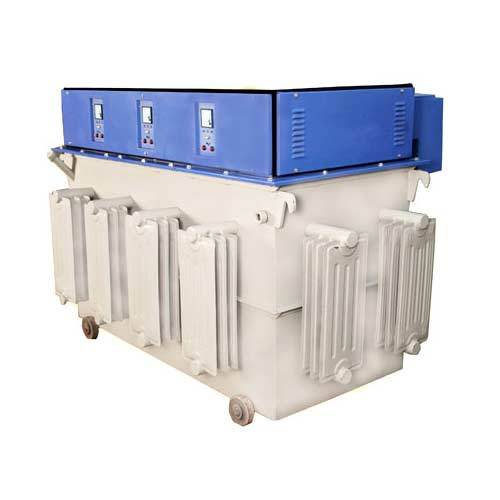
Oil-cooled construction can be considered where the stabilizer needs to operate under heavier and more demanding conditions. These applications can include continuous-duty machinery, higher-capacity installations, industrial environments, and applications with sustained electrical loading.
Oil cooling can provide improved heat dissipation for suitable heavy-duty applications, although the installation, maintenance requirements, physical space, and operating environment should all be considered. For a typical home, shop, clinic, or office, an air-cooled model will generally be the more practical configuration.
Where Can Single Phase Servo Stabilizers Be Used?
A single-phase servo stabilizer can be used in many Faridabad installations where maintaining a controlled supply voltage is important. Residential properties, retail stores, clinics, healthcare facilities, offices, workshops, and educational facilities can all have applications where stable voltage is required.
Residential Properties
Homes with multiple air conditioners, refrigerators, pumps, computers, home automation systems, and other electrical equipment may benefit from centralized voltage regulation. The stabilizer should be selected according to the combined electrical load and the starting requirements of motor-driven appliances.
Retail Stores
Shops and showrooms may use stabilizers to support billing systems, lighting, refrigeration equipment, displays, computers, and other electrical loads. Selecting the appropriate capacity can help ensure that connected equipment receives a more consistent supply.
Clinics and Healthcare Facilities
Certain single-phase medical and diagnostic equipment can require a stable electrical supply. The stabilizer specification should always be selected according to the equipment manufacturer's electrical requirements to ensure compatibility with the connected equipment.
Offices
Computers, networking equipment, printers, servers, and other office electronics can be affected by unsuitable voltage conditions. A properly selected single-phase servo stabilizer can help provide a more controlled supply for these types of installations.
Workshops
Single-phase motors, machine tools, compressors, pumps, and other workshop equipment may require additional attention to starting current and voltage stability. The stabilizer capacity should therefore account for both normal operating requirements and starting characteristics.
Educational Facilities
Computer laboratories, technical training centres, and institutional equipment can use centralized stabilization where the incoming supply is unsuitable for the connected load. The required capacity and voltage range should be determined according to the equipment being operated.
Why Choose Servoset for Faridabad?
For customers in Faridabad, proximity to a manufacturer and service provider can be an important consideration when purchasing industrial electrical equipment. Servoset, based in Noida, provides single-phase servo voltage stabilizers for residential, commercial, and industrial applications.
Its range can be configured according to application requirements, including different KVA capacities, voltage correction ranges, and cooling arrangements. Customers can consider factors such as Noida-based manufacturing and support, service accessibility across the Delhi NCR region, customization according to load requirements, wide input-voltage options, output regulation options, protection features, availability of air-cooled and oil-cooled configurations, and direct manufacturer-level assistance for product selection and service.
Instead of selecting a stabilizer solely by KVA, customers can provide their equipment list, incoming voltage range, and operating conditions so the appropriate configuration can be determined.
Factors to Check Before Placing Your Order
Before purchasing a servo stabilizer for a Faridabad property, it is important to collect information about the single-phase supply voltage, minimum and maximum recorded input voltage, total connected load, normal operating load, motor or compressor starting requirements, required output voltage, number and type of connected machines, daily operating duration, available installation space, and indoor or outdoor installation conditions.
Providing this information to the manufacturer can significantly improve the accuracy of the recommended stabilizer specification and help ensure that the selected unit is suitable for the actual operating environment.
Common Mistakes When Buying a Servo Stabilizer
Choosing Capacity Based Only on Wattage
A motor-driven load cannot always be treated like a simple resistive appliance. Starting current and power factor can affect the required stabilizer capacity, so the actual electrical characteristics of the connected equipment should be considered.
Selecting a Narrow Input Range
A stabilizer that cannot accommodate the site's actual voltage variation may frequently reach its correction limits. Measuring the incoming supply before selecting the input range can help avoid this problem.
Ignoring Future Load
If additional equipment is likely to be installed shortly, purchasing a unit with no capacity margin can result in an unnecessary replacement later. Considering potential future load can make the installation more practical over time.
Focusing Only on Price
Two stabilizers with the same KVA rating can differ considerably in input range, components, protection, construction, regulation, and service support. Therefore, price should not be the only factor considered during product selection.
Not Measuring the Incoming Voltage
Assuming the voltage range without taking actual measurements can lead to incorrect product selection. Recording the minimum and maximum voltage at the installation location provides a better basis for selecting the appropriate stabilizer.
Frequently Asked Questions
What size single phase servo stabilizer is suitable for a house in Faridabad?
A smaller home may require around 3–5 KVA, while a larger property with multiple air conditioners, pumps, or other significant loads may require 5–10 KVA or more. The correct capacity should be calculated from the actual connected and running load.
Can a servo stabilizer handle both low and high voltage?
Yes. Within its specified operating range, a servo stabilizer can compensate for both undervoltage and overvoltage and provide a controlled output.
Is a servo stabilizer suitable for air conditioners?
Yes. However, the stabilizer must be sized according to the number and capacity of air conditioners, their starting characteristics, and any other loads connected to the same unit.
What input range should I choose?
The input range should be based on the actual voltage measured at the installation. For locations experiencing significant variation, a wider range such as 90V–285V may be considered where appropriate.
Is air cooling sufficient for a single-phase stabilizer?
For many residential, office, retail, clinic, and light-commercial applications, air cooling is sufficient. Higher continuous loads may require an oil-cooled configuration.
Can one stabilizer protect several appliances?
Yes, provided the stabilizer has adequate KVA capacity and the connected equipment is compatible with the stabilizer's output specifications.
Does Servoset supply servo stabilizers in Faridabad?
Servoset operates from Noida and serves customers across Delhi NCR, including Faridabad. Customers can discuss their load and voltage conditions with the manufacturer to determine a suitable configuration.
Conclusion
For homes, businesses, clinics, offices, and workshops in Faridabad, voltage stability can be an important part of maintaining reliable equipment operation. A single-phase servo voltage stabilizer offers automatic voltage correction and can help maintain a more consistent supply for connected equipment.
However, the best stabilizer is not necessarily the one with the highest KVA rating or the widest advertised input range. The correct choice depends on the actual voltage conditions, connected load, starting requirements, required regulation, protection features, cooling arrangement, and installation environment.