Introduction
Industrial servo voltage stabilizer systems are becoming essential equipment for factories and workshops across Moradabad. The city's industrial belt — from brass and metal handicraft units to electroplating plants, textile units, and small-scale manufacturing — runs on power that isn't always predictable. Voltage in this region regularly swings due to overloaded transformers, seasonal agricultural load, and an aging distribution grid in parts of the city and surrounding industrial areas. For factory owners, this isn't just an inconvenience; it's a direct threat to machinery, output quality, and the bottom line.
What Is a Servo Voltage Stabilizer?
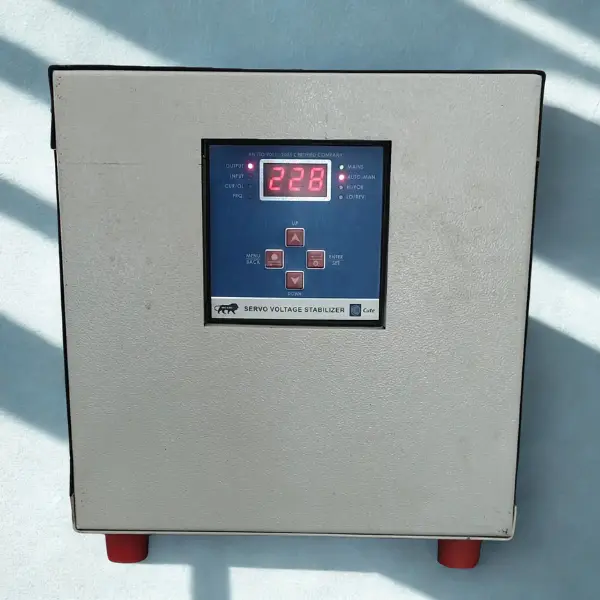
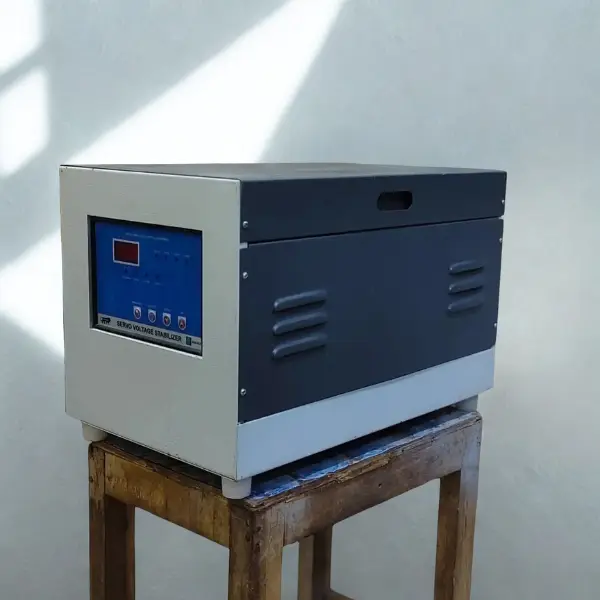
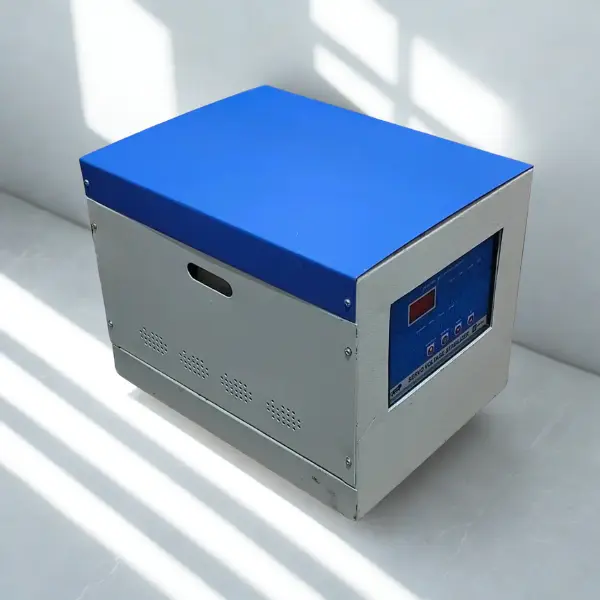
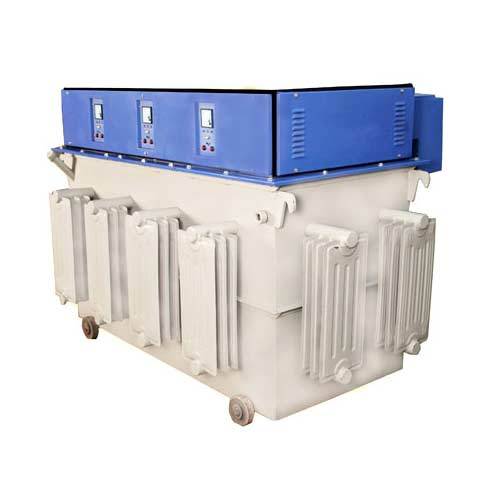
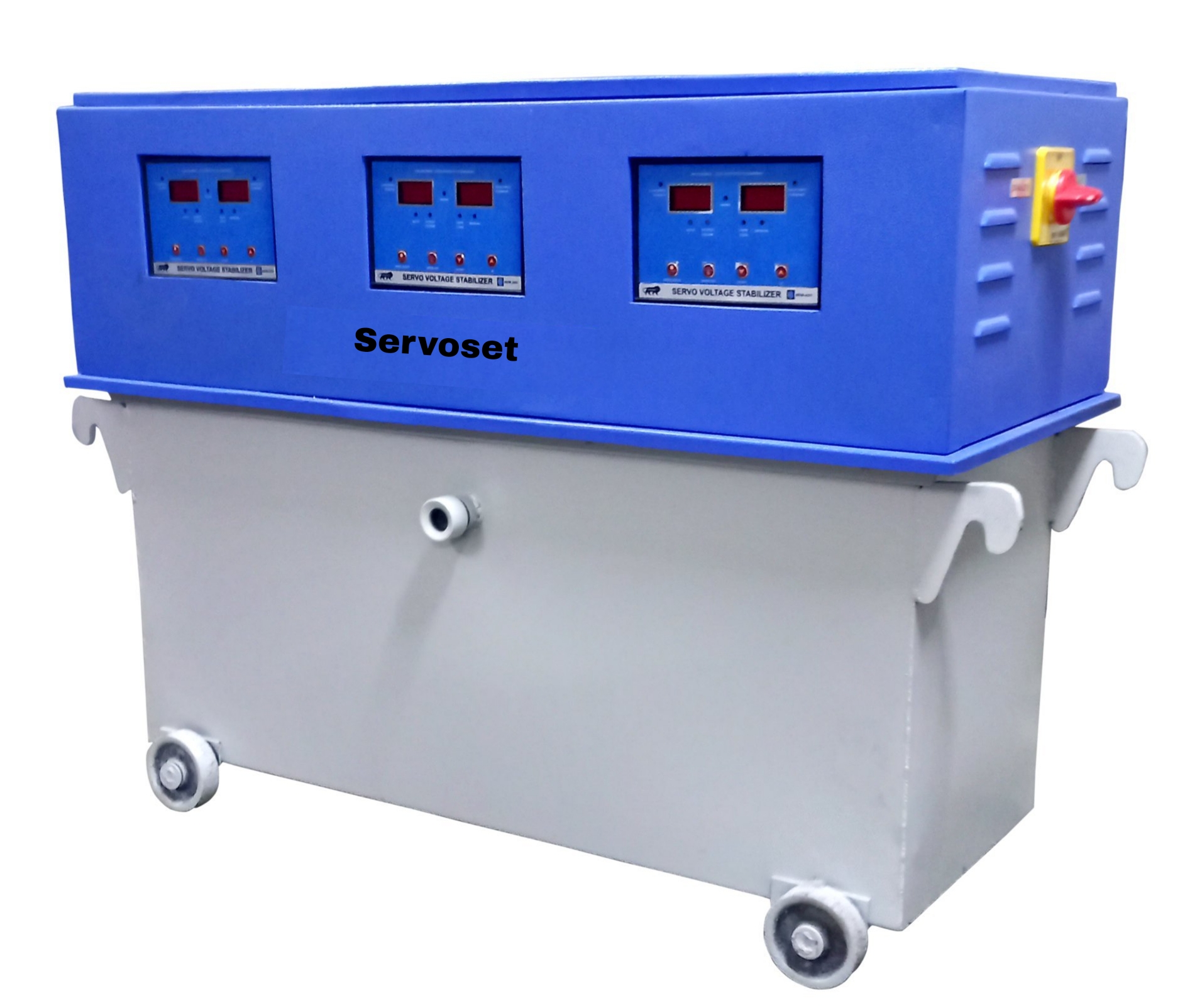
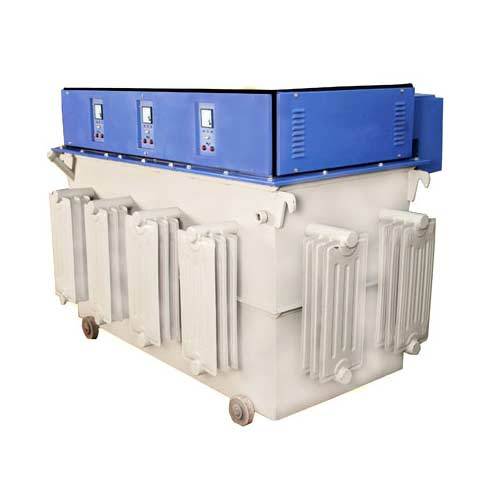
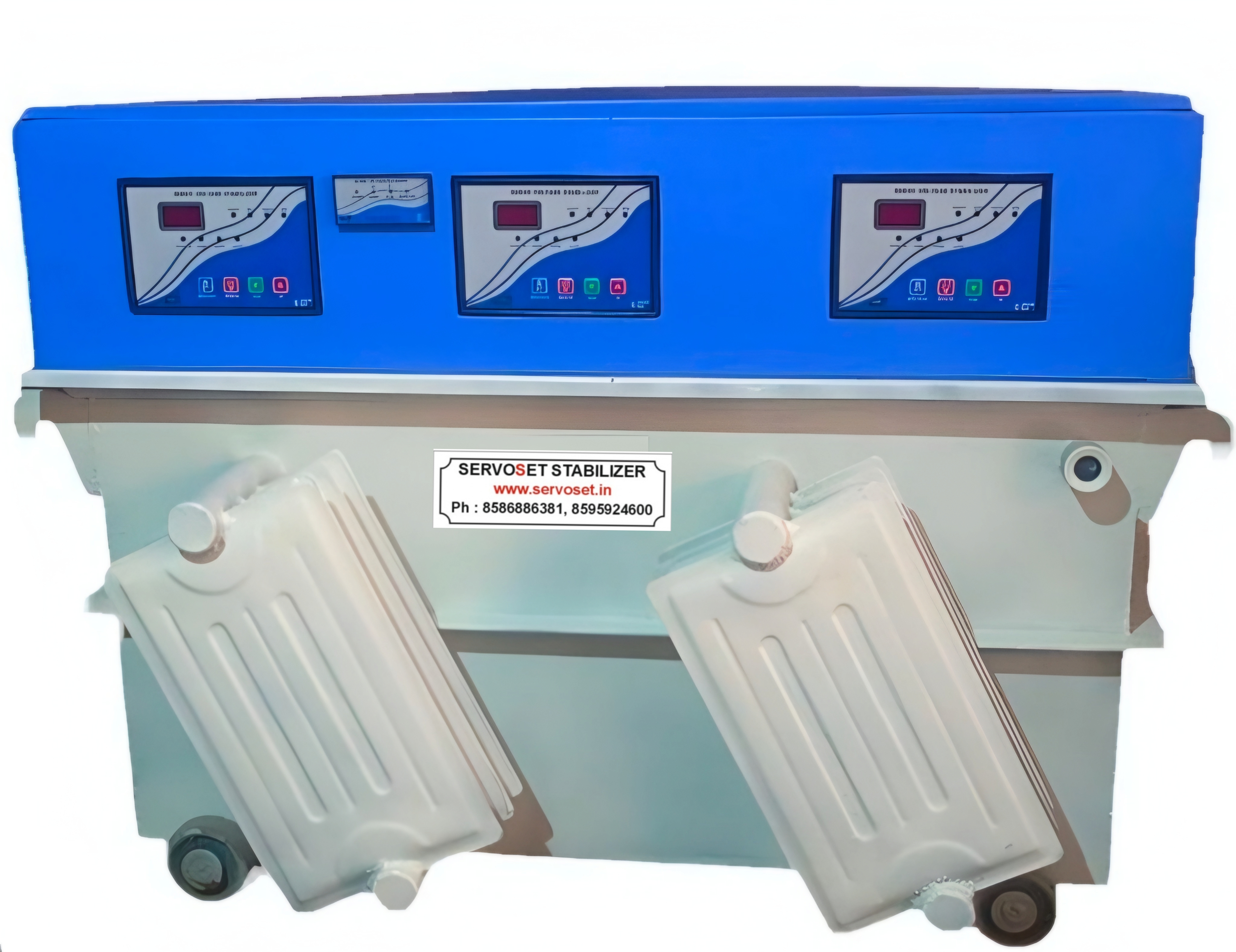
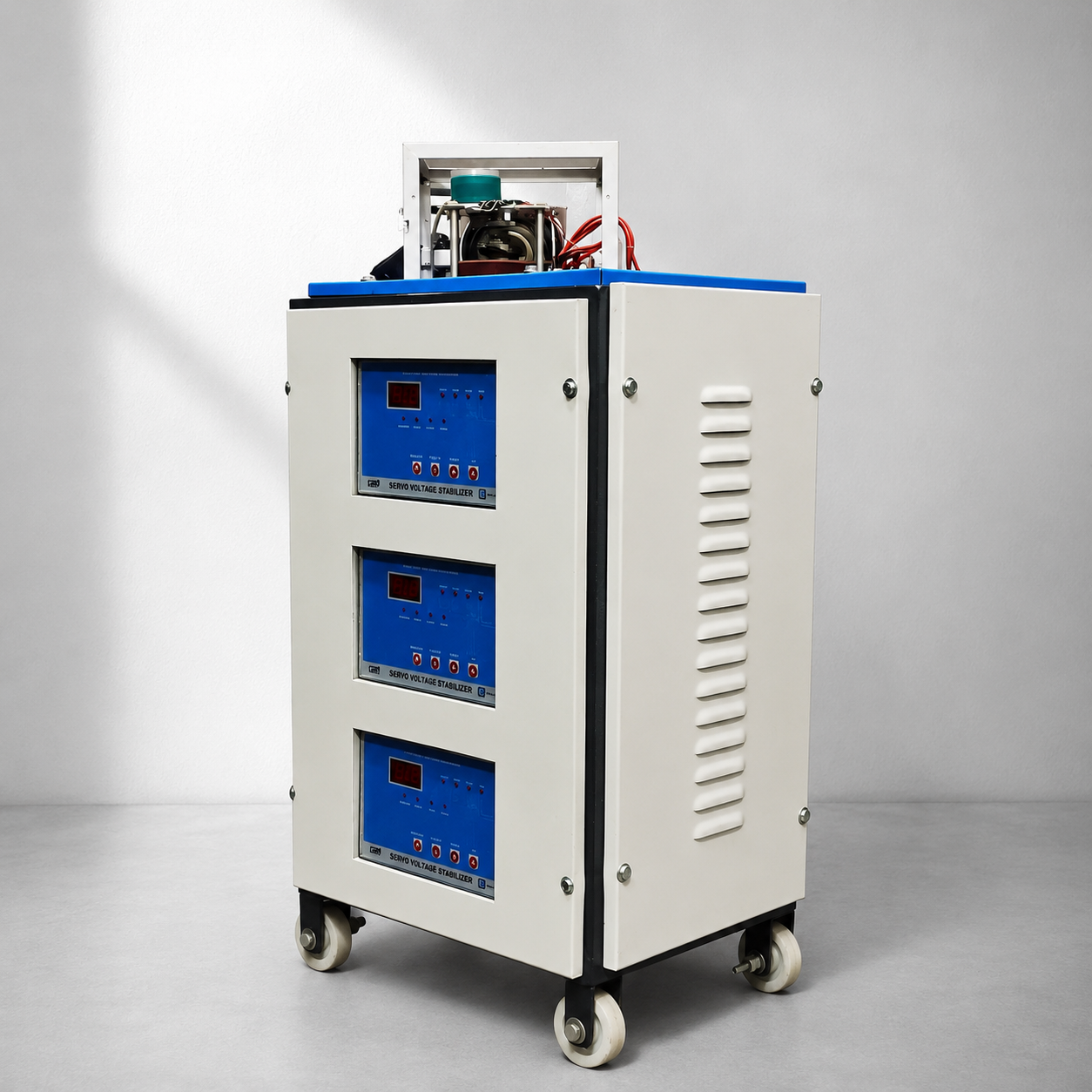
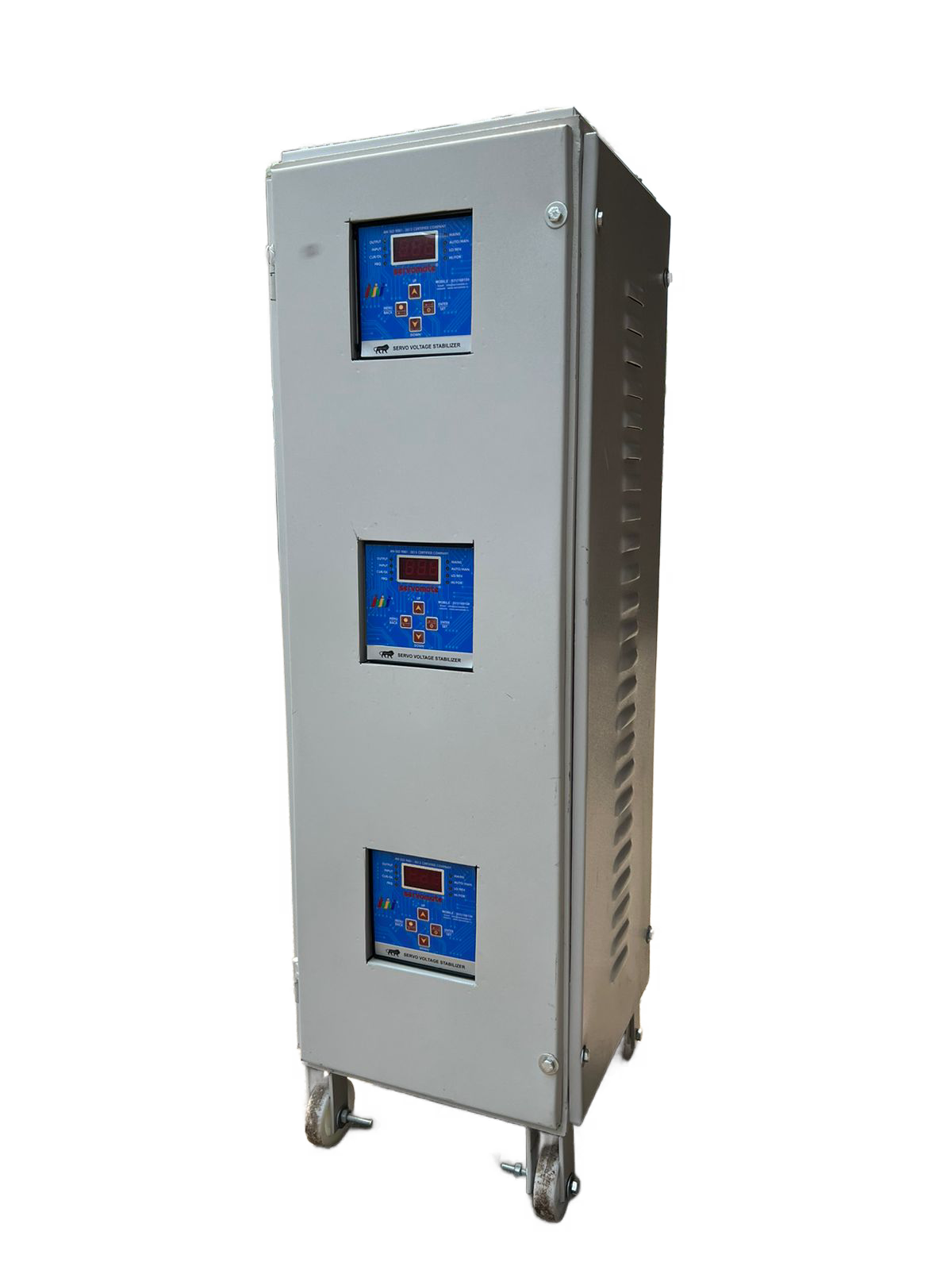
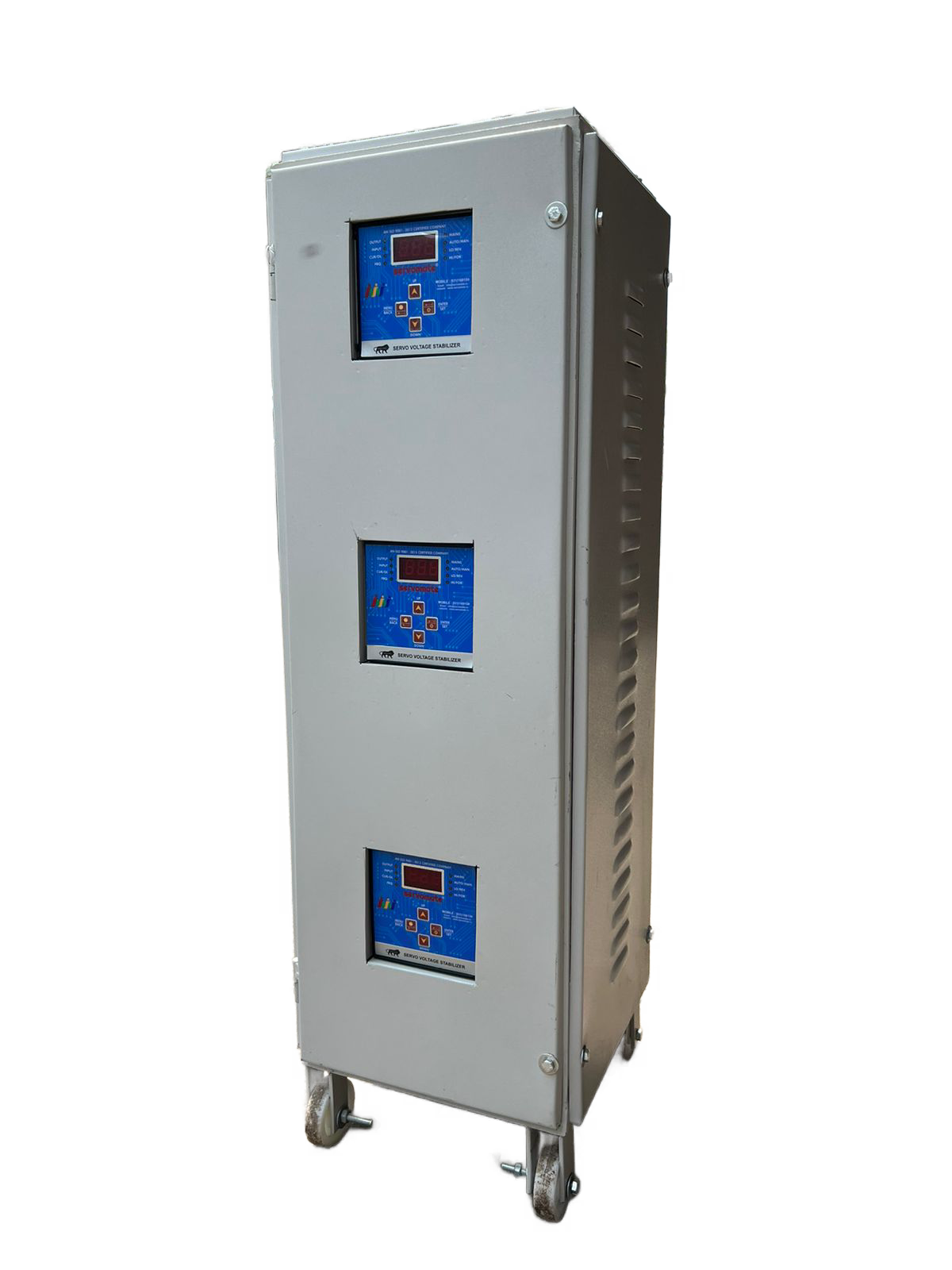
A servo voltage stabilizer is an automatic device that continuously monitors incoming AC voltage and corrects it in real time, using a servo motor-driven variable transformer (a "Variac" or buck-boost mechanism). Unlike static or relay-based stabilizers, a servo unit makes smooth, stepless corrections — meaning your connected equipment sees a steady, regulated voltage regardless of how much the incoming supply fluctuates.
For industrial use, this typically means:
- Wide input voltage tolerance (often 300V–470V for three-phase systems), so the stabilizer keeps working even during severe under-voltage or over-voltage conditions
- High correction accuracy, usually within ±1% of the set output voltage
- Three-phase, phase-sequence and single-phasing protection, which is critical for motors, compressors, and CNC or electroplating equipment
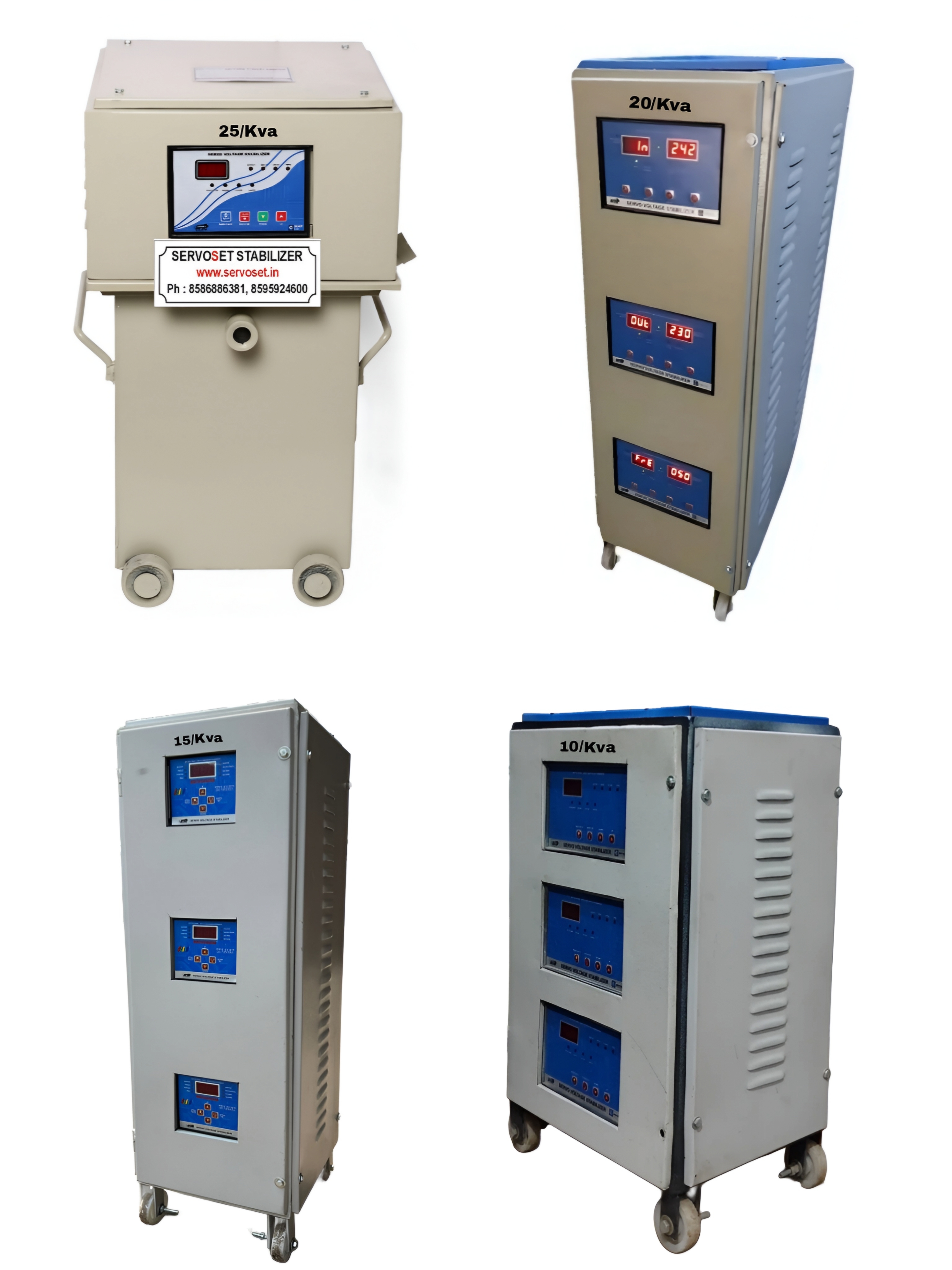
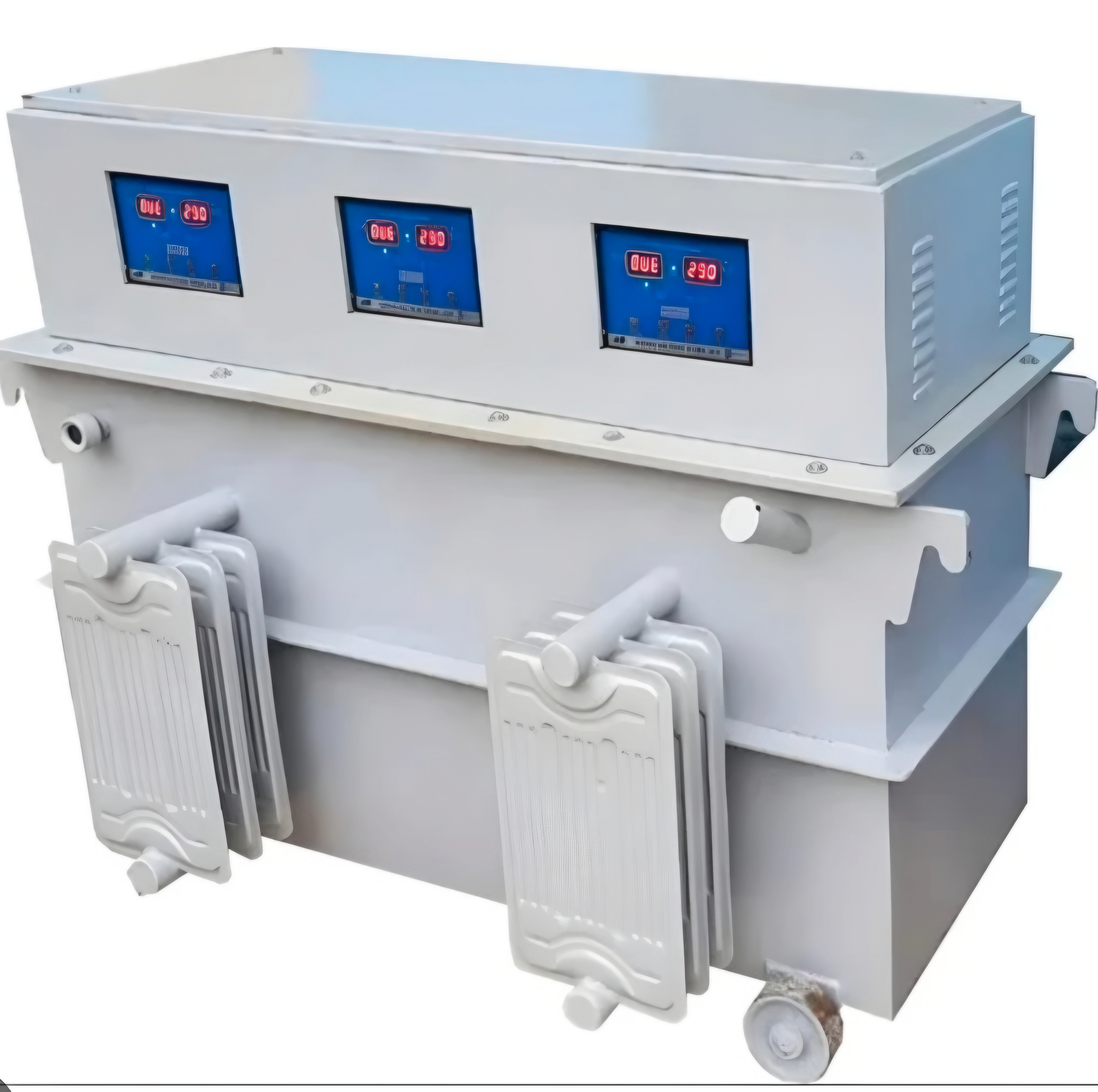
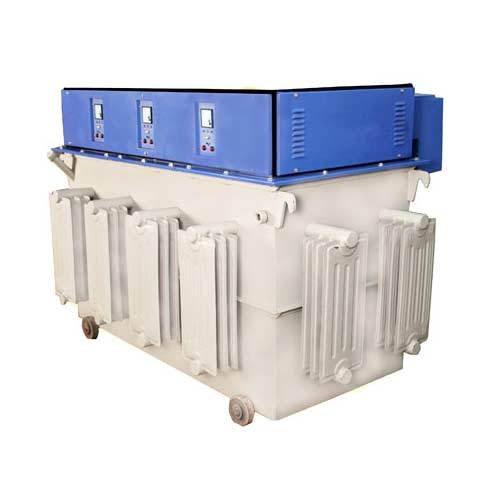
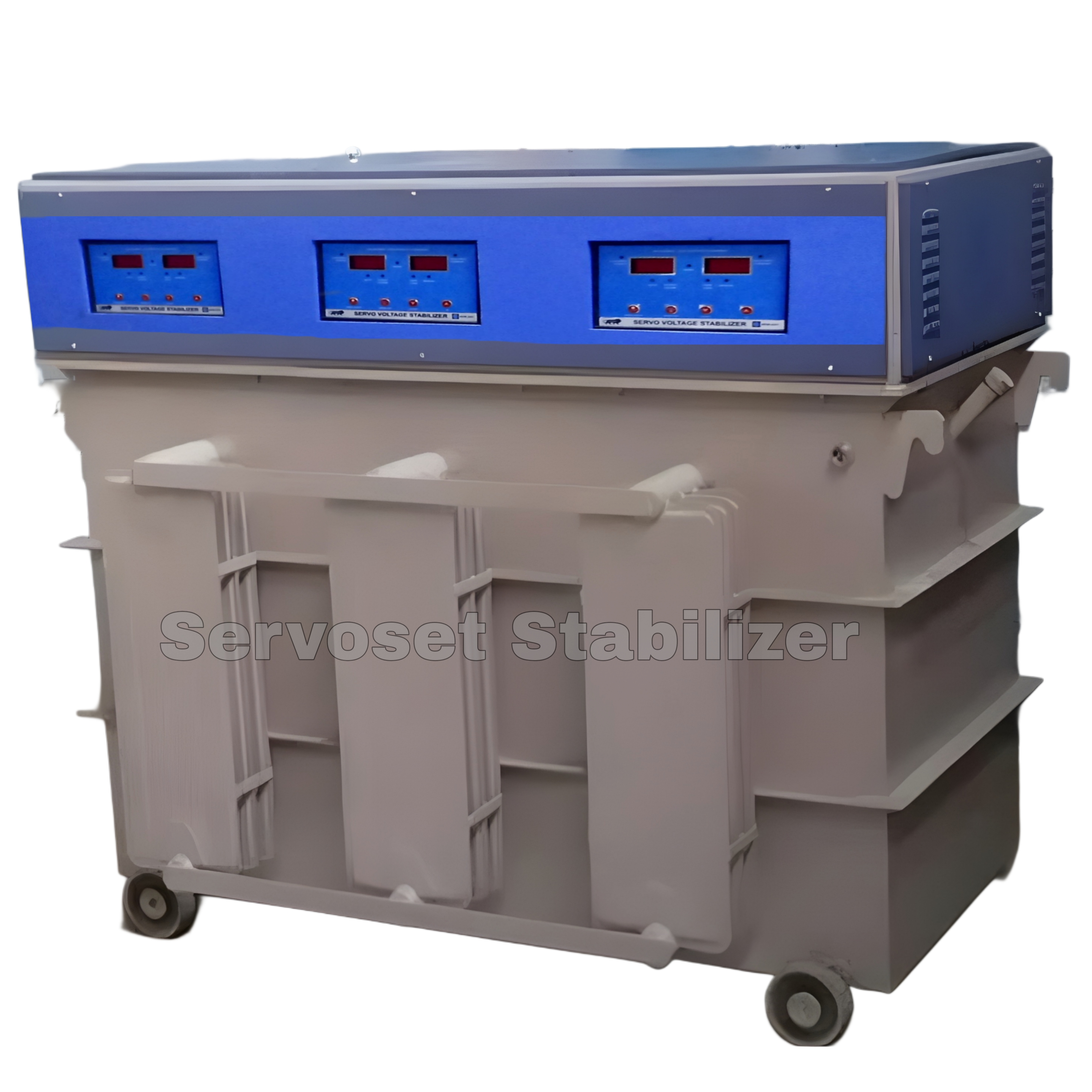
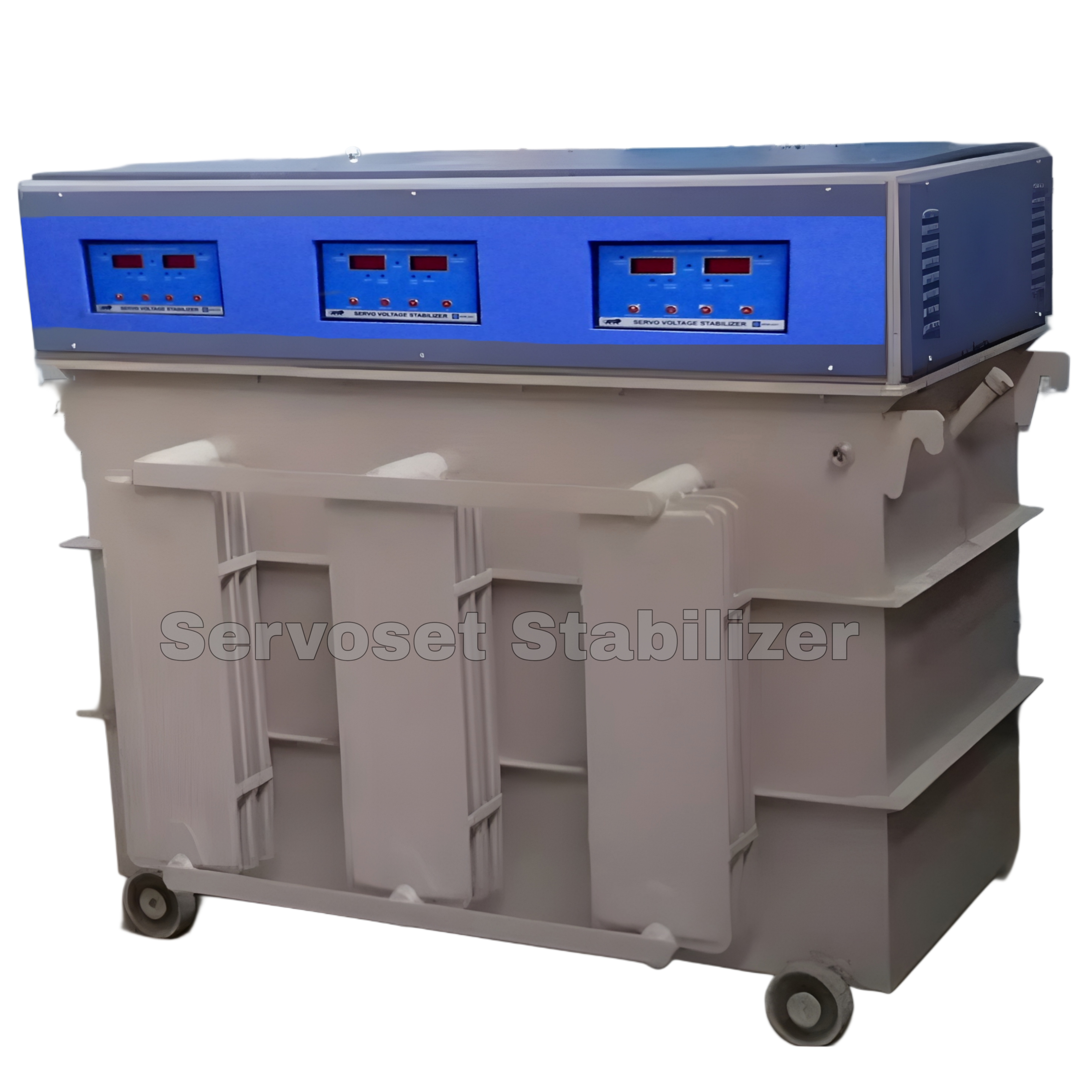
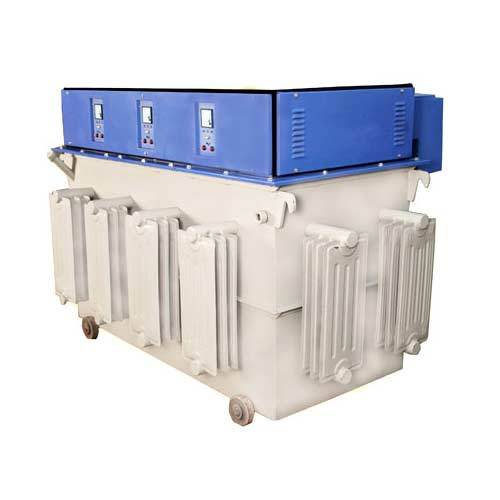
- Capacities ranging from a few kVA to several hundred kVA, scalable to the size of the plant
How the Correction Actually Happens
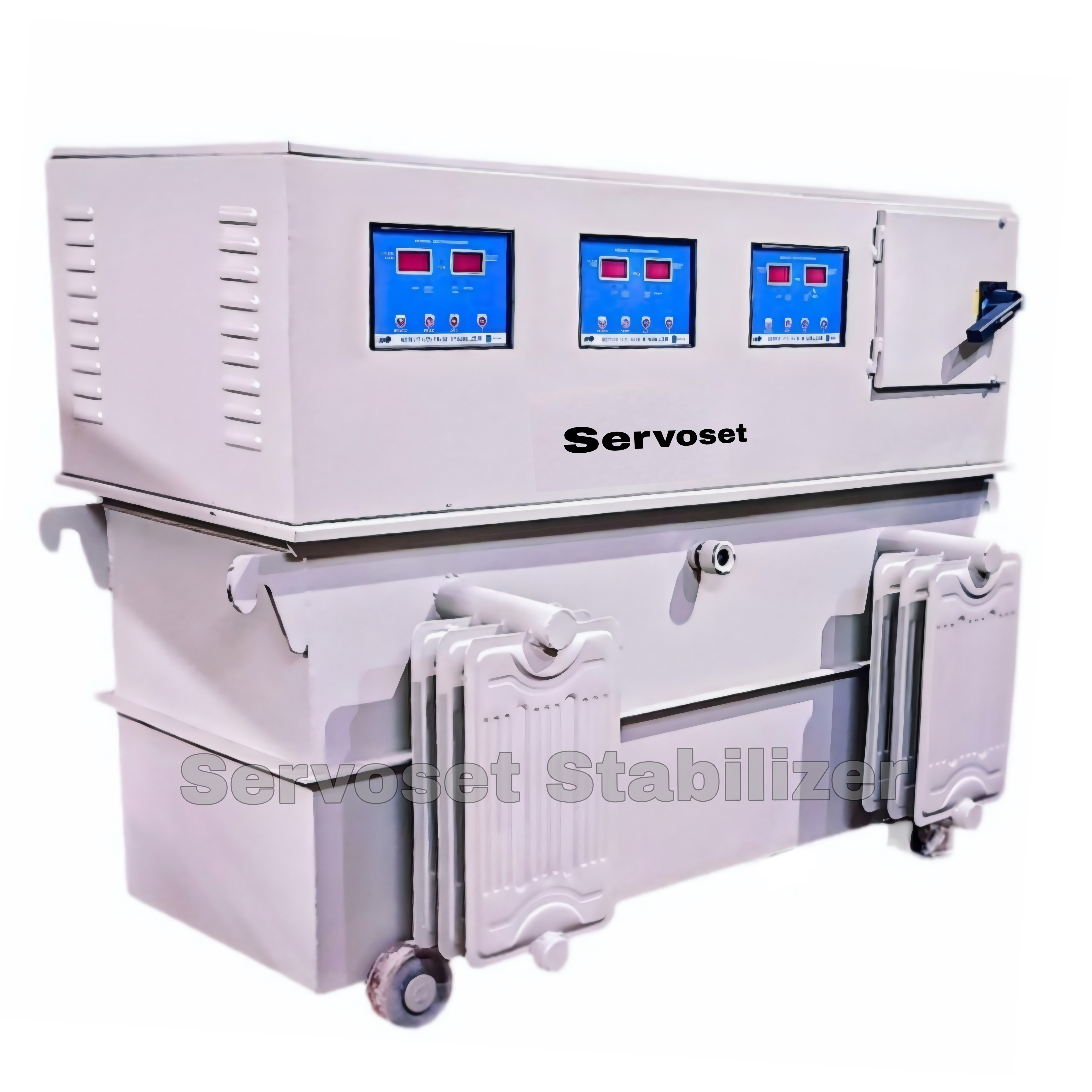
Inside a servo voltage stabilizer, three main components work together: a buck-boost transformer, a servo motor coupled to a variable autotransformer (the "Variac"), and a control card that constantly senses output voltage. When the control card detects that voltage has drifted outside the set range, it signals the servo motor to rotate the Variac's wiper arm in the correct direction — either boosting or bucking the voltage — until the output returns to the target value.
Because this correction happens mechanically and continuously rather than in fixed steps, the transition is smooth. There's no jarring jump in voltage the way there can be with relay-based or tap-changing stabilizers, which switch between discrete voltage taps. For industrial loads — especially motors, drives, and control electronics — this smoothness translates directly into less electrical stress and fewer nuisance trips.
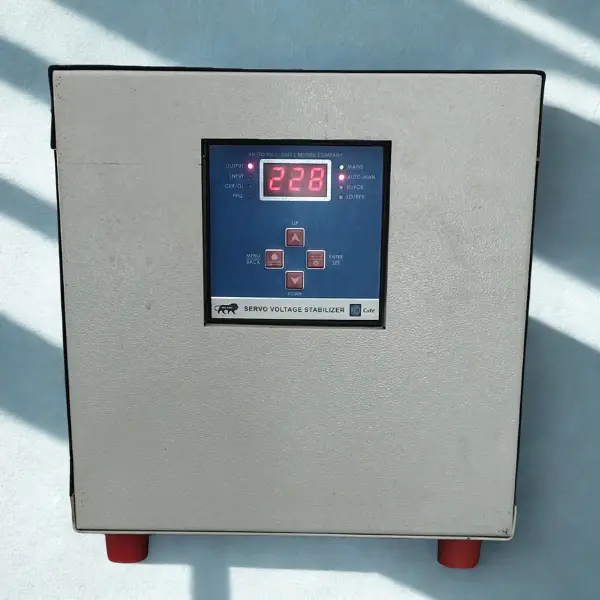
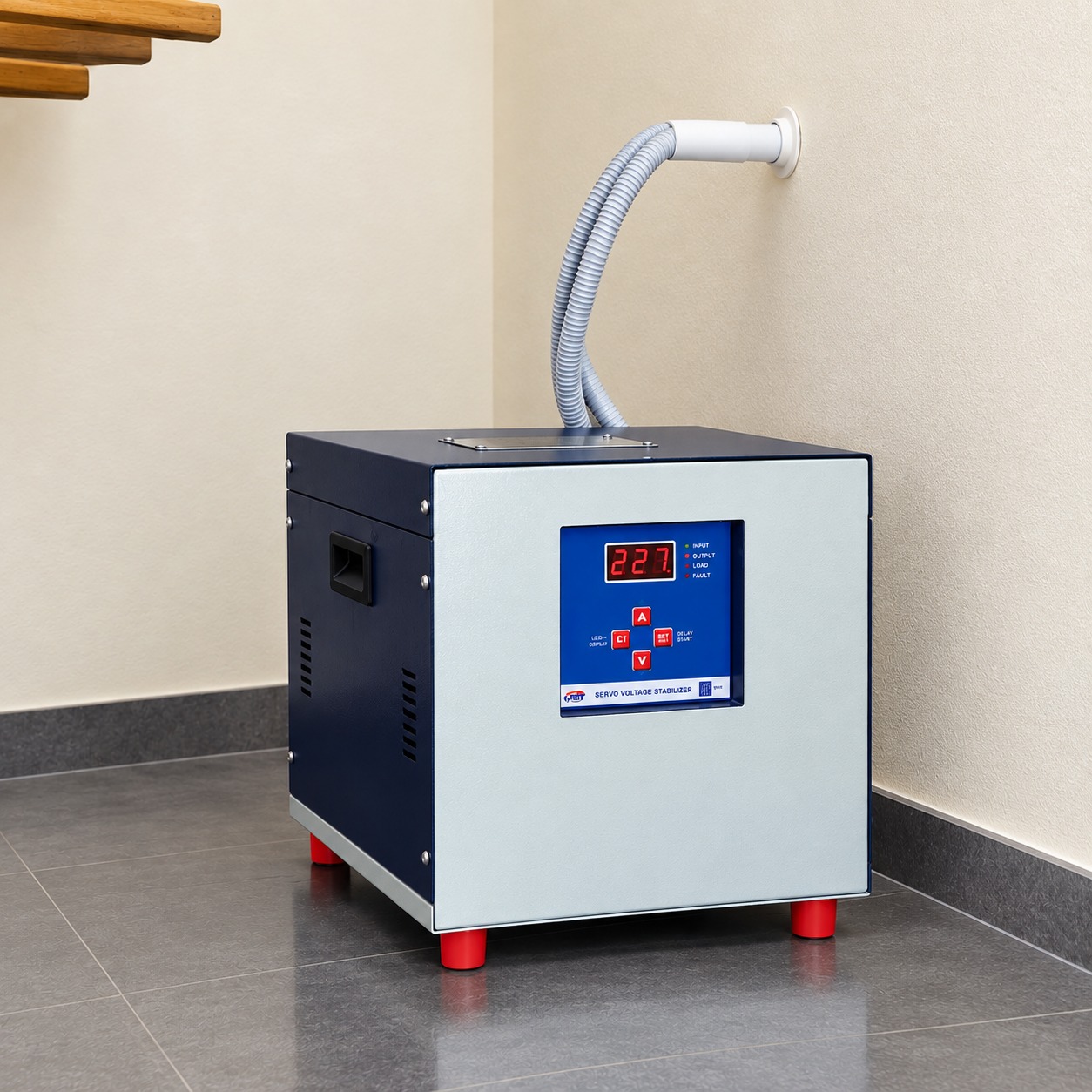
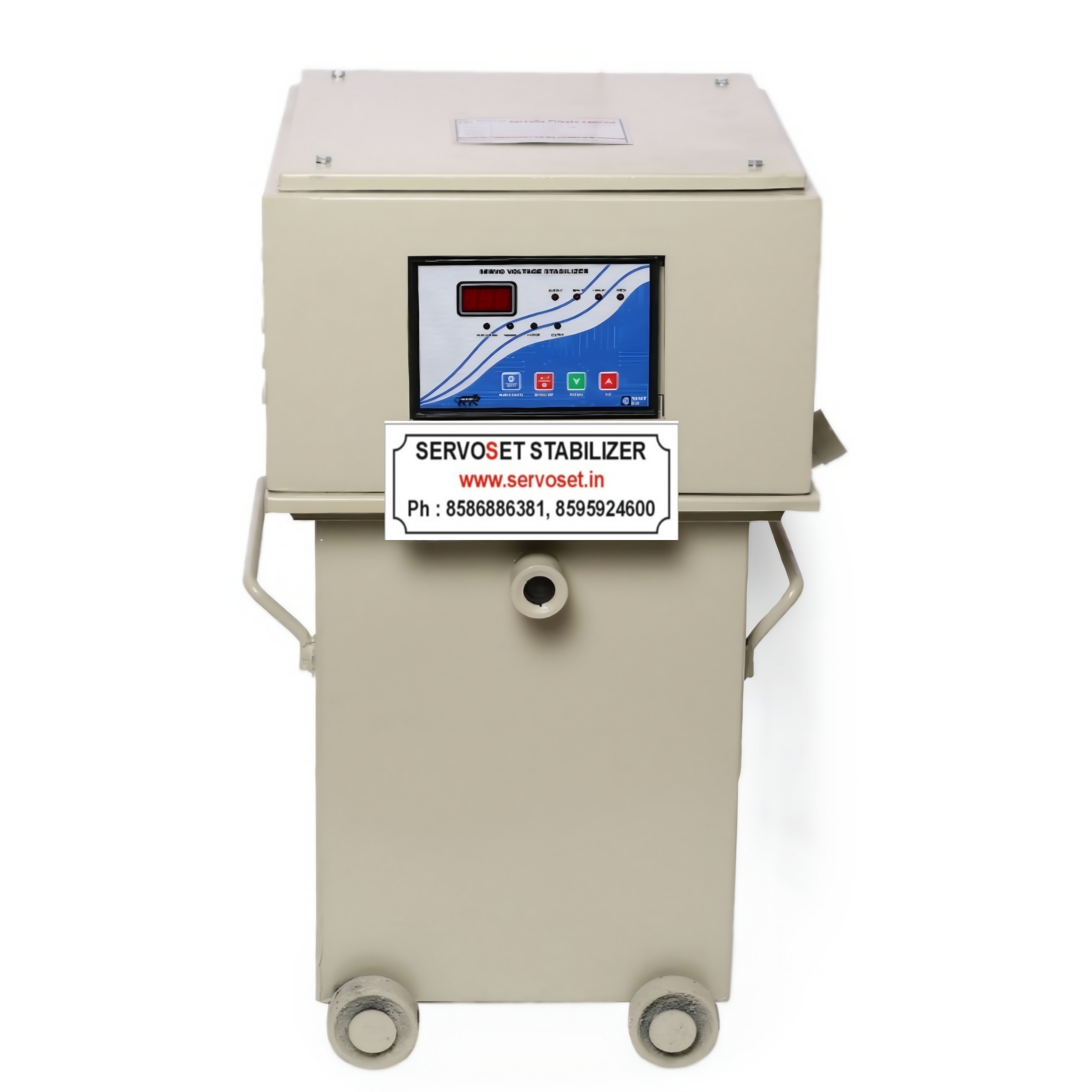
Modern servo stabilizers used in industrial settings also typically include a digital display for real-time input/output voltage and current, along with time-delay circuits that prevent the unit from restarting instantly after a power cut — protecting connected motors from being hit with an immediate, potentially damaging inrush current.
Why Moradabad Industries Face This Problem More Than Most
Moradabad is known globally as the "Brass City," with a dense concentration of electroplating units, metal casting workshops, and export-oriented manufacturing. These processes have two things in common that make them especially vulnerable to voltage instability:
- Sensitive electrical processes. Electroplating, in particular, depends on a stable DC/AC supply to rectifiers — voltage fluctuation directly affects plating quality, thickness consistency, and rejection rates.
- Mixed industrial and residential load on the same feeders. Many small and medium units in and around Moradabad share grid infrastructure with residential areas, so voltage dips and surges are common during peak demand hours.
Add to this the seasonal load spikes from agricultural pumping in surrounding districts, and it's easy to see why unprotected equipment in this region suffers more frequent breakdowns, shorter motor life, and inconsistent finished-product quality.
Industry-Specific Applications Around Moradabad
Different industries in and around Moradabad have different sensitivities to voltage instability. Here's how a servo stabilizer specifically helps a few of the region's dominant sectors:
Electroplating and metal finishing units. Electroplating rectifiers need a steady AC input to deliver a consistent DC output to the plating bath. Even small voltage swings on the AC side show up as uneven plating thickness, dull finishes, and higher rejection rates — a direct hit to export quality standards. A servo stabilizer feeding the rectifier keeps deposition rates consistent across a full production run.
Brass casting and metal handicraft workshops. Induction furnaces and melting units draw heavy, often fluctuating current loads. Voltage instability here can affect melt consistency and, over time, shorten the life of furnace control electronics and induction coils. Stabilized input protects both the furnace and the downstream casting quality.
Textile and powerloom units. Motors driving looms and spinning frames are highly sensitive to under-voltage, which causes them to overheat while trying to maintain speed under load. A servo stabilizer prevents this stress and reduces motor maintenance frequency.
Cold storage and food processing. Compressors in cold storage facilities are particularly vulnerable to voltage sag, which can trip protection relays and, in worse cases, damage compressor windings — risking spoilage of stored produce. Stable voltage keeps compressors cycling normally even during grid dips.
Small-scale engineering and CNC/machine shops. CNC controllers and servo drives are sensitive electronic systems that can reset, throw errors, or suffer component damage under voltage spikes. A properly rated stabilizer protects the investment in precision machinery.
Across all of these, the common thread is the same: unstable input voltage doesn't just risk a breakdown — it quietly degrades output quality and equipment life long before an outright failure occurs.
The Real Cost of Skipping Voltage Stabilization
Factory owners often underestimate what unstable voltage actually costs them over a year:
- Motor burnouts from prolonged under-voltage, which forces motors to draw higher current to deliver the same output
- Rejected or inconsistent output in plating, coating, and finishing processes sensitive to voltage swings
- Reduced lifespan of CNC machines, compressors, and control panels
- Unplanned downtime during voltage-related trips, which is far costlier than the price of a stabilizer
- Higher electricity bills, since equipment running on unstable voltage is less energy-efficient
A single motor rewind or a damaged control board can cost more than a mid-sized servo stabilizer — and that's before counting the production loss.
Choosing the Right Servo Stabilizer for Your Unit
Not every industrial unit needs the same stabilizer. A few factors that should guide your decision:
- Total connected load (in kVA) — undersizing a stabilizer is one of the most common and costly mistakes
- Input voltage range at your site — units closer to the end of a distribution feeder often see wider swings and need a stabilizer rated for a broader input range
- Single-phase vs. three-phase requirement, depending on your machinery
- Response time and correction speed, especially for equipment sensitive to sudden voltage drops
- Protection features — overload, short-circuit, single-phasing, and phase-reversal protection are non-negotiable for industrial settings
Working with a manufacturer who can assess your actual load profile — rather than selling a generic off-the-shelf unit — makes a measurable difference in long-term reliability.
Single-Phase vs. Three-Phase: Which Do You Need?
Most household and small commercial stabilizers are single-phase, but industrial units almost always run three-phase machinery — motors, compressors, furnaces, and CNC equipment. For three-phase loads, it's important to choose between:
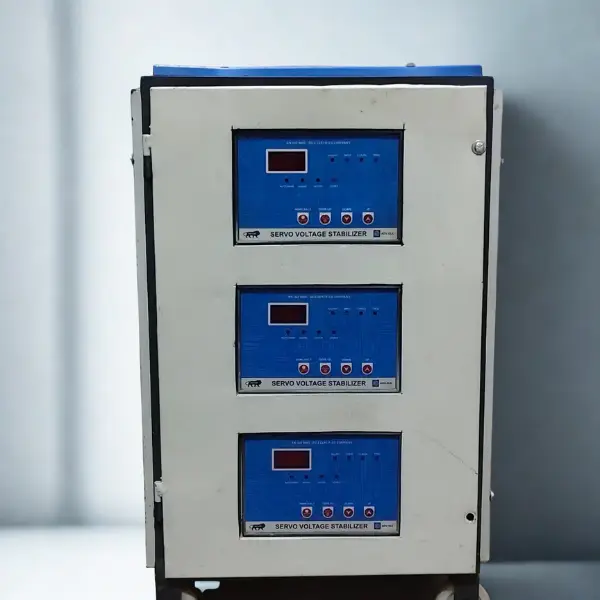
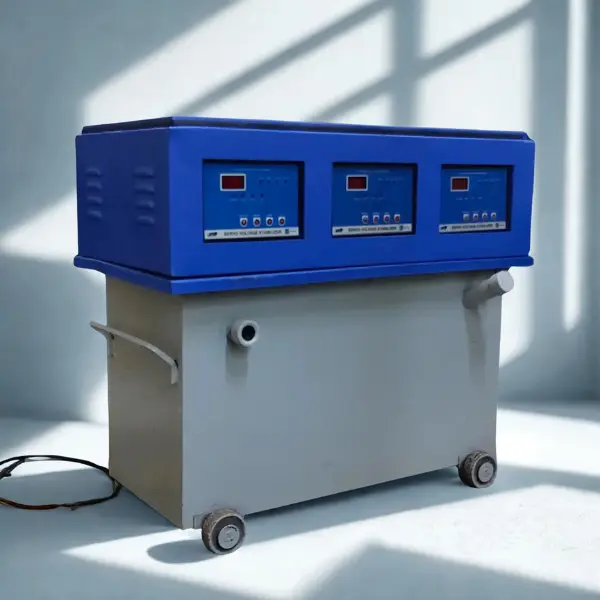
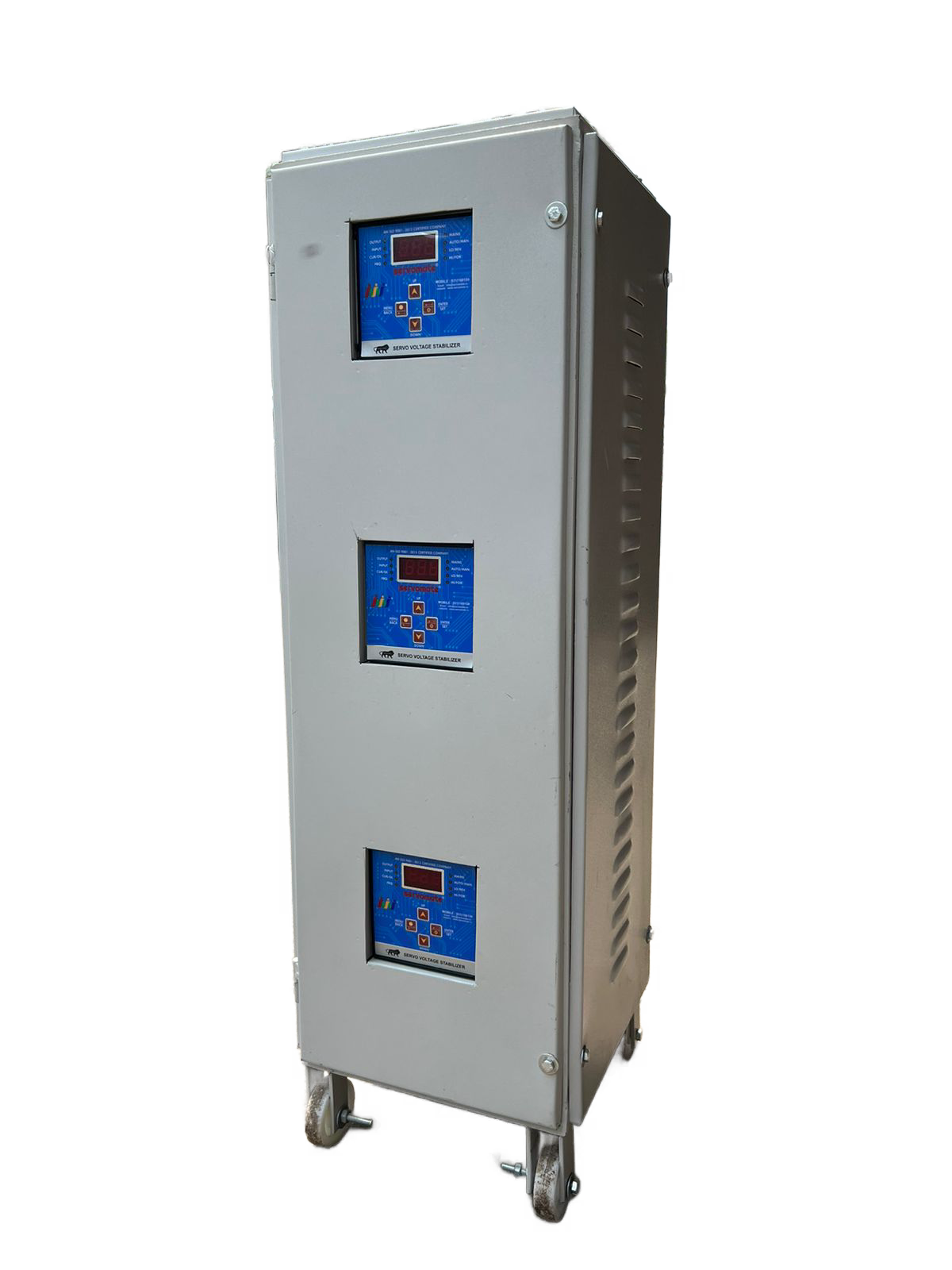
- A single three-phase stabilizer unit, which corrects all three phases through one shared control system, generally more compact and cost-effective for balanced loads
- Three linked single-phase stabilizers (one per phase), which offer independent correction per phase and better handle badly unbalanced loads, though at a higher footprint and cost
For most Moradabad-based units with reasonably balanced three-phase loads, a single integrated three-phase servo stabilizer is the more practical and economical choice. Units with highly uneven phase loading — common in some casting and furnace operations — may benefit from independent per-phase correction instead.
Installation and Maintenance Best Practices
Getting the benefits of a servo stabilizer also depends on how it's installed and maintained:
- Ventilation matters. Servo stabilizers dissipate heat during correction, especially under sustained voltage deviation. Install in a well-ventilated area, away from direct heat sources or excessive dust — a real consideration in casting and furnace-heavy workshops.
- Correct earthing. Proper earthing protects both the stabilizer and connected machinery from fault currents and is essential for the unit's protection circuits to function correctly.
- Load within rated capacity. Running a stabilizer consistently near or above its rated capacity shortens component life and reduces correction accuracy. Always size with some headroom above your actual connected load, particularly to accommodate motor starting current.
- Periodic servicing. Carbon brush wear, servo motor lubrication, and connection tightness should be checked periodically — typically every few months in continuous industrial use — to avoid slow correction response or unexpected downtime.
- Choose a manufacturer with local/regional support. For industrial units, downtime while waiting for a technician to travel from another city adds up. A manufacturer with responsive after-sales service in the region is often as important as the stabilizer's specifications.
Servoset Stabilizer: Built for Industrial Power Protection
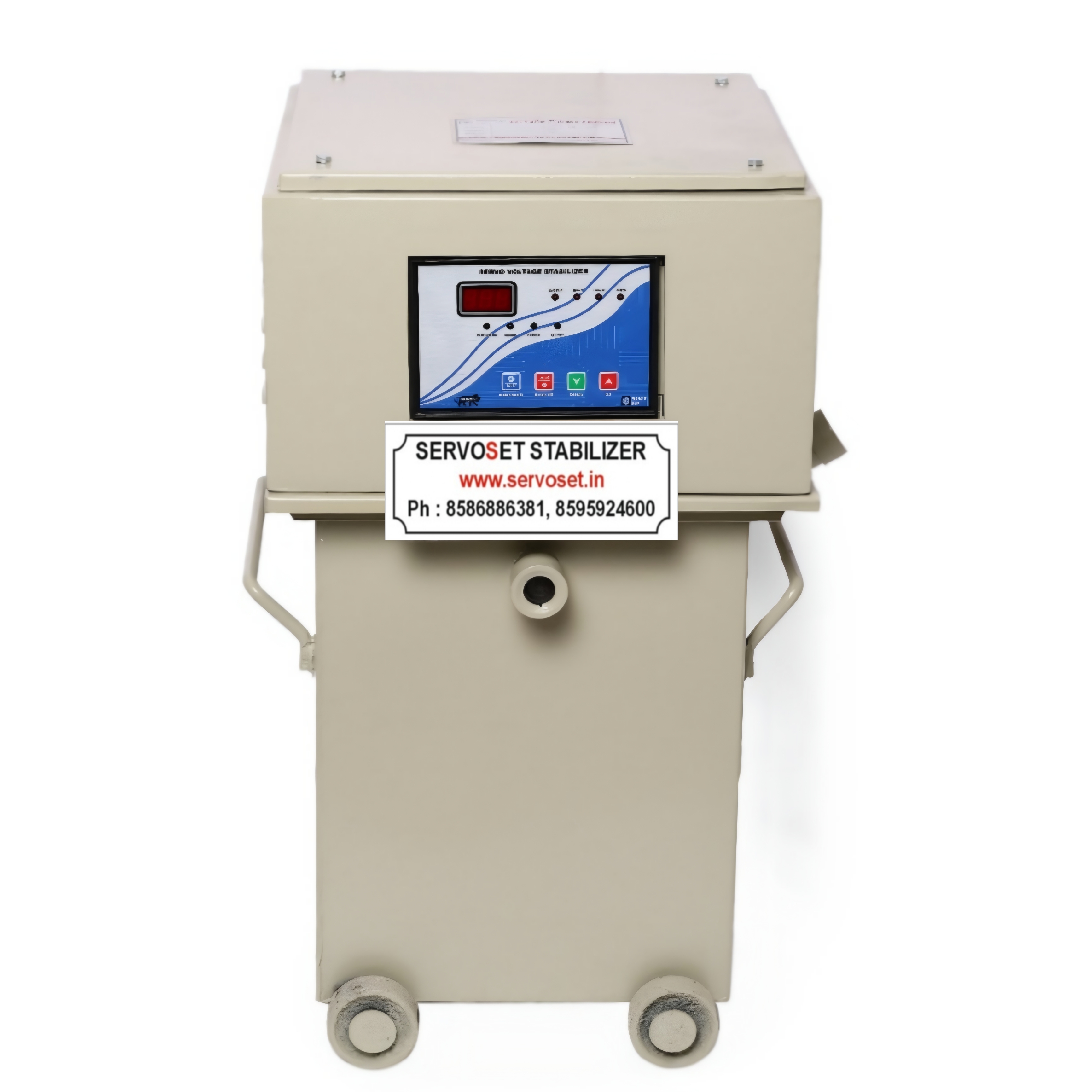
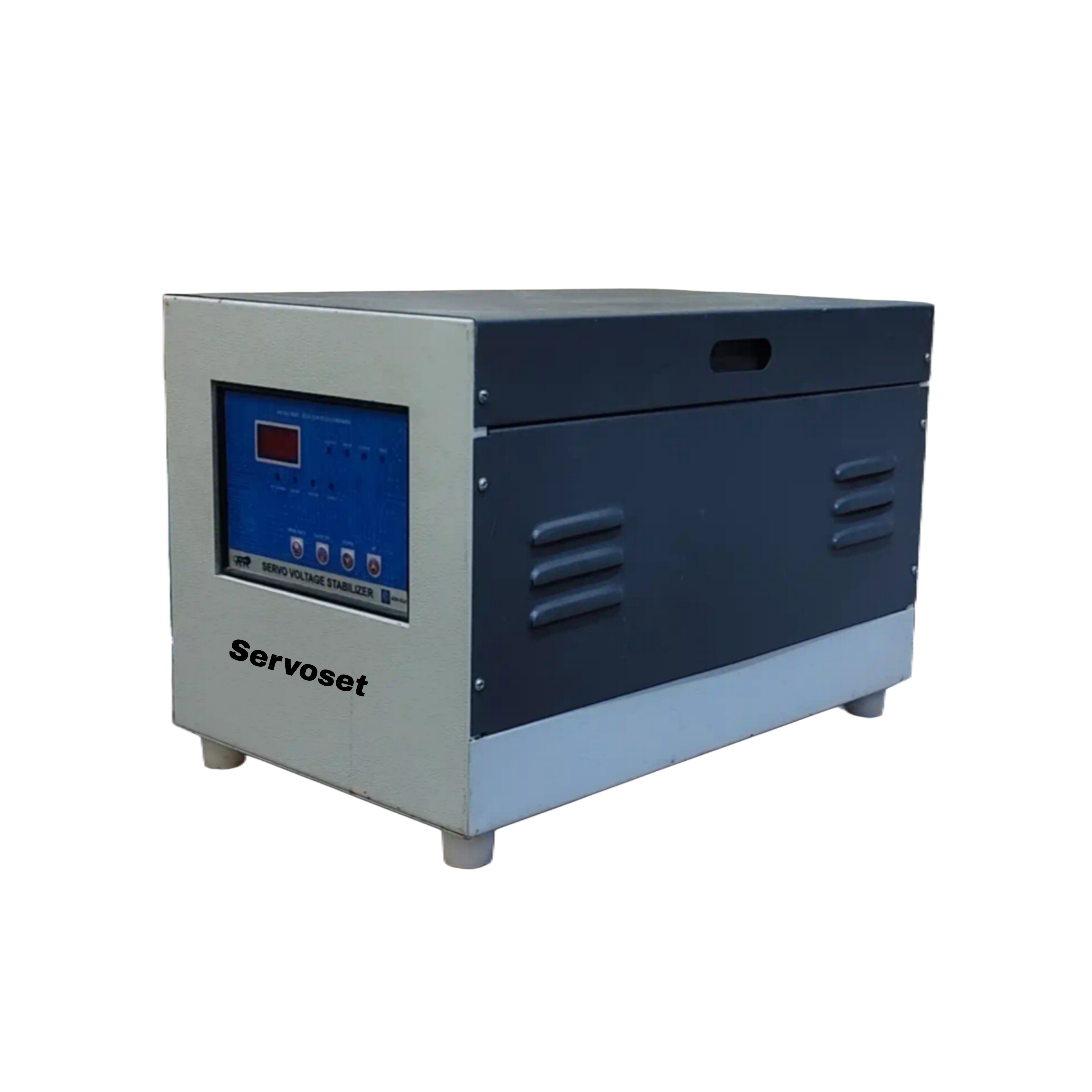
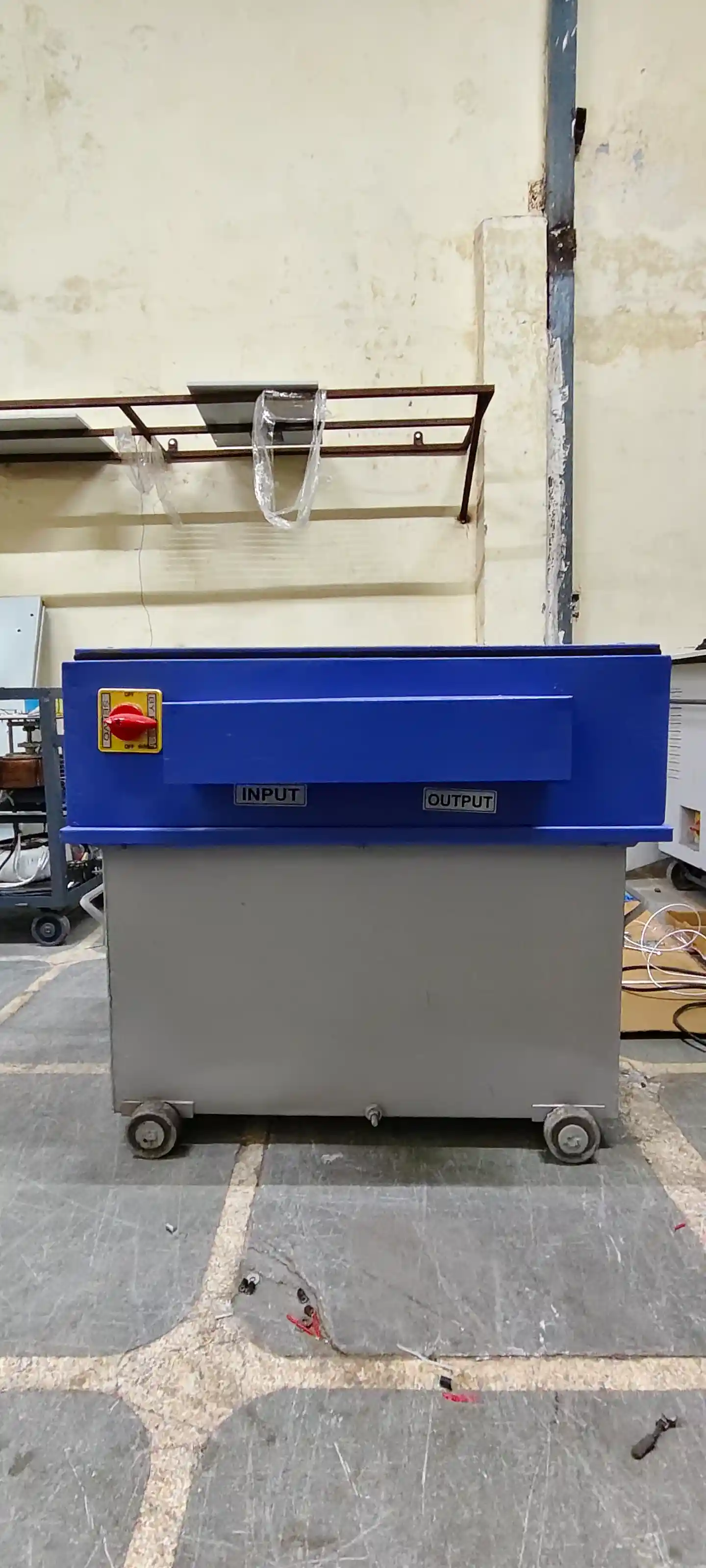
At Servoset, we design and manufacture servo voltage stabilizers, transformers, and UPS systems specifically for industrial and commercial power protection needs — including units operating in demanding environments like Moradabad's electroplating and manufacturing clusters.
Our approach focuses on:
- Accurate, load-matched sizing rather than one-size-fits-all products
- Robust protection circuitry against overload, single-phasing, and incorrect phase rotation
- Reliable after-sales support, so a fault doesn't turn into extended downtime
- Customized solutions for units with unique load patterns or space constraints
Frequently Asked Questions
1. What is the difference between a servo voltage stabilizer and a regular voltage stabilizer?
A regular stabilizer corrects voltage in fixed steps, while a servo stabilizer makes smooth, continuous corrections. This gives it much higher accuracy, typically within ±1%.
2. What size servo stabilizer does my factory in Moradabad need?
Sizing depends on your total connected load in kVA and the voltage range actually seen at your site. It's best to get an on-site load assessment rather than estimating.
3. Can a servo stabilizer handle severe voltage drops common in industrial areas of Moradabad?
Yes. Industrial-grade units are built with a wide input range (often 300V–470V) to handle deep dips and surges. This makes them well suited to Moradabad's mixed industrial-residential feeders.
4. Does a servo stabilizer protect against single-phasing and phase reversal?
A properly specified industrial unit includes single-phasing prevention and automatic phase-sequence correction as standard. These protections prevent common causes of motor damage.
5. How much maintenance does a servo voltage stabilizer need?
Servo stabilizers are largely maintenance-free in normal operation. Periodic checks of carbon brushes and connections, plus routine servicing, keep them reliable long-term.
6. Is a servo stabilizer a one-time cost, or are there recurring expenses?
It's mainly a one-time investment with a long service life, often 10+ years. Skipping it tends to cost more over time through motor burnouts and downtime.
Conclusion
For industrial units in Moradabad — particularly in electroplating, brass manufacturing, and general small and medium-scale production — voltage instability isn't an occasional inconvenience; it's a recurring risk to equipment, output quality, and uptime. A correctly sized industrial servo voltage stabilizer addresses this at the source, protecting motors and sensitive processes while smoothing out the swings common to the region's grid.
The key is choosing a unit matched to your actual load and voltage conditions, backed by a manufacturer that stands behind it with real support. If you're evaluating options for your unit, the Servoset team can help assess your requirement and recommend the right specification — reach out through servoset.in to get started.