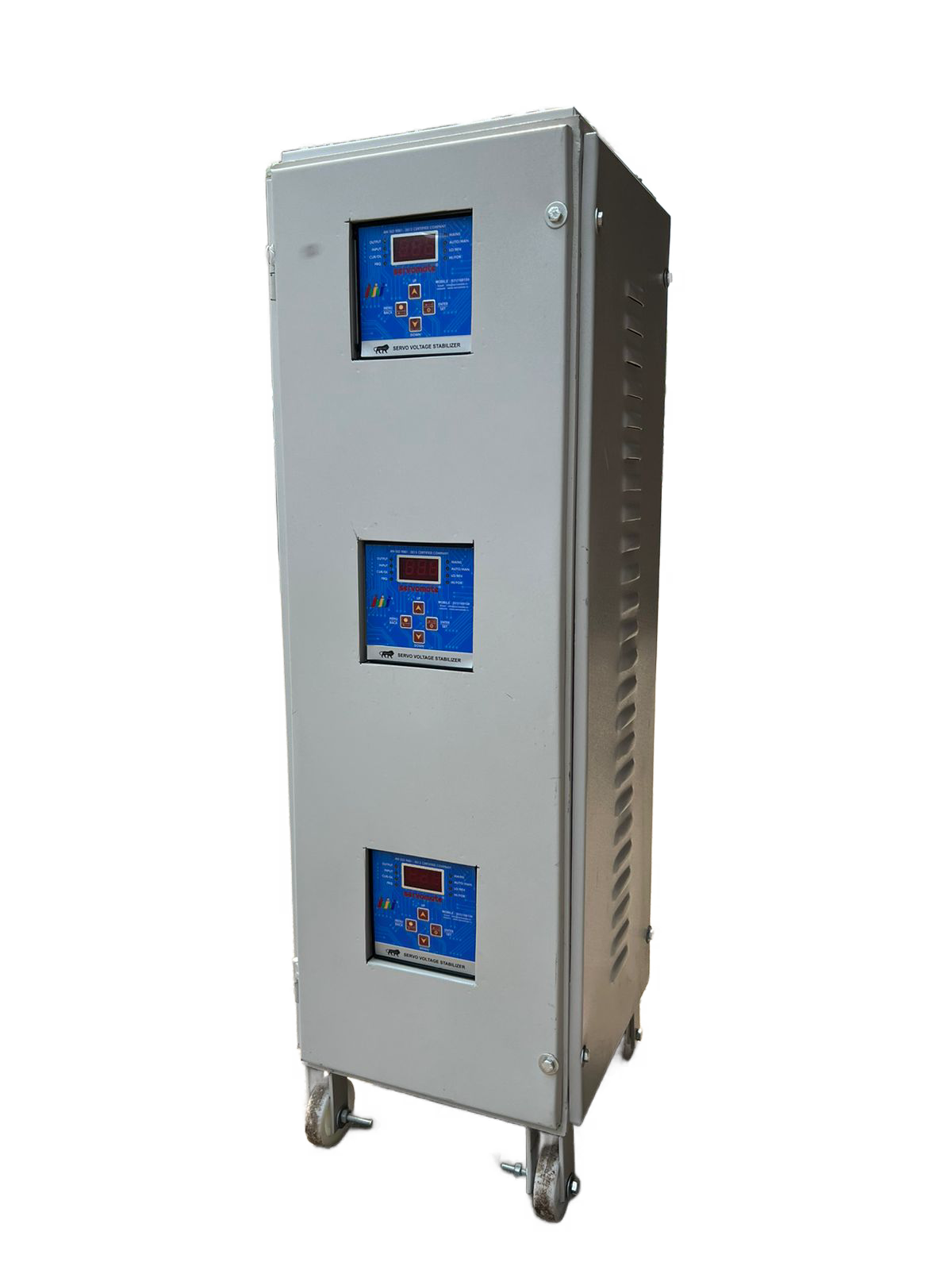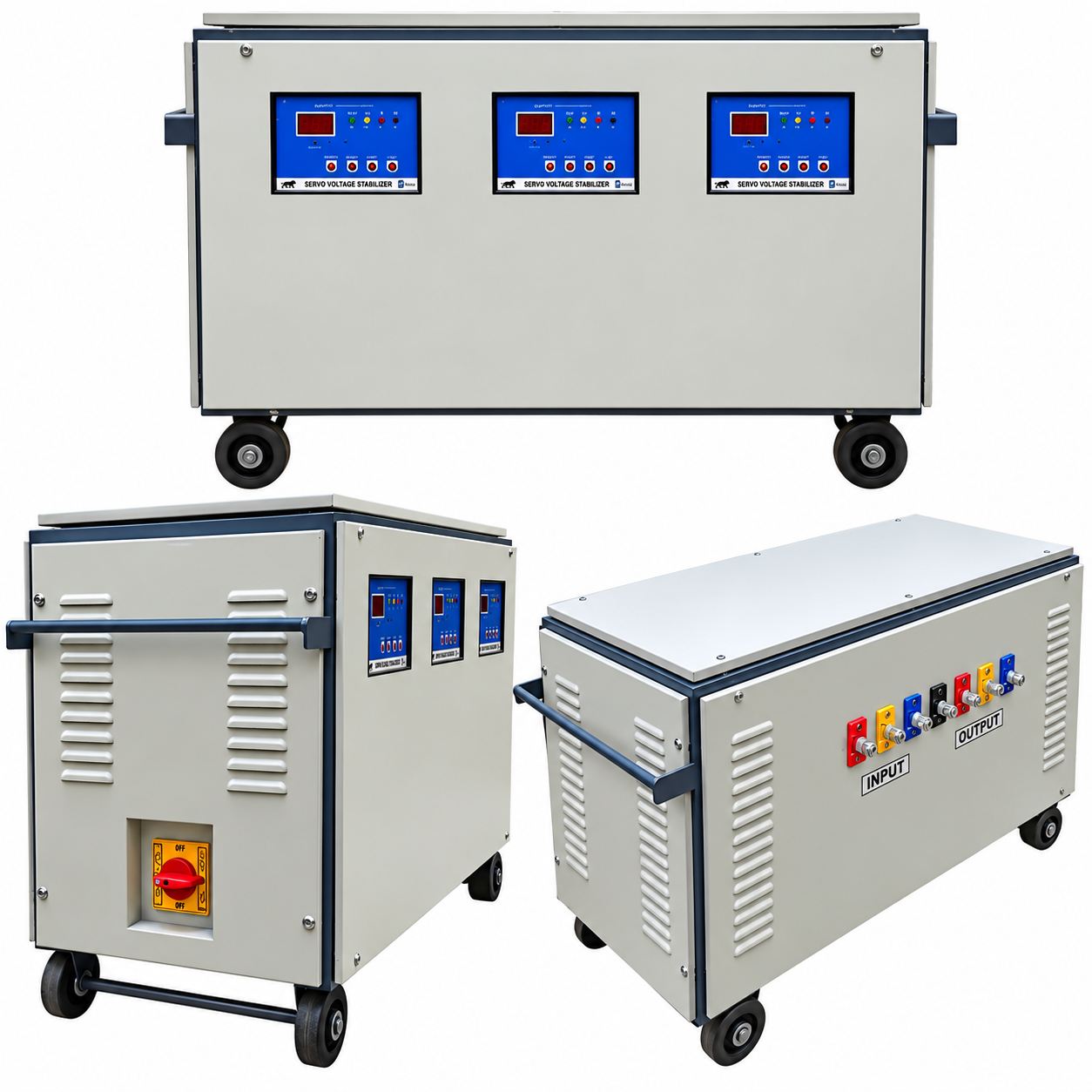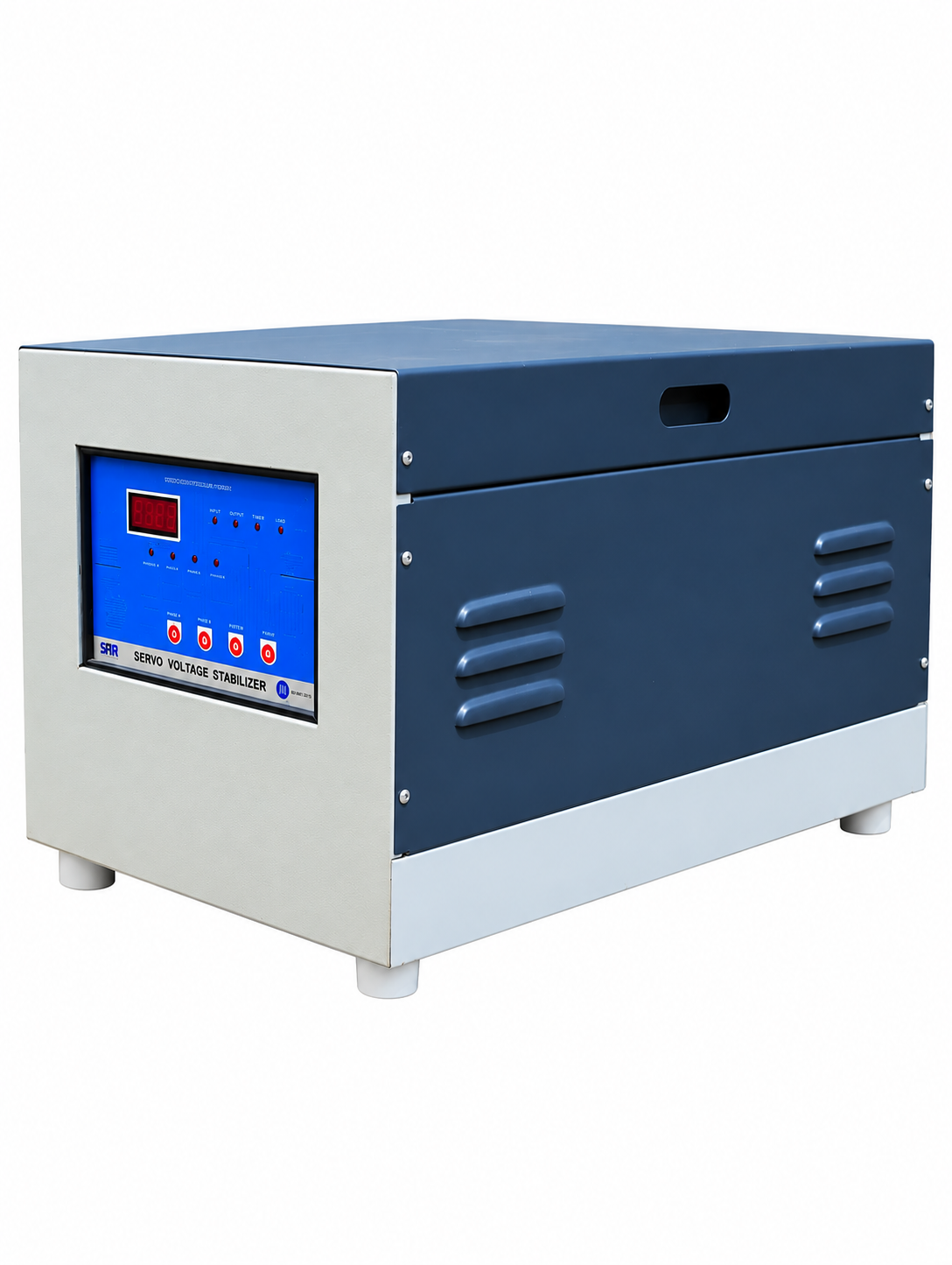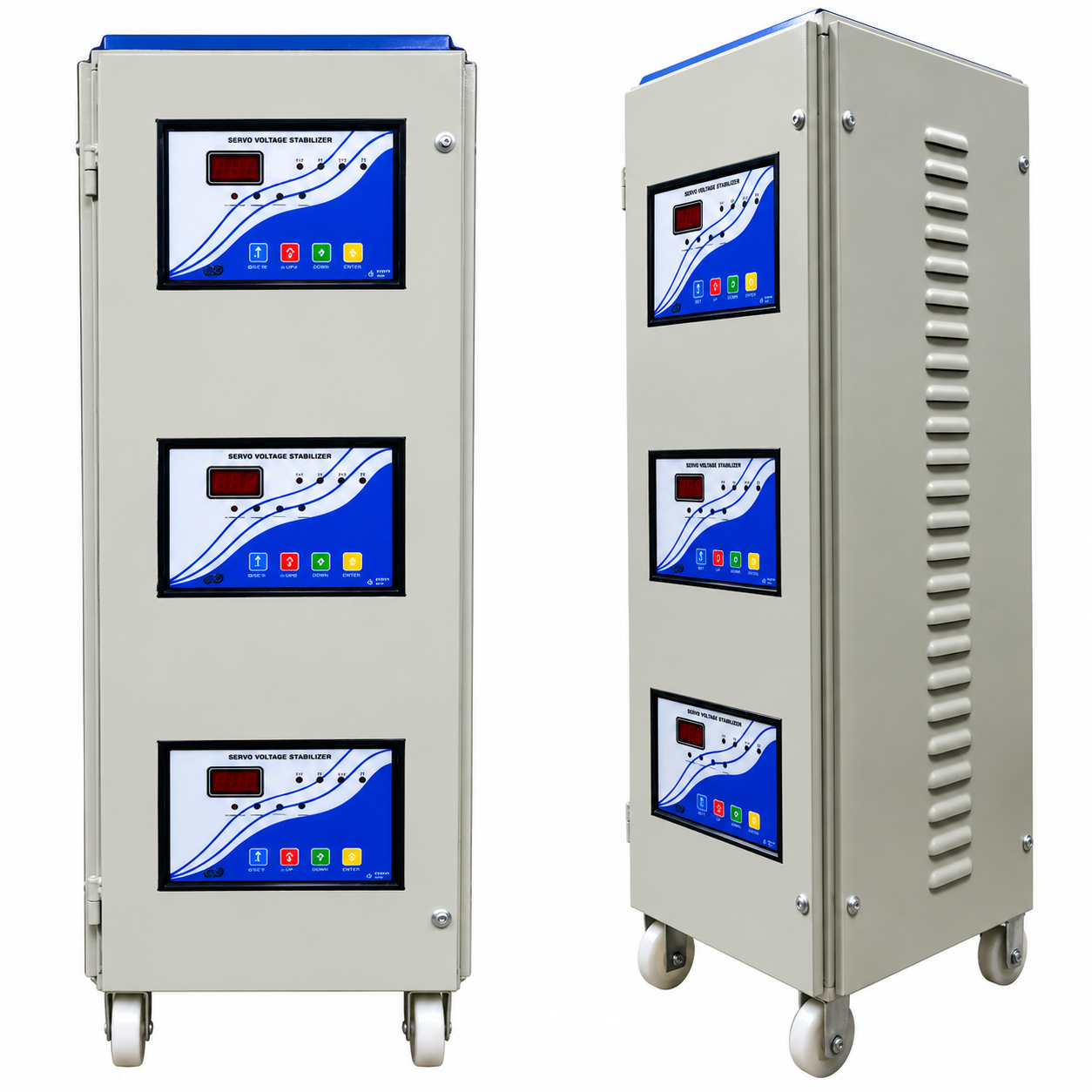
Introduction
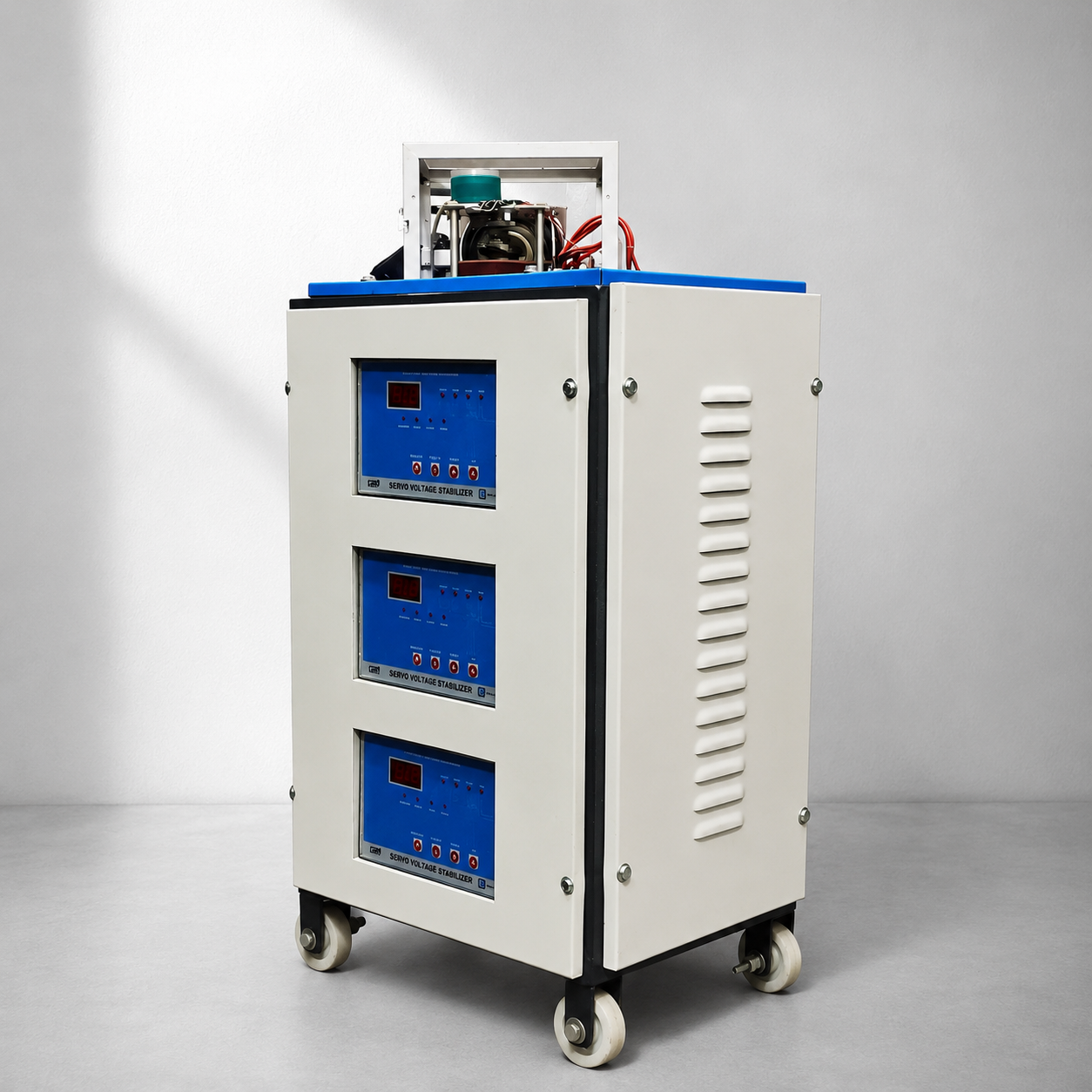
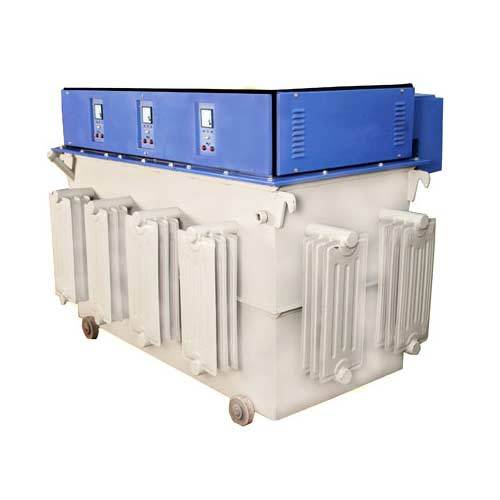
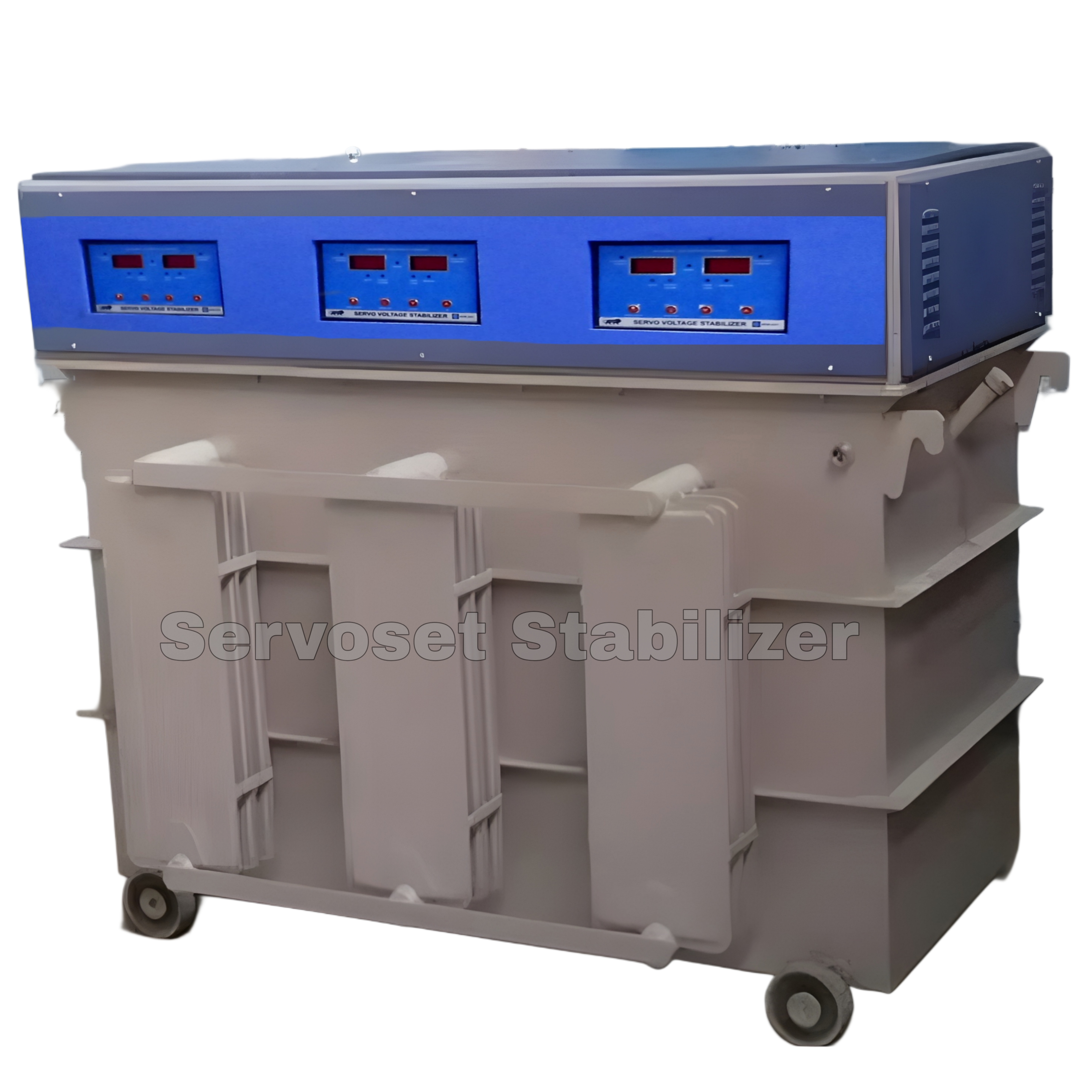
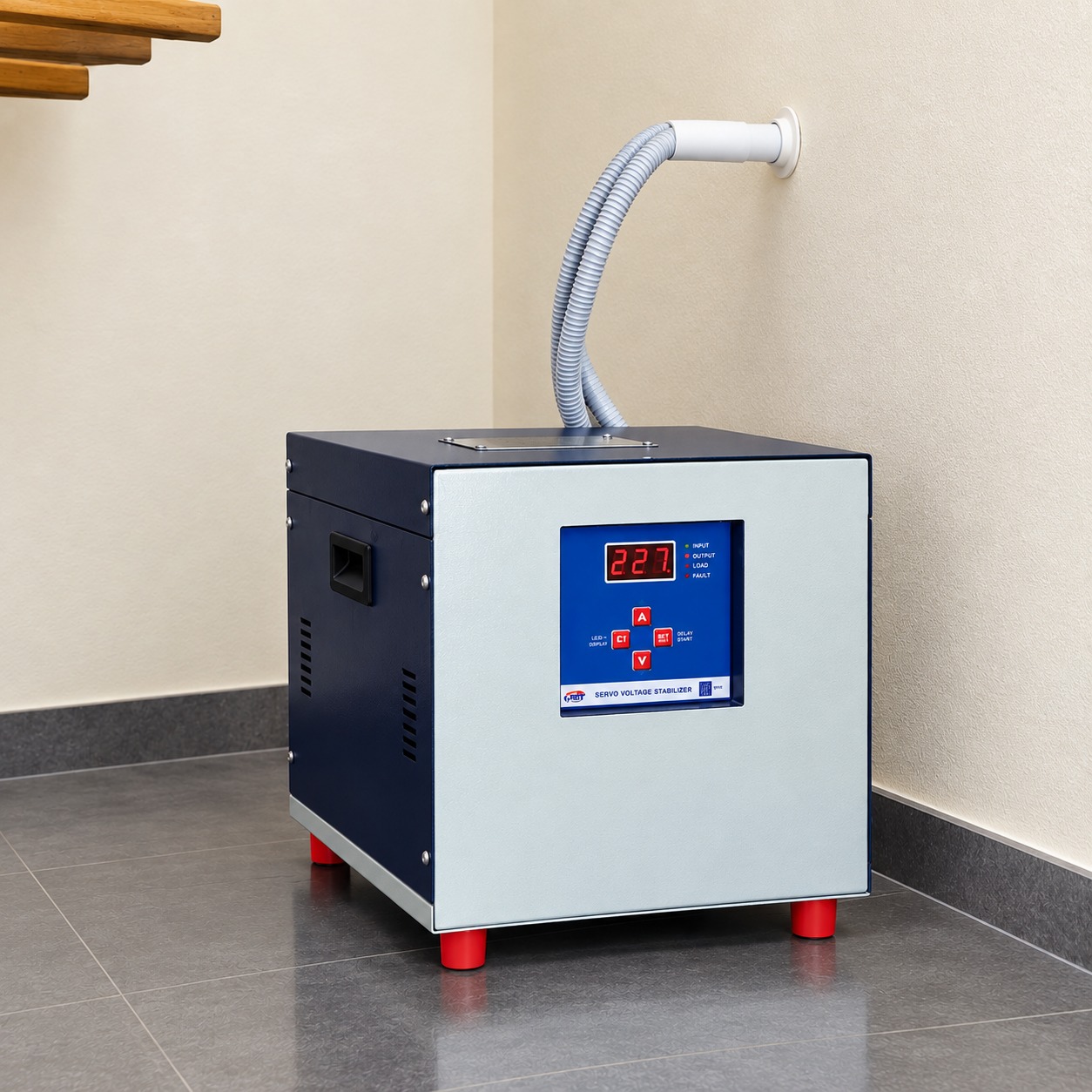
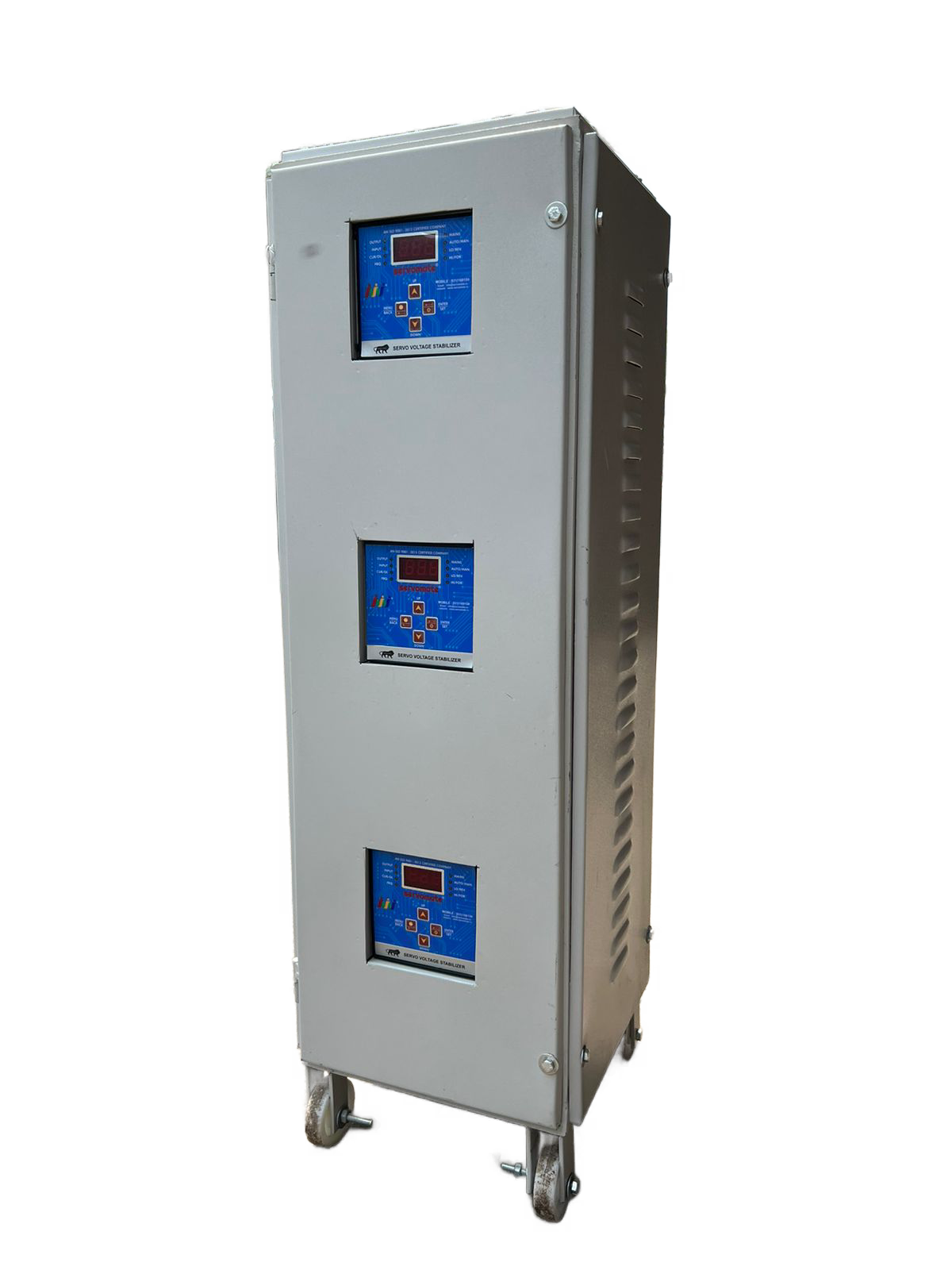
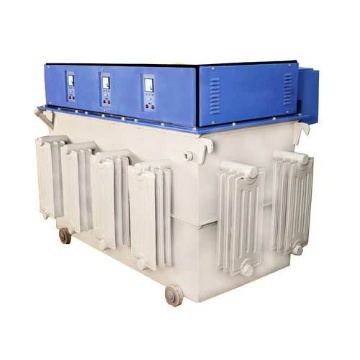
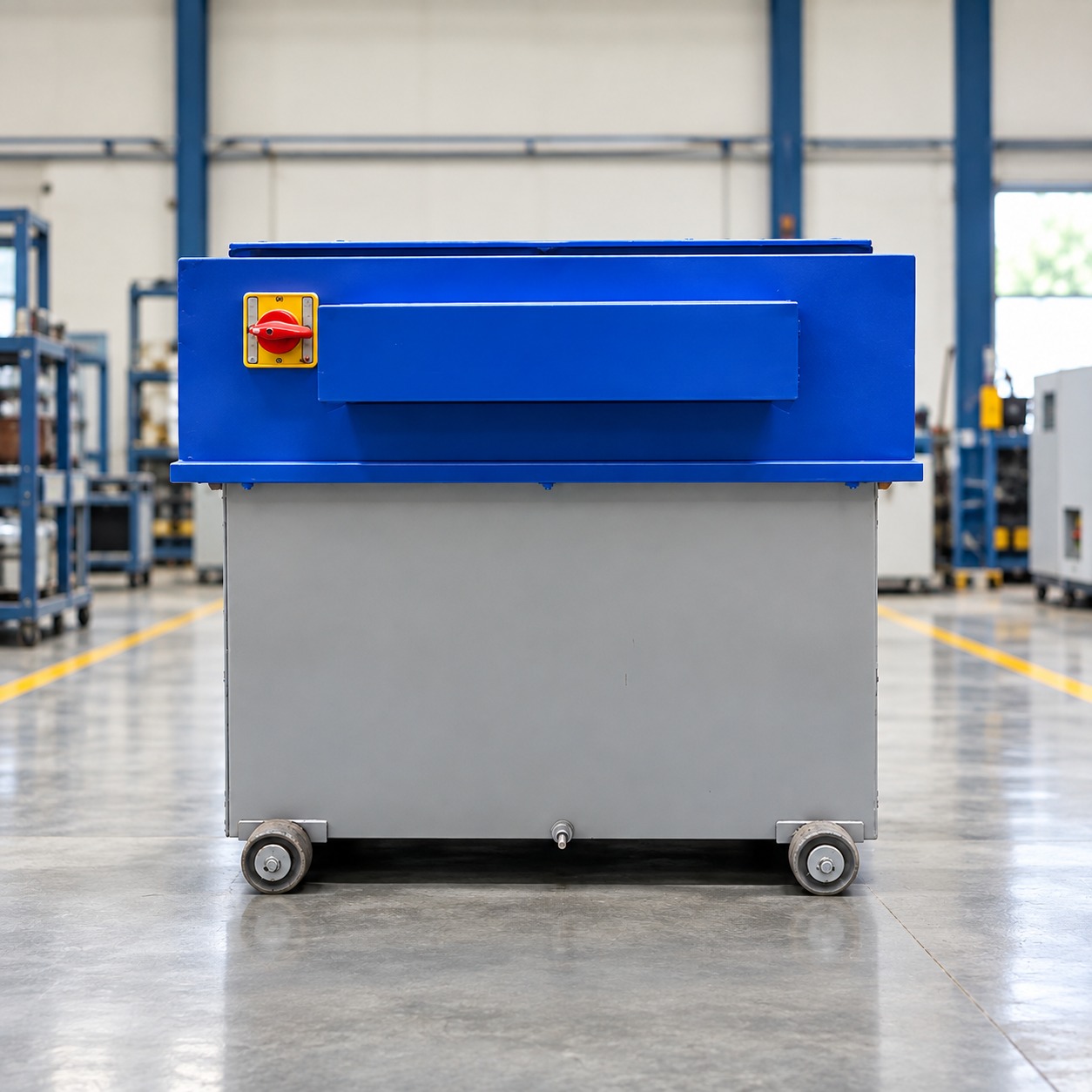
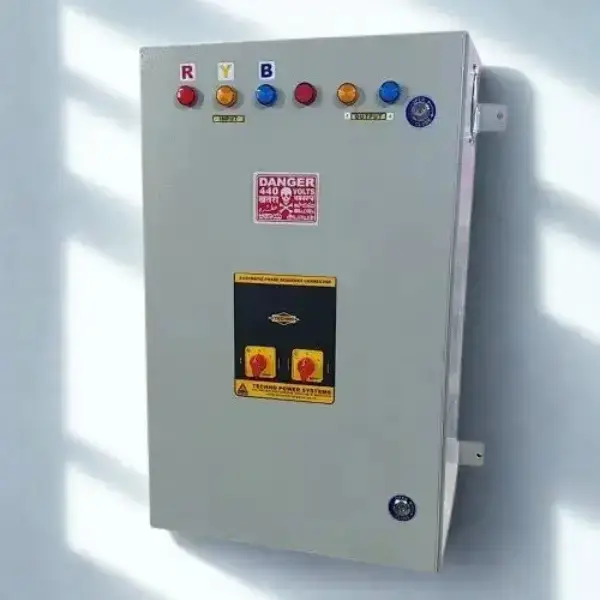
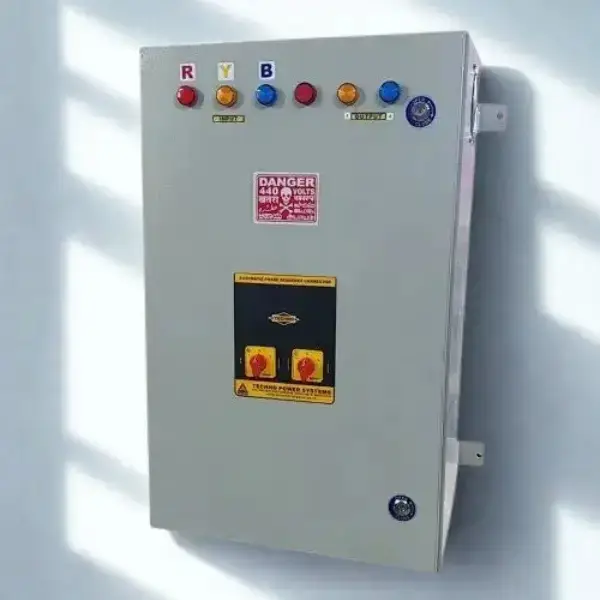
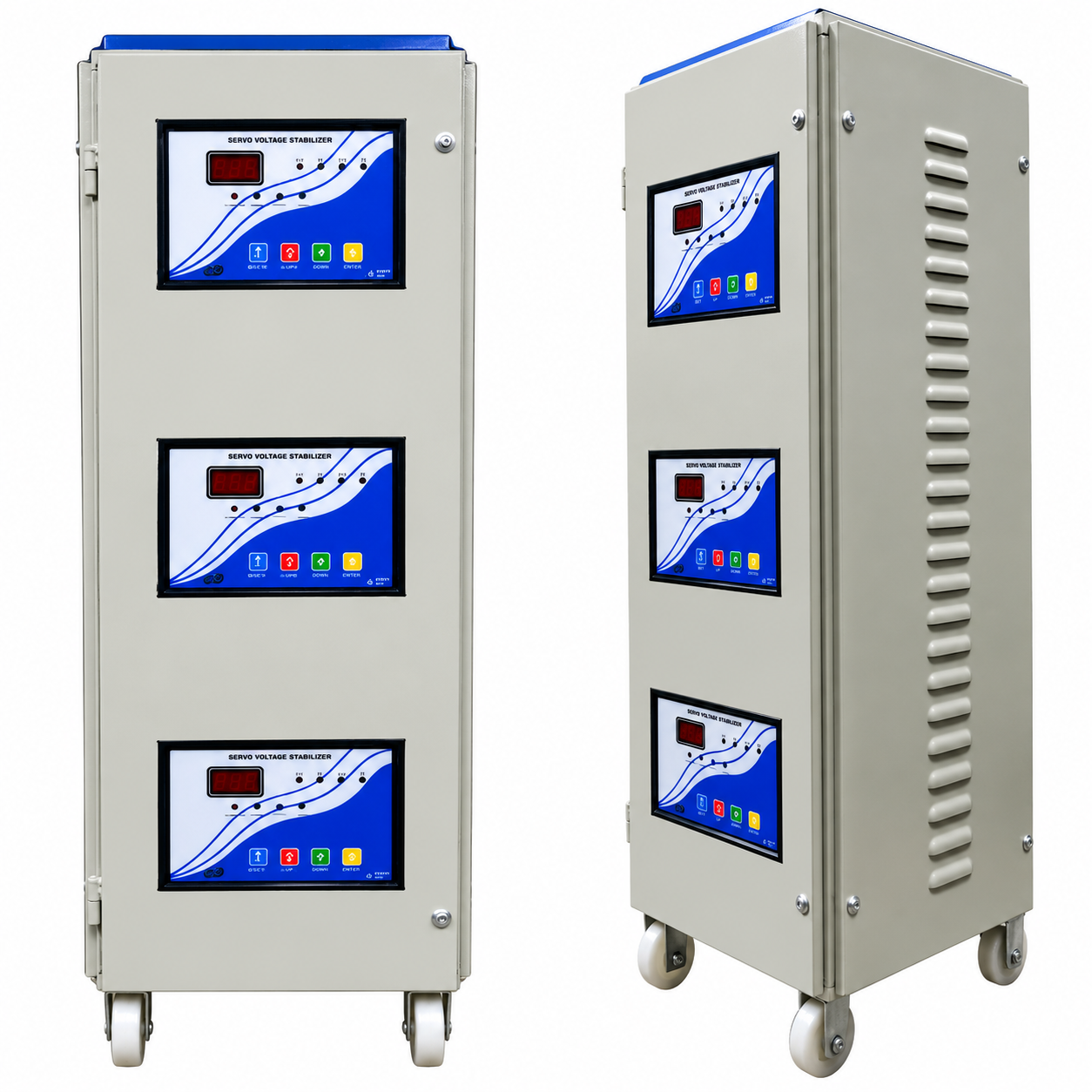
Voltage fluctuations can damage industrial equipment, interrupt production, and increase maintenance costs. Choosing an undersized stabilizer, installing it incorrectly, or ignoring early warning signs can lead to expensive problems. This guide explains how to identify voltage issues, calculate the right capacity, install a three phase servo voltage stabilizer, and troubleshoot common faults.
Signs Your Plant Needs a Three Phase Servo Stabilizer
Voltage problems often appear as small, recurring issues rather than sudden failures.
- Motors overheating or making unusual noises
- Drives, MCBs, or contactors tripping frequently
- Machines resetting or stopping unexpectedly
- Lights dimming when large machines start
- Repeated PLC, control panel, or electronic card failures
- Inconsistent product quality
- Increasing equipment repair costs
If you notice several of these symptoms, measure your incoming voltage throughout a full working day before choosing a solution.
Why Voltage Fluctuates in Industrial Areas
- Heavy shared loads: Multiple factories draw power simultaneously, especially during peak hours.
- Overloaded transformers: Excessive connected loads can affect voltage stability.
- Long supply lines: Greater distances from the transformer can increase voltage drop.
- Large motors starting: High starting currents can temporarily reduce supply voltage.
- Ageing lines and loose connections: Poor connections can increase resistance and cause voltage instability.
Servo vs Static vs Relay Stabilizers
Each stabilizer type offers different advantages depending on the load and application.
| Feature | Servo Stabilizer | Static Stabilizer | Relay Stabilizer |
|---|---|---|---|
| Voltage correction | Smooth and continuous | Fast electronic correction | Step-based correction |
| Accuracy | High | High | Generally lower |
| Moving parts | Yes; maintenance required | No | Relays can wear out |
| Overload handling | Depends on design and rating | Depends on design | May be limited |
| Typical use | Industrial and heavy loads | Sensitive, fast-changing loads | Small and light loads |
Servo stabilizers are commonly used in factories operating motors, compressors, and machine tools because they provide continuous voltage correction and can support heavy industrial loads when properly sized.
Balanced vs Unbalanced Load
In a three-phase system, the load may not be equally distributed across all three phases. This condition is called an unbalanced load.
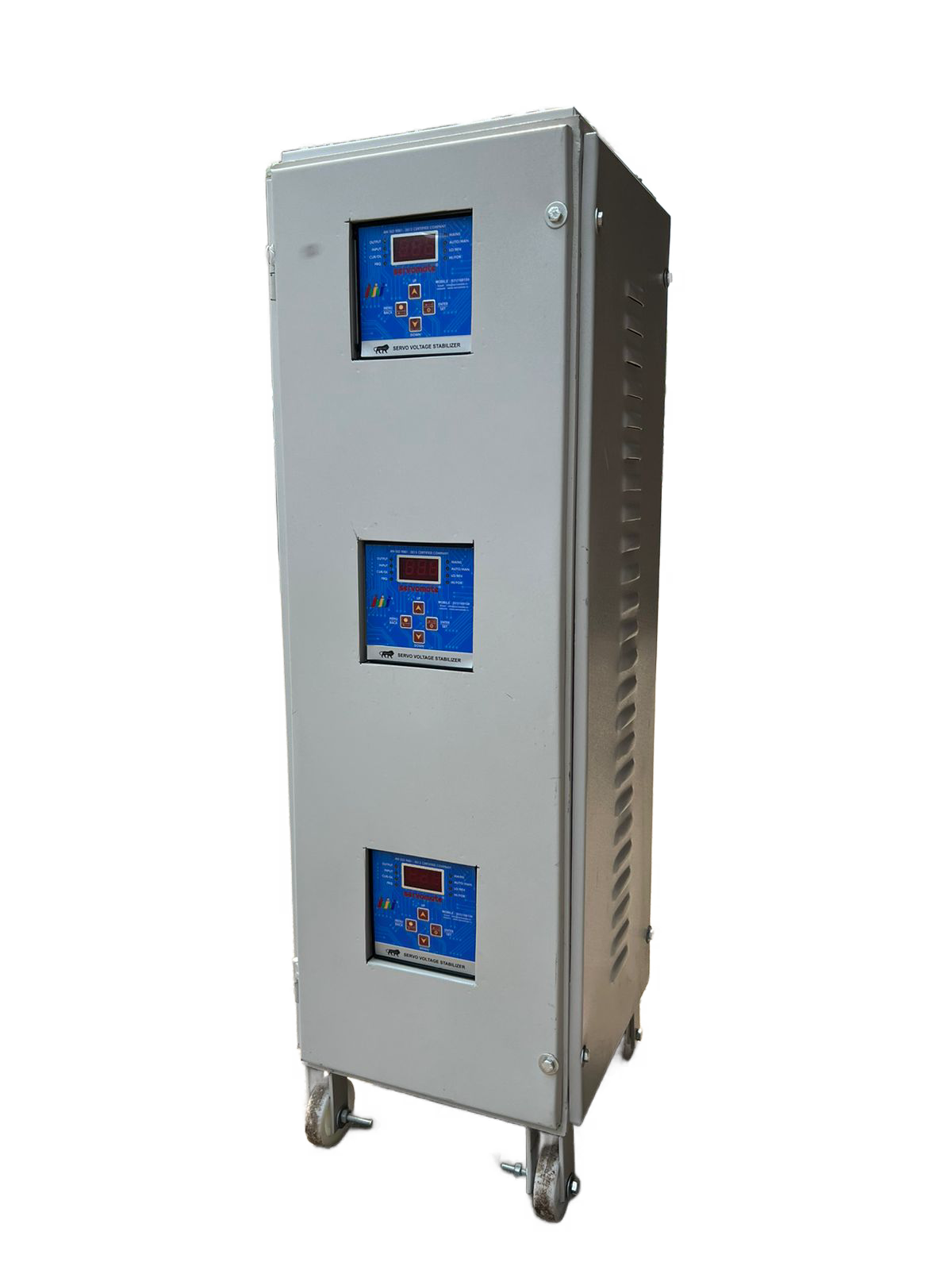
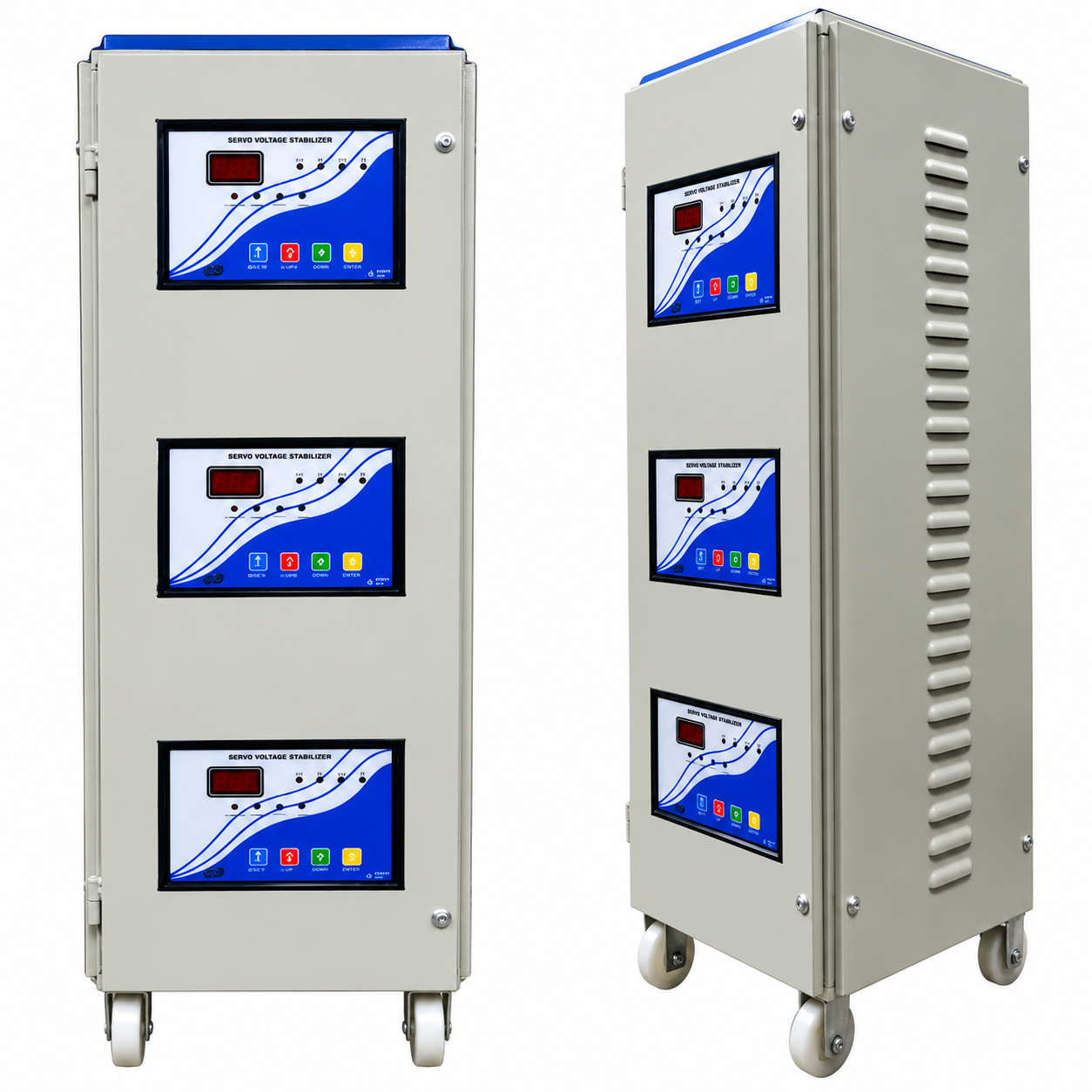
A stabilizer that adjusts all phases together may not correct every phase imbalance. A model with independent phase correction adjusts each phase separately and may be more suitable for plants with uneven phase-wise loading.
Check the load on each phase before purchasing a stabilizer and select the correction method according to your electrical system.
How to Calculate the Right kVA Capacity
Follow these steps to estimate the required stabilizer capacity:
- List all machines that may operate simultaneously and note their power ratings in kW.
- Add the ratings to calculate the total load.
- Divide the total kW by the power factor. Use 0.8 as a preliminary estimate if the actual value is unknown.
- Add a 20–25% margin for operating headroom and future expansion.
- Select the next suitable standard kVA rating above the calculated requirement.
Example Calculation
A workshop operates a 15 kW CNC machine, a 7.5 kW compressor, and 5 kW of other equipment simultaneously.
- Total load: 15 + 7.5 + 5 = 27.5 kW
- Required capacity at 0.8 power factor: 27.5 ÷ 0.8 = 34.4 kVA
- With a 25% margin: 34.4 × 1.25 = approximately 43 kVA
- Suggested standard capacity: 50 kVA
This is a preliminary estimate. High motor starting currents and actual load characteristics may affect the final selection. Consult a qualified electrician before ordering.
Other Factors to Check Before Ordering
- Input voltage range: Match the stabilizer to the minimum and maximum voltage measured at your site.
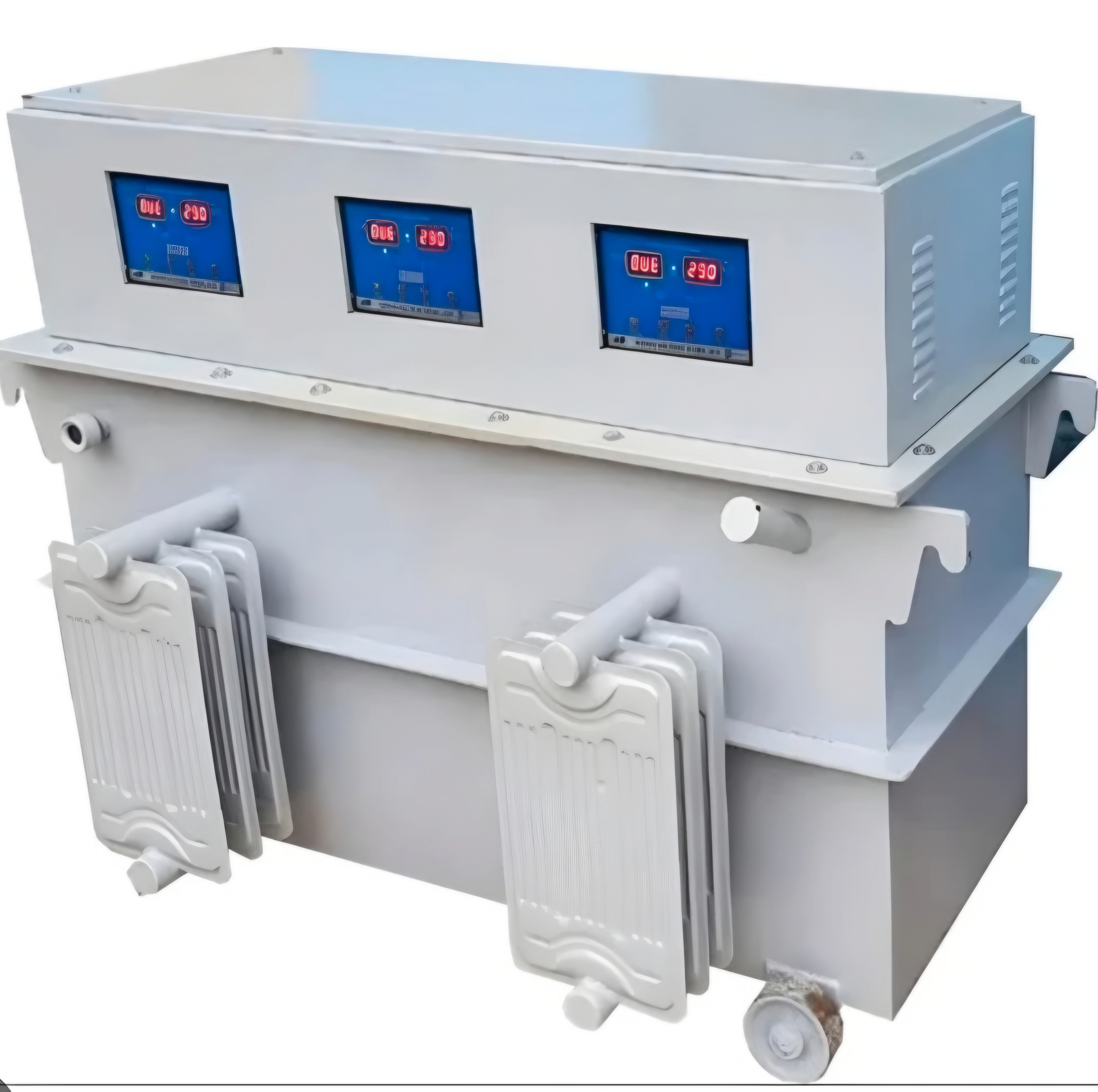
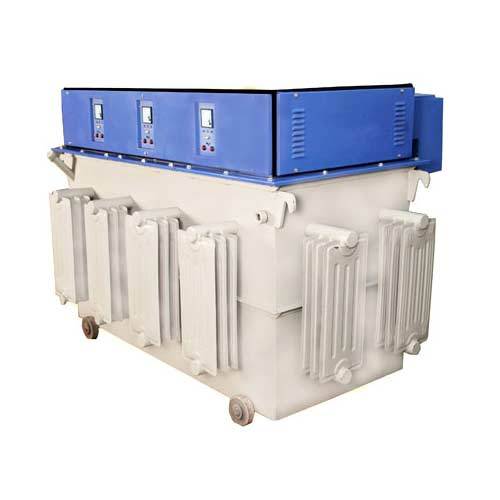
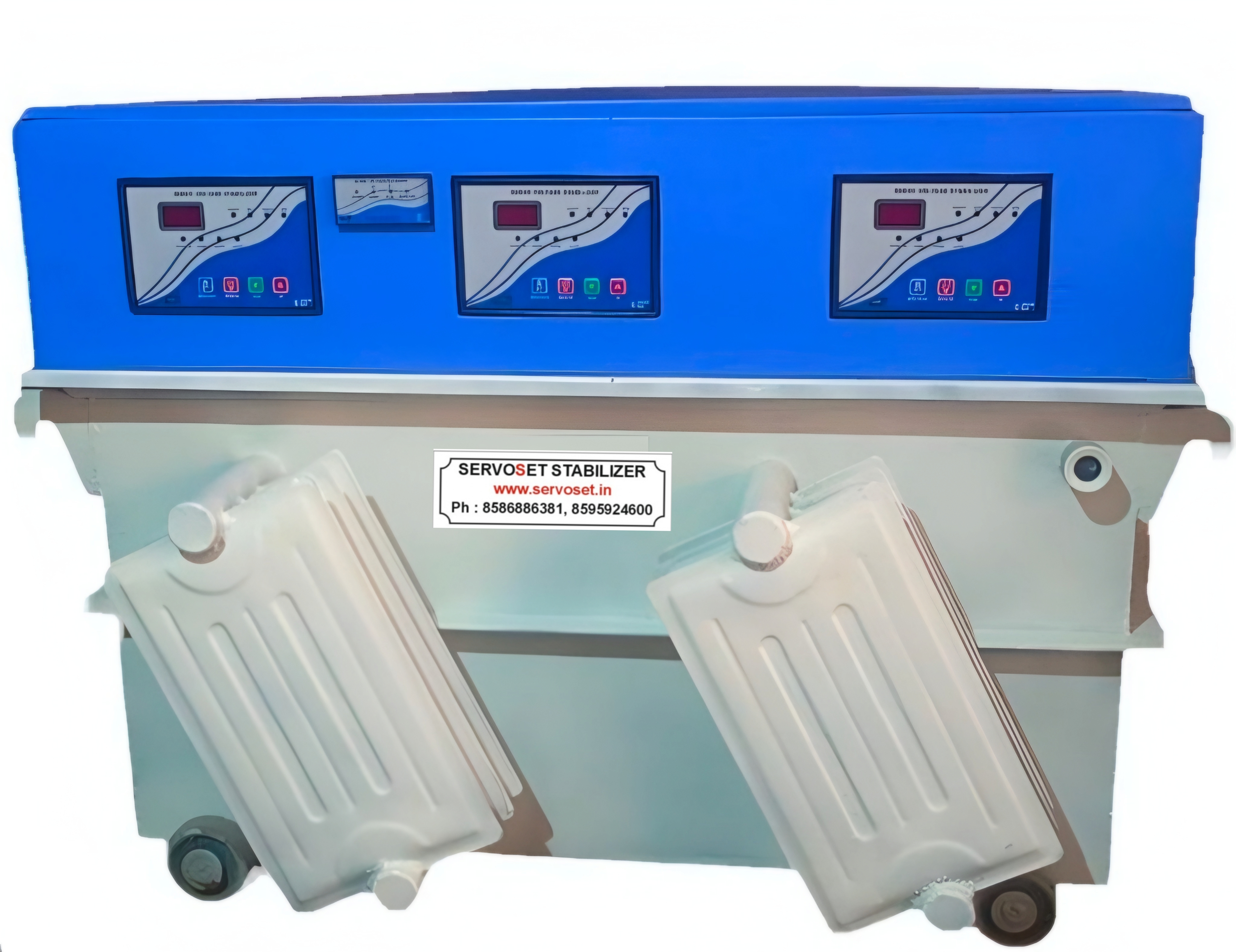
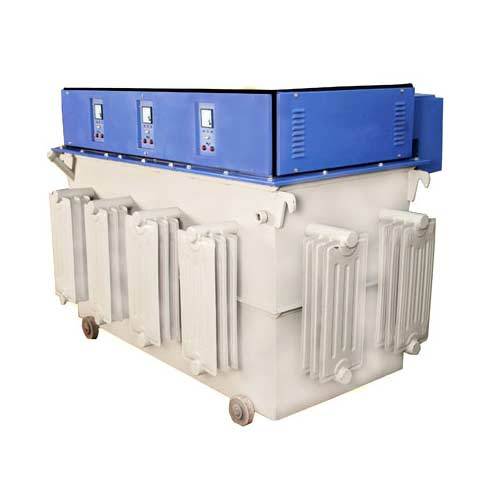
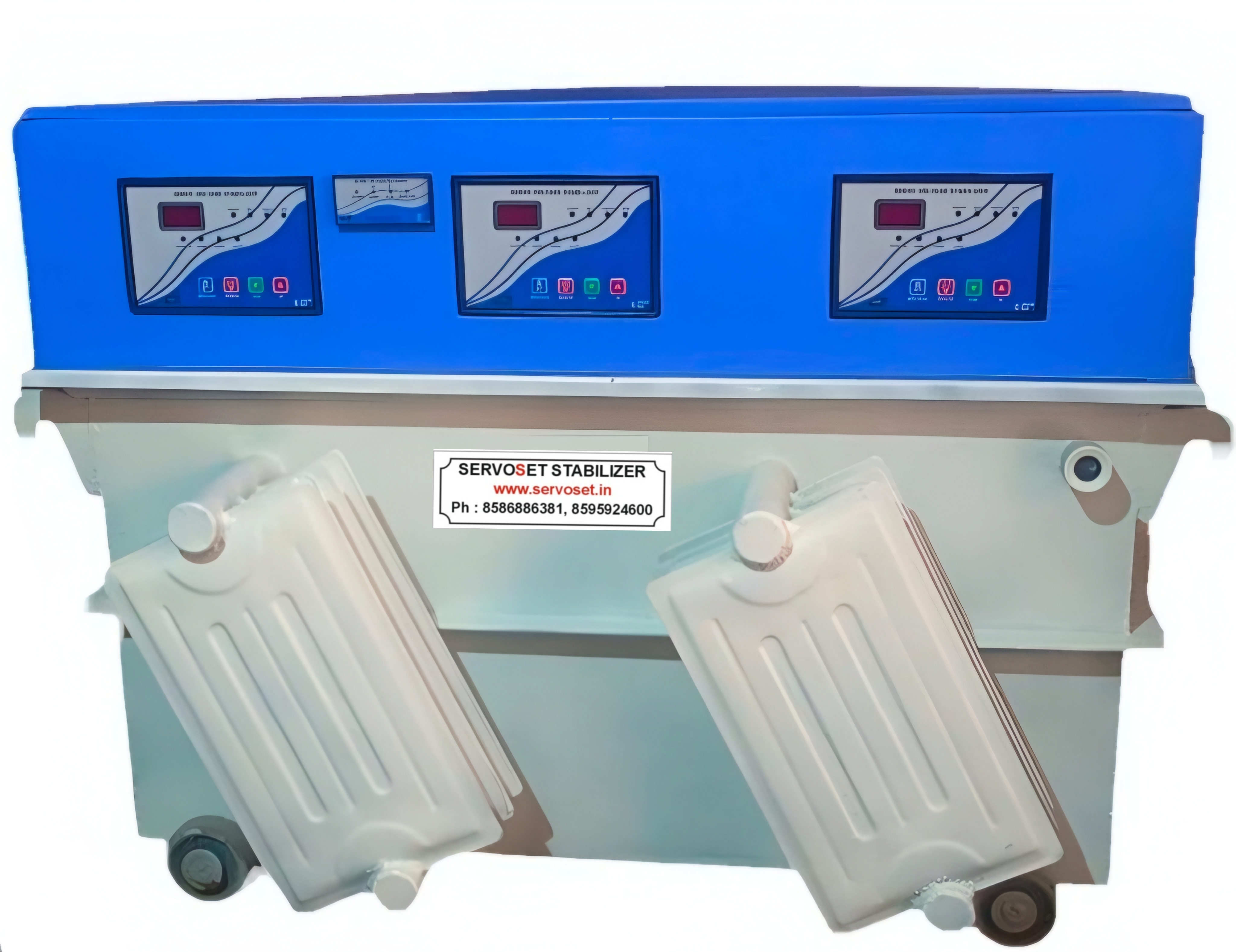
- Cooling type: Consider air-cooled or oil-cooled models according to capacity, environment, and operating hours.
- Protection features: Check for overvoltage, undervoltage, overload, short-circuit, single-phasing, and time-delay protection.
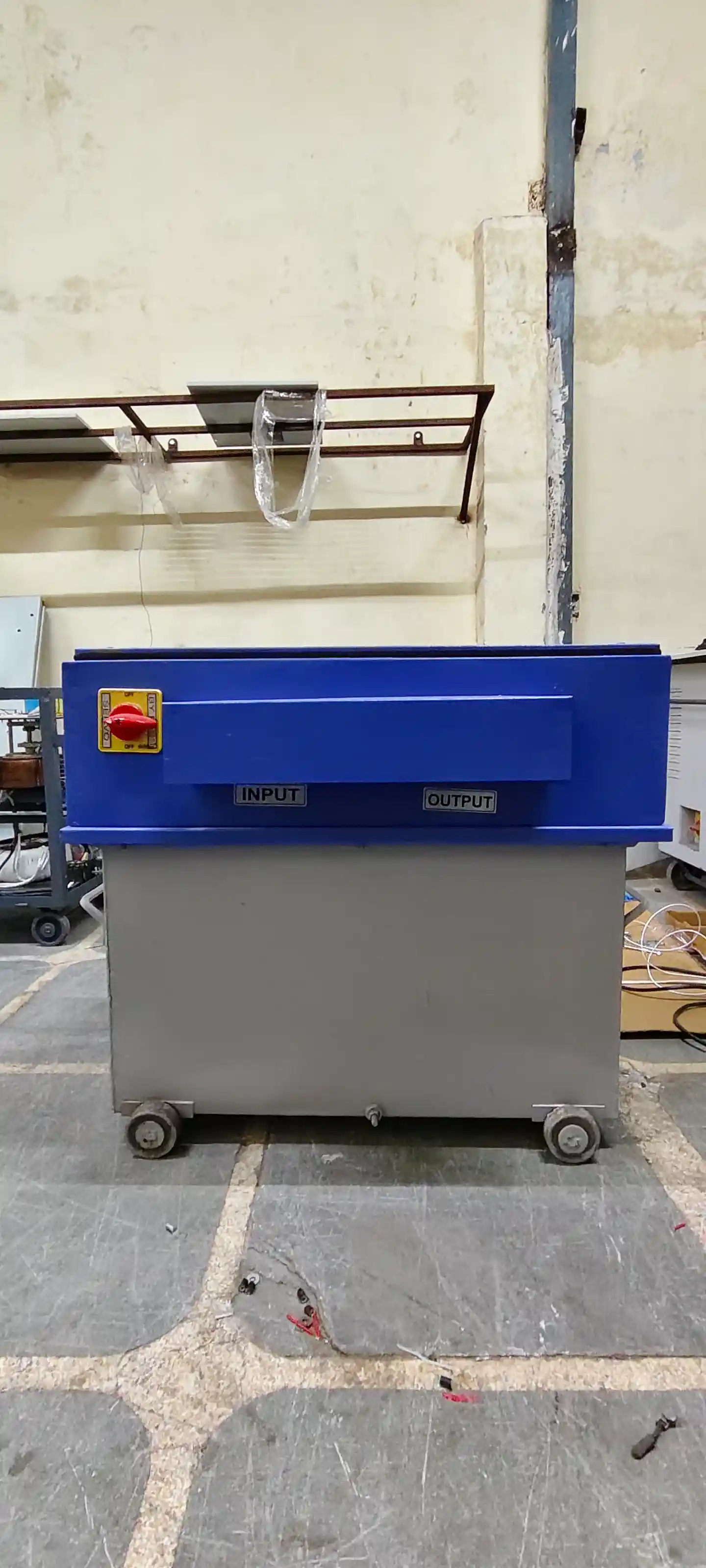
- Bypass switch: Allows direct mains operation during servicing when conditions are safe and suitable.
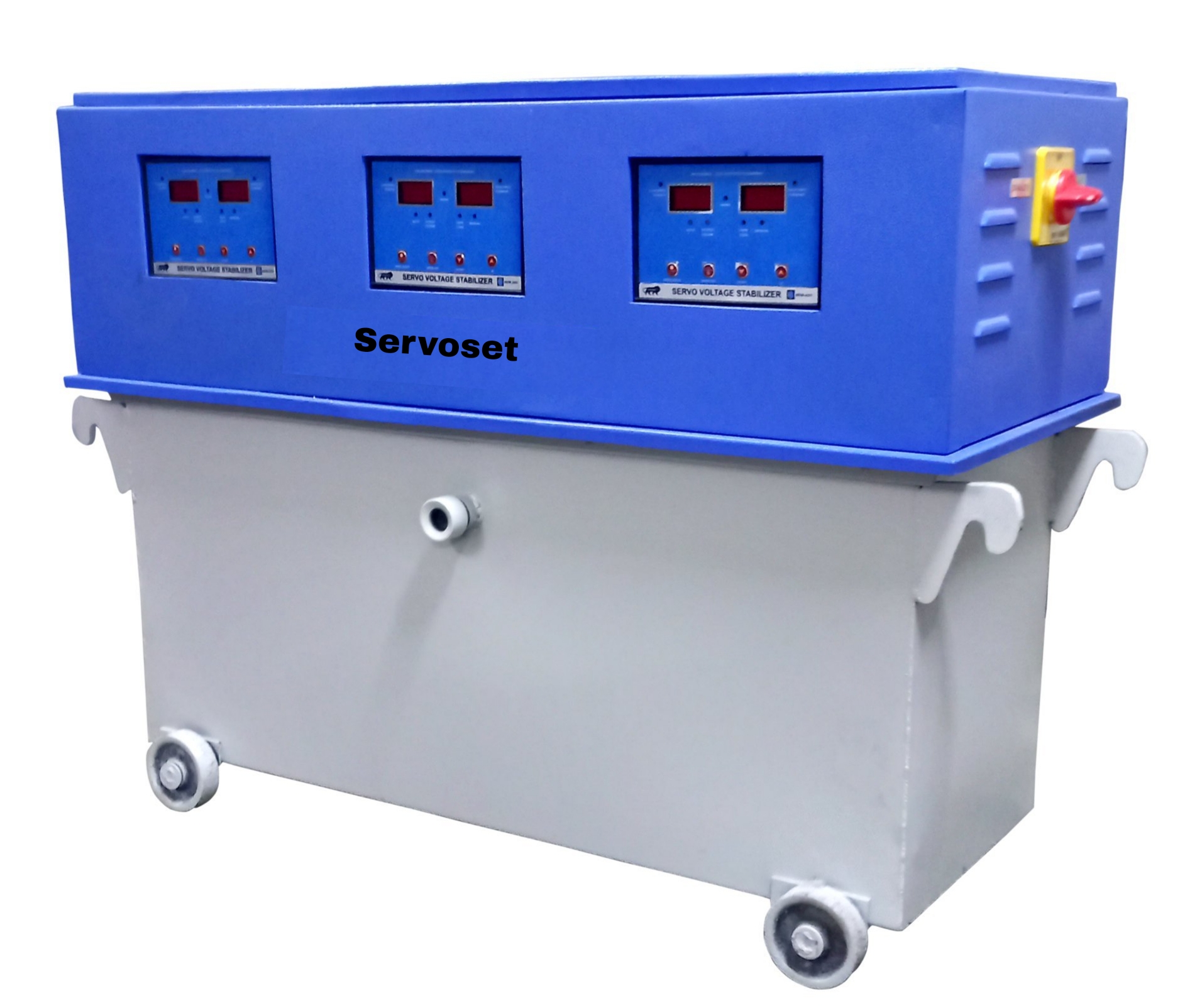
- Display: A clear voltmeter and ammeter simplify routine monitoring.
Installation Tips
- Install the unit in a dry, well-ventilated location away from water, direct heat, and excessive dust.
- Maintain sufficient clearance for airflow and servicing.
- Use correctly sized cables suitable for the rated current and installation conditions.
- Ensure proper earthing and have it tested.
- Verify the phase sequence and tighten all terminals before energising the unit.
- Start the unit without a load, then connect the load gradually according to the manufacturer's instructions.
- Use a qualified electrician for installation and testing.
Basic Troubleshooting Guide
| Problem | Possible Cause | What to Check |
|---|---|---|
| Unstable output voltage | Worn brush or dirty winding | Arrange inspection and cleaning |
| Overload tripping | Excessive connected load | Recalculate the load |
| Excessive heating | Poor ventilation or heavy loading | Check airflow and operating conditions |
| Unusual noise | Loose components or motor wear | Inspect mounting and servo motor |
| Sparking near the brush | Dust or worn carbon brush | Arrange professional inspection |
| Display or protection fault | Loose connection or control-card issue | Have the connections and control card checked |
If a fault persists, stop using the unit and contact a service engineer. Never open or service a live stabilizer yourself.
Common Mistakes to Avoid
- Choosing capacity based only on price.
- Ignoring phase-wise load imbalance.
- Installing the unit in a hot, poorly ventilated area.
- Skipping regular maintenance.
- Adding machines without recalculating the load.
Why Choose SERVOSET?
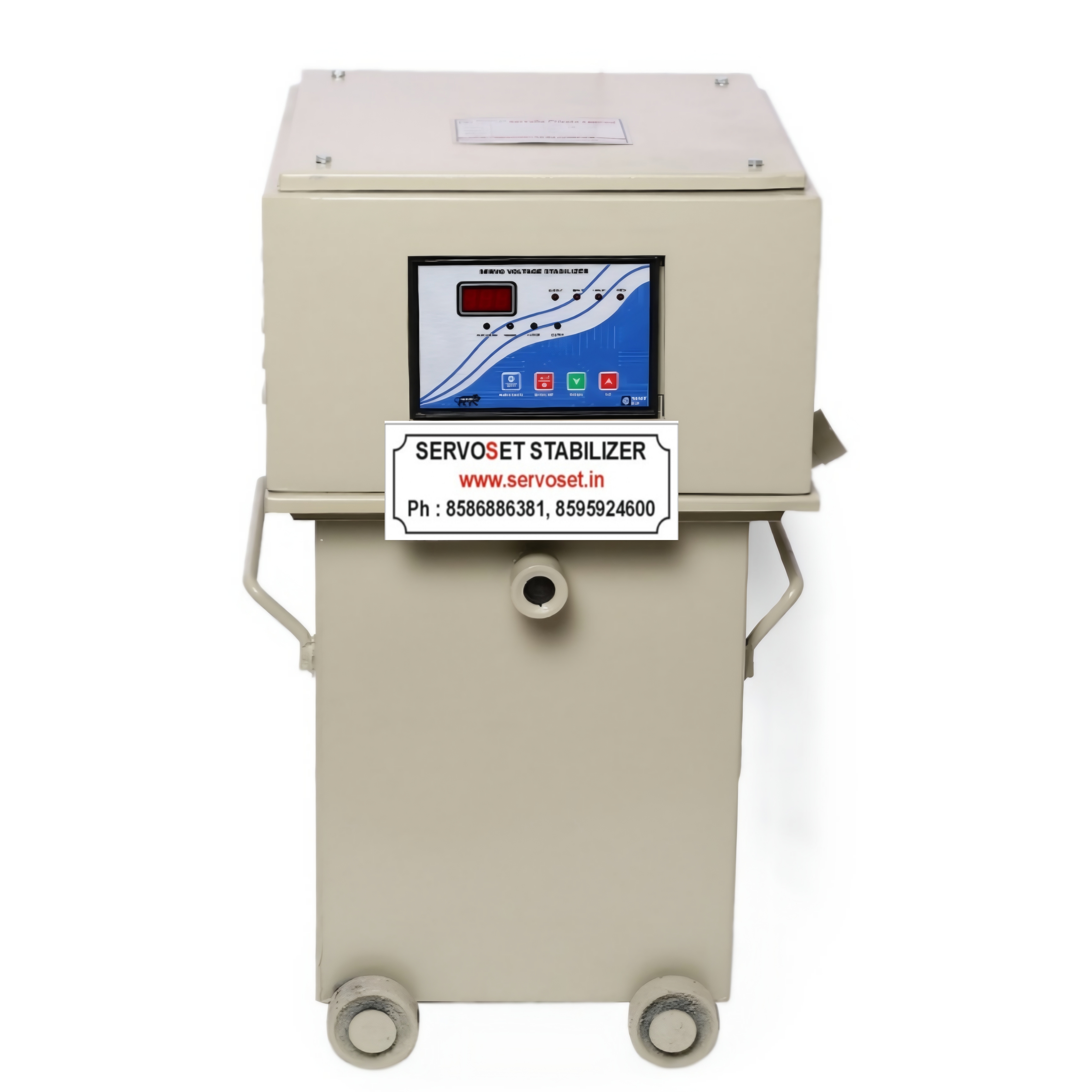
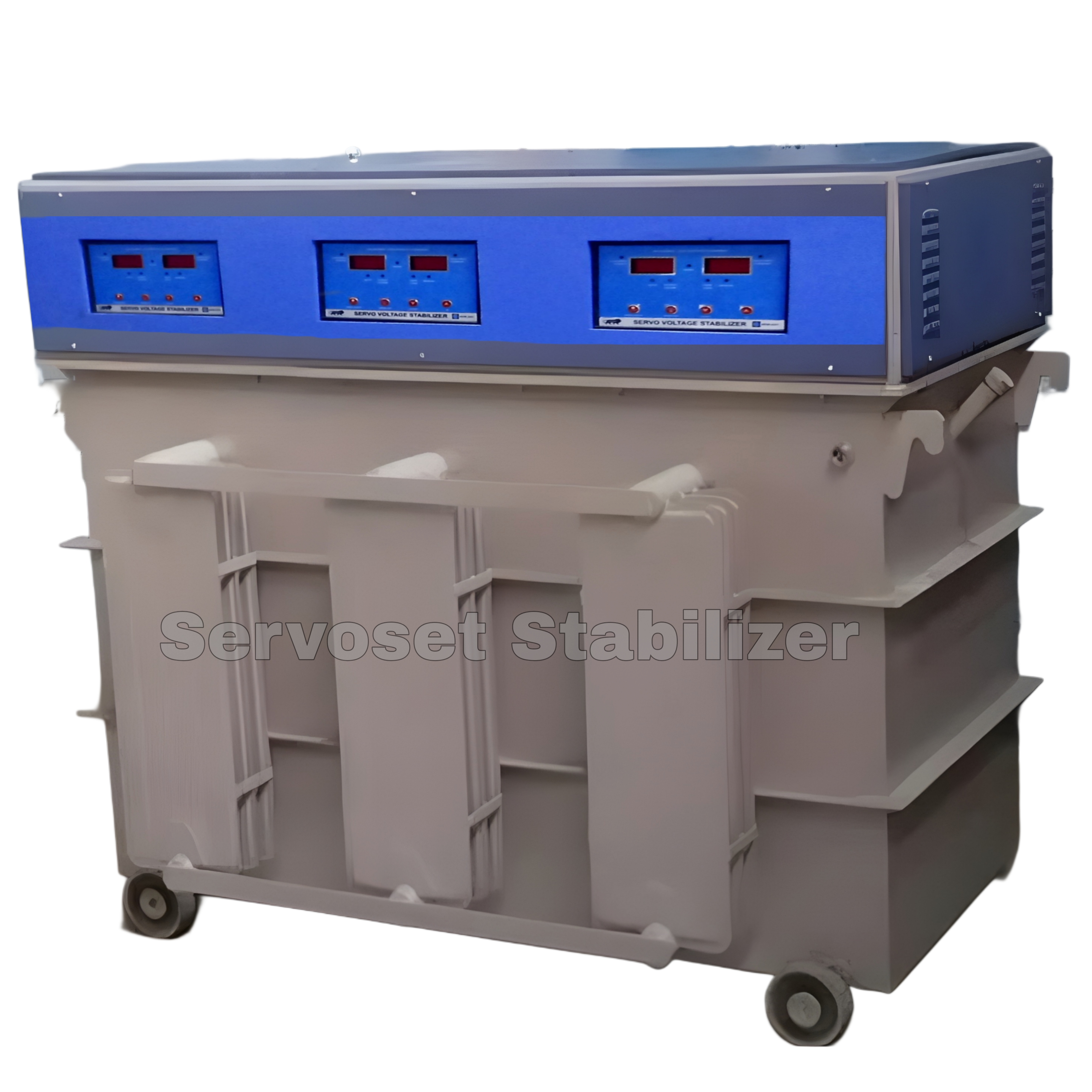
SERVOSET can help you select a three phase servo voltage stabilizer based on your connected load and site voltage conditions. Share your machine list, phase-wise load, and input voltage range to help identify a suitable capacity and cooling type for your plant.
FAQ
1. What are the signs of voltage fluctuations?
Frequent tripping, overheating motors, machine resets, and dimming lights are common signs.
2. How do I calculate stabilizer capacity?
Divide total kW by the power factor, add a suitable margin, and select the next standard kVA rating.
3. Why is phase correction important?
It helps manage voltage differences caused by uneven loading across three phases.
4. Which stabilizer is suitable for factories?
A properly sized servo stabilizer is a common choice for industrial loads.
5. Is a bypass switch necessary?
It is recommended for safe, suitable operation during stabilizer servicing.
6. How often should a stabilizer be serviced?
Annual servicing is a useful minimum guideline; follow the manufacturer's recommendations.
7. Can I add machines later?
Yes, provided the total load remains within the stabilizer's rated capacity.
Conclusion
Choosing the right three phase servo voltage stabilizer helps improve equipment reliability and reduce voltage-related downtime. Calculate your load, check phase balance, ensure proper installation, and maintain the unit regularly. Contact SERVOSET for assistance in selecting a suitable stabilizer for your plant.