
Modern buildings require HVAC systems that provide efficient cooling, flexibility, and better energy management. Traditional air conditioning systems may not always meet the requirements of large commercial spaces, offices, hotels, hospitals, and premium residential projects. This is where a VRF HVAC system becomes an ideal solution.
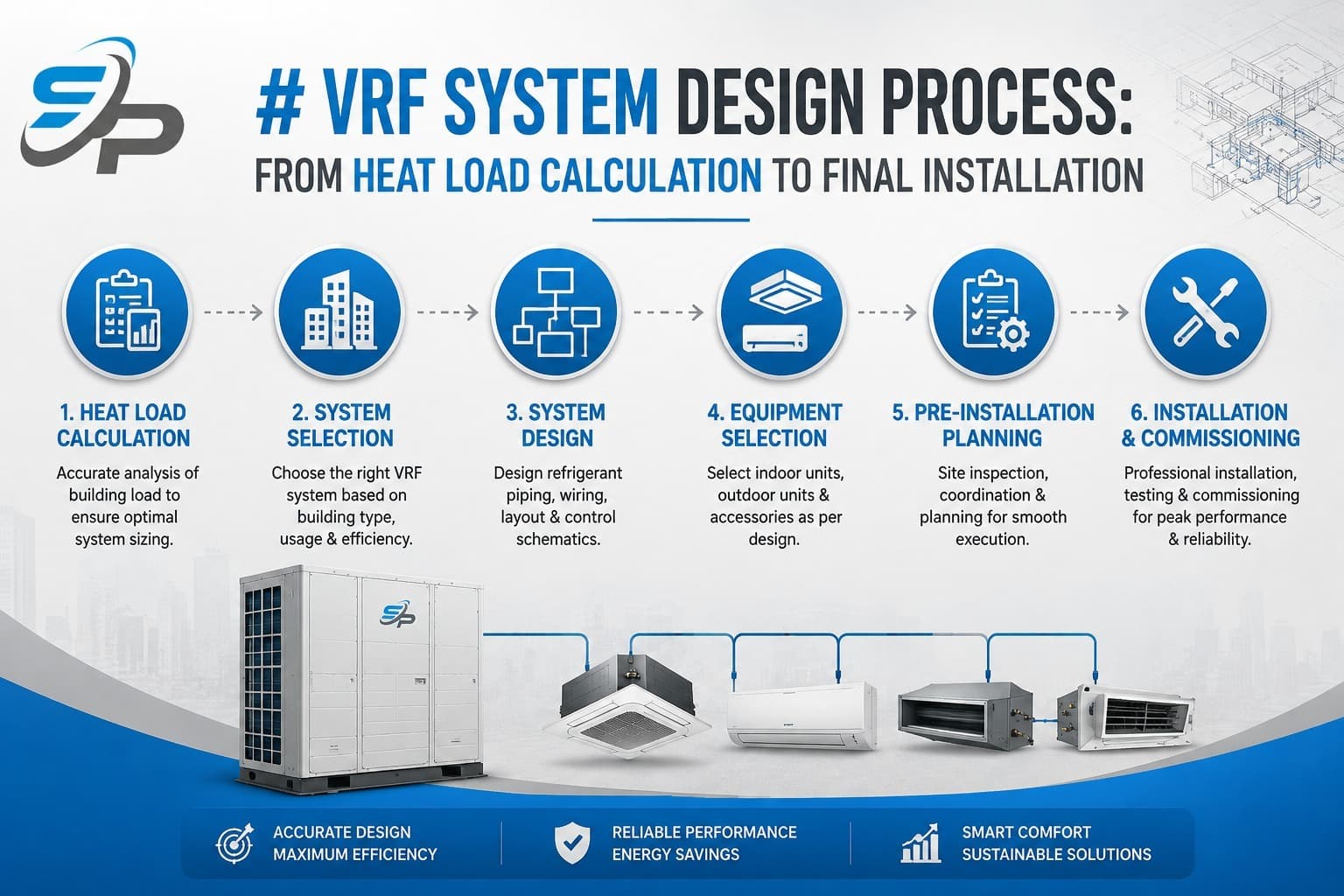
A VRF System Design Process involves much more than selecting air conditioning equipment. It requires detailed planning, accurate heat load calculation, proper equipment selection, efficient piping design, professional installation, and final testing to ensure long-term performance.
At Swamit Projects , we understand that every building has unique cooling requirements. Our approach focuses on designing customized HVAC solutions that provide comfort, energy efficiency, and reliable operation.
What is a VRF HVAC System?
VRF (Variable Refrigerant Flow) is an advanced air conditioning technology that allows multiple indoor units to connect with a single outdoor unit while controlling refrigerant flow according to individual cooling requirements.
Unlike conventional air conditioning systems that operate at fixed capacity, VRF systems automatically adjust their output based on the demand of each zone. This helps reduce energy consumption and provides better temperature control.
A VRF air conditioning system is commonly used in:
- Corporate offices
- Hotels and resorts
- Shopping complexes
- Hospitals
- Educational institutions
- Luxury residential buildings
The flexibility and efficiency of VRF technology make it one of the preferred choices for modern HVAC applications.
Step 1: Site Survey and Requirement Analysis
The first stage of the VRF system design process is understanding the project requirements. Before selecting any equipment, HVAC professionals conduct a detailed site assessment.
During the site survey, engineers analyze:
- Building layout and floor plans
- Room sizes and usage patterns
- Number of occupants
- Window locations and sunlight exposure
- Existing electrical infrastructure
- Ventilation requirements
- Future maintenance requirements
Step 2: Heat Load Calculation for VRF System
One of the most important parts of VRF system design is accurate heat load calculation.
Heat load calculation determines how much cooling capacity is required for each area. Selecting equipment without proper calculation can result in inefficient cooling, higher electricity bills, and unnecessary equipment costs.
The calculation considers factors such as:
- Area and volume of the space
- Number of people using the area
- Lighting and electrical equipment load
- Heat entering through walls and windows
- Outdoor weather conditions
- Building insulation quality
At Swamit Projects, our HVAC experts focus on precise heat load analysis to recommend the right system capacity for every project.
Step 3: Equipment Selection and System Planning
After completing the heat load calculation, the next step is selecting suitable VRF equipment.
The selection process includes:
- Choosing the appropriate outdoor unit capacity
- Selecting indoor units based on room requirements
- Planning refrigerant pipe routes
- Designing control systems
- Considering energy efficiency ratings
Different indoor unit options are available depending on the application:
- Cassette type units for offices and commercial spaces
- Ducted units for concealed installations
- Wall-mounted units for smaller rooms
- Floor-standing units for specific applications
Proper equipment selection plays a major role in achieving efficient cooling performance.
Step 4: VRF System Layout and Engineering Design
A detailed design layout is created before starting installation. This stage ensures that every component is positioned correctly for maximum efficiency.
The VRF system design includes:
- Indoor and outdoor unit placement
- Refrigerant piping layout
- Drainage planning
- Electrical connection planning
- Air distribution design
- Service access planning
Professional HVAC design services help avoid common installation issues such as poor airflow, excessive piping length, and difficult maintenance access.
A well-designed system not only improves performance but also increases the lifespan of HVAC equipment.
Step 5: VRF Installation Process
The VRF installation process requires skilled technicians and careful execution. Even a well-designed system may not perform properly if installation quality is poor.
The installation involves several important steps:
Outdoor Unit Installation
The outdoor unit is installed in a location with proper ventilation and sufficient space for maintenance.
Indoor Unit Installation
Indoor units are installed according to the approved HVAC layout to ensure balanced cooling throughout the building.
Refrigerant Piping Installation
Copper refrigerant pipes are connected between indoor and outdoor units. Proper insulation, pressure testing, and leak checking are essential to maintain system efficiency.
Electrical and Control Installation
Power connections, communication wiring, and control systems are installed to ensure smooth operation.
Step 6: Testing, Commissioning, and Final Handover
After installation, the system goes through testing and commissioning before final operation.
The commissioning process includes:
- Refrigerant pressure testing
- Leak detection
- Temperature performance checks
- Airflow testing
- Control system verification
- Overall system performance evaluation
This stage ensures that the VRF HVAC system operates according to design specifications.
Professional commissioning also helps identify potential issues before the system is used regularly.
Common Mistakes to Avoid During VRF Installation
Poor planning can affect the performance and efficiency of a VRF system. Some common mistakes include:
Incorrect Capacity Selection
Choosing a system without proper heat load calculation may lead to insufficient cooling or energy wastage.
Poor Refrigerant Pipe Planning
Incorrect pipe sizing or routing can reduce system efficiency.
Ignoring Maintenance Access
Equipment should be installed in locations where future servicing can be performed easily.
Skipping Proper Testing
Commissioning is essential to ensure reliable operation.
Working with an experienced VRF system installation company helps prevent these problems.
Benefits of Professional VRF System Design and Installation
A professionally designed VRF system provides several advantages:
Better Energy Efficiency
VRF technology adjusts cooling output according to demand, helping reduce electricity consumption.
Individual Temperature Control
Different zones can maintain separate temperature settings.
Space Saving Design
A single outdoor system can support multiple indoor units.
Long-Term Reliability
Proper design and installation improve equipment performance and lifespan.
Lower Maintenance Costs
A well-planned HVAC system is easier to maintain and operate.
Why Choose Swamit Projects for VRF Solutions?
At Swamit Projects , we provide complete HVAC solutions designed according to each project's specific requirements.
Our services include:
- HVAC consultation
- Heat load calculation
- VRF system design
- Equipment planning
- Professional installation
- Testing and commissioning
We combine technical expertise with practical project experience to deliver reliable and energy-efficient HVAC systems.
Whether it is a commercial building, office space, hotel, or residential project, our team focuses on creating solutions that deliver comfort and value.
Conclusion
The VRF System Design Process requires careful planning, technical expertise, and professional execution. From initial site analysis and heat load calculation to installation and commissioning, every step impacts system efficiency and performance.
Choosing experienced HVAC professionals ensures that your VRF system delivers consistent cooling, energy savings, and long-term reliability.
With Swamit Projects, businesses and property owners can achieve customized VRF HVAC solutions designed for modern comfort and efficiency.