Introduction
Whether you're managing a construction site, handling an industrial move, or tackling a one-time heavy lift, hiring the right crane rental service can make or break your project timeline and budget. Buying a crane outright is rarely practical — the equipment is expensive, requires specialized maintenance, and often sits idle between jobs. That's why most contractors, project managers, and even homeowners turn to a professional crane rental company instead of purchasing equipment outright.
This guide breaks down everything you need to know before using crane hire services: the types of cranes available, how pricing works, what to look for in a provider, and the safety standards that protect your crew and your project — whether you need a mobile crane rental, an industrial crane rental, or heavy crane rental for a large-scale lift.
What Is a Crane Rental Service?
A crane rental service is a company that provides cranes — along with, in many cases, certified operators, riggers, and support equipment — on a short-term or long-term basis for lifting, moving, and positioning heavy loads. Instead of purchasing a crane that could cost hundreds of thousands of dollars and require ongoing maintenance, storage, and licensing, businesses rent exactly what they need for the duration of a project.
Most crane hire services offer two main arrangements:
- Bare rental: You rent the crane itself and supply your own certified operator and crew.
- Operated rental (crane with operator): The rental company provides a trained, certified operator along with the equipment, often bundled with rigging and site setup support.
A well-established crane rental company for construction will maintain large, diverse fleets so they can match the right crane to the right job, from a small residential lift to a heavy industrial installation.
Types of Cranes You Can Rent
Not all lifting jobs call for the same equipment. Understanding the main categories helps you have a more productive conversation with a provider and avoid paying for more capacity than you need — whether you're comparing mobile crane rental service options or looking into heavy lifting crane rental service for a bigger job.
- Mobile cranes: Mounted on wheels, these are the most common choice for mobile crane rental because they can be driven directly to a location without a separate transport truck.
- All-terrain cranes: Built for both highway travel and off-road maneuverability, ideal for job sites with uneven or undeveloped ground.
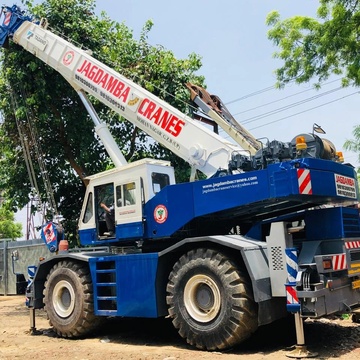
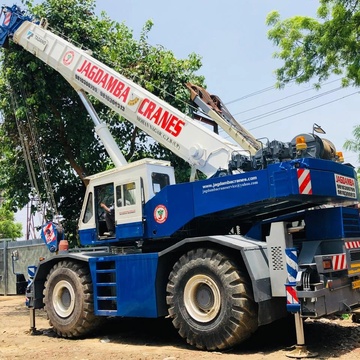
- Rough terrain cranes: Designed specifically for off-road, unpaved sites — common on infrastructure and utility projects.
- Crawler cranes: Mounted on tracks instead of wheels, offering excellent stability for very heavy lifts, though they require a separate transport truck to move between sites — a common pick for heavy crane rental projects.
- Tower cranes: Fixed, tall cranes used for high-rise construction, capable of reaching great heights and lifting materials to upper floors.
- Carry deck cranes: Compact, highly maneuverable cranes suited for tight indoor or industrial crane rental spaces.
- Boom trucks: Truck-mounted cranes useful for smaller, faster lifting jobs like signage, HVAC units, or light material handling.
A reputable provider will help assess your load weight, lift height, site conditions, and access constraints to recommend the right category rather than upselling unnecessary capacity.
How Much Does Crane Rental Cost?
Pricing for crane rental services varies widely depending on several factors, so getting an accurate quote usually requires sharing project specifics with the provider. That said, here's a general sense of what drives the cost of an affordable crane rental service:
- Crane size and lift capacity: Smaller mobile cranes are the most affordable, often starting in the low hundreds of dollars per day, while heavy-duty cranes capable of lifting hundreds of tons can run well over a thousand dollars per day.
- Rental duration: Daily, weekly, and monthly rates typically decrease per-day the longer the rental term.
- Operator and crew costs: Operated rentals cost more than bare rentals since you're paying for a certified operator's time and expertise.
- Delivery and mobilization: Transporting a crane to your site — especially crawler cranes, which require disassembly and reassembly — adds to the total cost.
- On-site assembly: Fixed cranes like tower cranes often require significant setup and teardown labor, which is billed separately.
- Location and demand: Local market conditions, seasonal demand, and travel distance from the rental yard all influence final pricing.
- Project duration and complexity: Longer or more technically demanding lifts may require additional rigging, permits, or site preparation.
Because of these variables, it's best to request a detailed, itemized quote rather than relying on a rough estimate — this is the easiest way to find a genuinely affordable crane rental service without hidden charges once the crane is on-site.
It also helps to ask providers whether they charge a flat day rate or a minimum-hour rate, since some companies bill a four- or eight-hour minimum even if the actual lift takes less time. If your project will need the crane on standby between lifts, clarify whether idle time is billed at the same rate as active lifting time. For multi-day or multi-week projects, negotiating a weekly or monthly rate up front is usually more cost-effective than repeatedly renewing a daily contract.
What to Look for in a Crane Rental Company
Not every provider is equal, and choosing the wrong one can lead to delays, safety issues, or unexpected costs. Here's what separates a reliable crane rental company from the rest:
- Fleet variety and availability: A wide, well-maintained fleet means the company can match equipment to your exact job rather than forcing a compromise.
- Certified, experienced operators: Look for operators certified by a recognized body, along with documented experience relevant to your type of lift.
- Strong safety record and compliance: The provider should follow OSHA and relevant regional safety regulations, with a track record of incident-free operations.
- 24/7 or emergency availability: Construction schedules and industrial breakdowns don't always happen during business hours, so responsive support matters.
- Transparent, itemized pricing: A trustworthy company will break down mobilization, operator, rigging, and rental fees clearly upfront.
- Insurance and licensing: Confirm the company carries adequate liability insurance and holds the proper state or municipal licenses to operate in your area.
- Positive reputation and references: Reviews, case studies, and referrals from past clients are a strong indicator of reliability.
Taking the time to vet a crane rental company for construction on these points upfront is far cheaper than dealing with equipment failures or scheduling gaps mid-project.
Crane Rental Safety Considerations
Heavy lifting carries real risk, and safety should never be an afterthought when arranging heavy lifting crane rental service. A responsible provider will actively manage the following:
- Site assessment: Before any lift, the provider should evaluate ground stability, overhead obstructions, power lines, and weather conditions.
- Load calculations: Operators must confirm the load weight is within the crane's rated capacity at the required boom angle and radius.
- Rigging inspection: Slings, shackles, and other rigging hardware should be inspected before every lift for wear or damage.
- Operator certification: Only trained, certified operators — typically certified through a body like the National Commission for Certification of Crane Operators (NCCCO) in the U.S. — should run the equipment.
- Communication protocols: Clear signals between the operator, riggers, and spotters prevent miscommunication during the lift.
- Weather monitoring: High winds and storms are common reasons lifts get postponed, since they significantly increase tipping and load-swing risk.
Before signing a contract, ask the rental company directly about their safety procedures, incident history, and how they handle site-specific hazards. A provider that answers these questions thoroughly and proactively is generally one you can trust with your heavy crane rental needs.
How to Book a Crane Rental: Step-by-Step
- Define your lift requirements: Note the load weight, lift height, site access, and duration of the job.
- Request quotes from multiple providers: Compare pricing, fleet options, and availability across a few crane rental services.
- Confirm certifications and insurance: Verify the operator's credentials and the company's liability coverage.
- Schedule a site visit if needed: For complex lifts, many providers will inspect the site before finalizing equipment selection.
- Review the contract terms: Check for mobilization fees, cancellation policies, and what happens if the job runs longer than planned.
- Confirm the lift plan: Make sure the operator and your team agree on timing, load path, and safety protocols before the crane arrives.
- Prepare the site: Clear access routes, mark underground utilities, and ensure there's adequate space for the crane to set up and operate safely.
- Do a final walkthrough on delivery day: When the crane arrives, walk the site with the operator to confirm ground conditions, obstacles, and the planned lift sequence haven't changed since the initial assessment.
Following this process not only reduces the chance of delays but also gives you documented proof of due diligence, which can matter if a safety or liability question ever comes up later.
Renting vs. Buying: When Does Ownership Make Sense?
For most businesses, using a crane rental company for construction is the more practical choice — but it's worth understanding when ownership might actually pay off. If your company runs cranes on a near-daily basis across multiple ongoing projects, the math can shift toward purchasing, since the cost of frequent rentals can eventually exceed the price of owning and maintaining a unit. Ownership also gives you full control over scheduling, without needing to coordinate availability with a third-party provider.
That said, ownership comes with real trade-offs: depreciation, storage, insurance, licensing, and maintenance costs add up quickly, and a crane sitting idle between jobs is still costing you money. For companies with variable or seasonal lifting needs — which describes the majority of contractors — an affordable crane rental service remains the more flexible and financially sound option, since it lets you scale equipment up or down based on actual project demand rather than carrying fixed overhead year-round.
Frequently Asked Questions
How far in advance should I book a crane rental?
For standard mobile crane rental service bookings, a few days to a week of notice is often enough. For larger cranes, tower cranes, or jobs requiring permits and site prep, book several weeks ahead to avoid scheduling conflicts.
Do I need a permit to use a rented crane?
In many cities and counties, yes — especially if the crane will operate on or over public roads, sidewalks, or near power lines. Your provider can usually advise on local permit requirements or handle the application on your behalf.
Is it cheaper to rent a crane with an operator or without one?
Bare rentals (crane only) are cheaper upfront, but they require you to provide a certified operator and assume more liability. Operated rentals cost more but include a trained professional and typically reduce your overall risk and insurance burden.
What size crane do I need for my project?
This depends on the weight of your heaviest load, the required lift height, and the distance (radius) between the crane and the load. Most providers of crane rental services will help calculate this based on your project details rather than expecting you to know the exact specifications in advance.
Can a crane be rented for just one day?
Yes, most companies offering mobile crane rental and similar equipment provide daily rentals, though very large or specialized cranes may have minimum rental periods due to the cost and time involved in transport and setup.
What happens if the crane breaks down during my rental period?
Reputable providers will typically repair or replace the equipment at no additional cost, since the crane is still their asset. Always confirm this policy in the rental agreement before signing.
Conclusion
Choosing the right crane rental service comes down to matching your project's specific lifting needs with a provider that offers the right equipment, certified operators, transparent pricing, and a strong safety record. Whether you need a compact carry deck crane for a tight indoor job, a mobile crane rental for a fast-turnaround site, or a heavy-duty crawler crane for a major industrial crane rental project, taking the time to evaluate fleet options, verify credentials, and get a detailed quote will save you time, money, and risk down the line.
Before committing to a crane rental company, ask direct questions about safety procedures, pricing breakdowns, and availability — a company that answers confidently and transparently is one you can rely on when the stakes of a heavy lift are high. With the right crane and the right team behind it, even the most demanding lifting jobs can be completed safely, efficiently, and on schedule.