
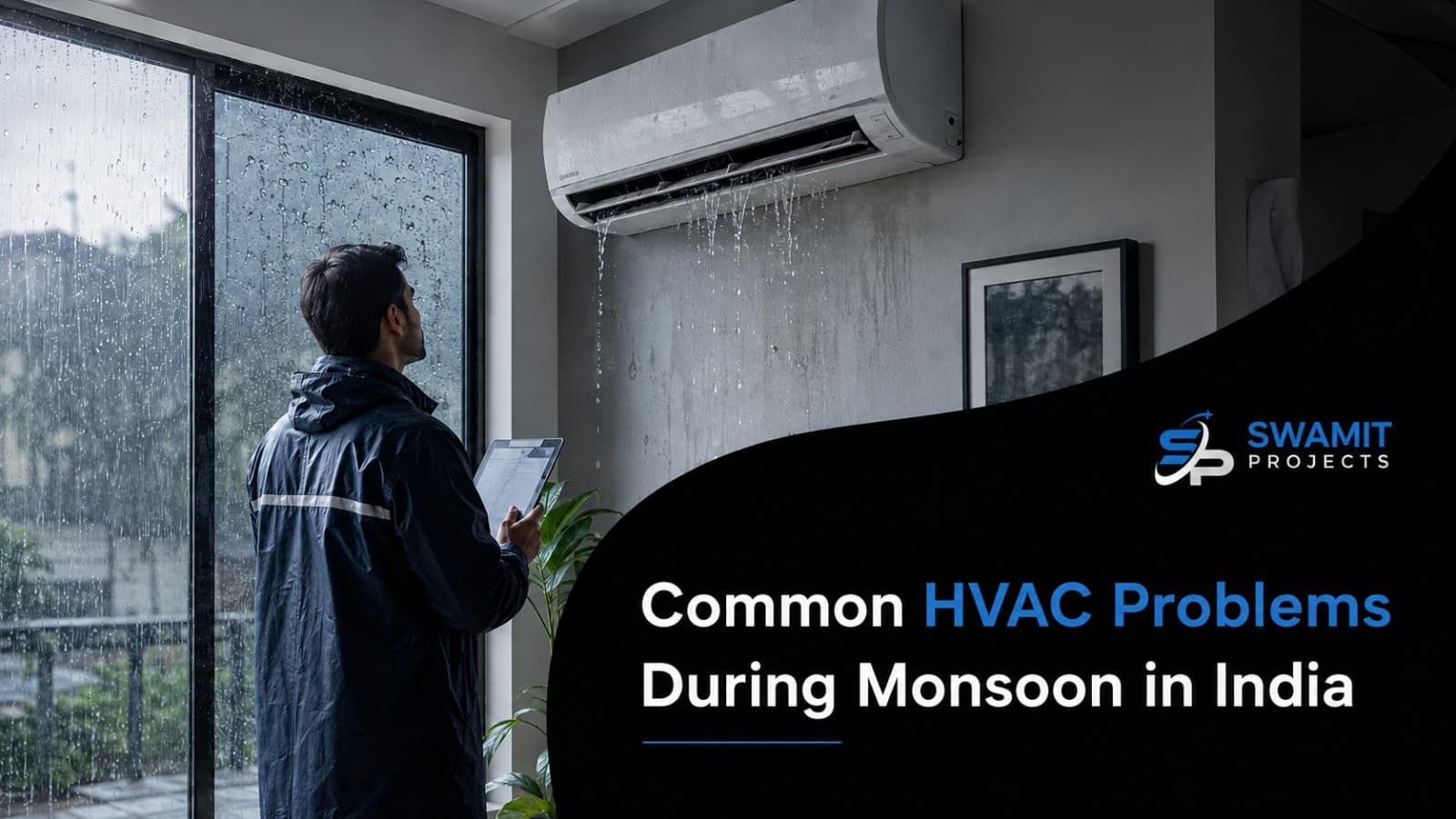
Because of India's tropical climate, there are unique challenges that Residential Heating, Ventilation and Air Conditioning (HVAC) systems experience throughout the year. During India's monsoons, there are the challenges that occur as a result of humid weather, high humidity levels, and extensive rainfall. All of these factors negatively impact the performance and efficiency of air conditioning hardware within homes and other structures.
It is common knowledge to businesses and homeowners that understanding the unique challenges of monsoon weather and HVAC systems will help businesses and homeowners better manage the costs of maintenance and prevent high moisture levels from causing air quality issues. Additionally, it helps provide the comfort and indoor air quality that is expected.
Swait Projects is a trusted HVAC service provider within India. We have the means to develop and install HVAC hardware that is able to directly address the unpredictable and changing nature of India's weather conditions. From new installations, regular inspections, and maintenance to complete management of an HVAC system, we guarantee our clients will have a superior cooling system that is both cost effective and efficient.
Why the Monsoon Season Creates HVAC Problems
Indias monsoon season is characterized by air consisting of a high moisture content. This directly correlates to how HVAC systems perform. Air conditioners possess the ability to facilitate the removal of heat and moisture from an enclosed space, but remove-at-large moisture levels create an added burden on an air conditioning system.
During high moisture seasons, dirt, blocked drains, and problems related to the electrical systems of an HVAC system begin to surface. The lack of routine maintenance creates poor cooling systems that lead to high energy consumption.
Common Problems with Residential HVAC Systems During the Monsoon Season
- High Humidity and Cooling Performance
One of the most common problems that monsoons experience is a failure to achieve optimal cooling. Because of the high moisture content in the air, the cooling system of an HVAC is ultimately impacted and leads to rooms feeling warmer than they actually are, as well as creating technologies that work to cool a room functioning inefficiently.
When ACs struggle to remove excess moisture, they can't function properly. As a result:
Long Cycles
High Energy Consumption
Increased Heat Stress
Increased Component Stress Service calls and proper humidity control help HVAC systems maintain peak performance during rainy periods. 2. AC Water Leakage
Water leakage from your air conditioner happens when drain pipes are obstructed or when filters or ducts are dirty. Leakage can ruin walls, furniture, and floors.
Water accumulates when it can't drain because of an obstructed drain line.
Measures to stop water leakage include:
Going through the AC installation angle
Cleaning drain pipes
Filter cleaning
Calling a maintenance crew 3. Mold and Bacterial Growth
HVAC systems become breeding grounds for mold and bacteria. This mainly happens because of dirty air filters and cooling coils.
Mold can:
Cause respiratory problems and be a source of bad odors
Reduce the performance of your AC
HVAC systems should be regularly cleaned to remove mold and bacteria. 4. Effects of Moisture on HVAC Systems
Because of rain and high humidity, moisture can affect the wiring and control boards of your HVAC system.
This can lead to:
Short circuits
Unexpected power outages
Damage to the control system
HVAC systems should be inspected to find safety concerns before they become big repair problems.
- Blocked Outdoor Unit
Rain, dust, leaves and other debris can build up on an air conditioners outdoor unit. Over time, this can block air flow and inhibit the release of heat.
Some effects of a blocked outdoor unit are:
- Poor cooling
- Increased power consumption
- Shortened equipment life span
- Stress on the unit
Having a clean and unobstructed outdoor unit will lower the stress on the unit and lead to a more efficient system.
How to Avoid HVAC Issues During the Monsoon Season
Scheduling Routine HVAC Services
Routine maintenance of the HVAC system keeps it functioning properly and increases the equipment longevity. In addition, it helps avoid unnecessary breakdowns of the HVAC system.
Cleaning and Replacing the Air Filters
Air filters become less effective in allowing consistent air flow if they are dirty. Moisture collecting on filters during the monsoon season will make them dirtier even more quickly. For improved air quality, get them cleaned/replaced on a regular basis.
Ensuring Proper Drainage
It is necessary to check the drainage system of a condensate in the monsoon season. A blocked drainage system causes leakage of water and creates a mess.
Improving Ventilation
Mold will grow due to accumulation of moisture. To avoid this a balanced conditioning and ventilation system should be used.
Outdoor HVAC Units
Proper placement of outdoor units can prevent rain water from accumulating in them.
Why Swamit Projects for Your Monsoon HVAC Needs?
We at Swamit Projects have acknowledged the peculiarities for HVAC systems during Indias Monsoon. With our team consisting of professionals who specialize in the installation, maintenance, and service of HVAC systems, we have resolved the needs of residential, commercial, and industrial facilities alike.
We strive for the best by designing systems that consume less energy and boost the internal comfort of the occupants, while at the same time reduce the costs of with the regular maintenance of the system, increases the trust and faith in the reliability of the systems that we developed. Swamit Projects has your HVAC systems ready for the every season.
Conclusion
It is a known fact that the Monsoon has an adverse effect on the HVAC systems owing to humidity, water exposure, and challenges related to the maintenance of the systems. System failures as a consequence to the exposure to water can also lead to electrical failures, mold growth, and poor cooling.
Regular HVAC system maintenance is a wise investment, as it not only benefits the system from an efficiency point of view, but also the occupants with a healthier and more comfortable internal environment. Swamit Projects will ensure that your HVAC systems are prepared to tackle the monsoon that India has in store.