

Introduction
Voltage fluctuation rarely announces itself with a dramatic failure. More often, it shows up as small, repeated problems: a machine that trips now and then, a motor that runs hot, a controller that resets without reason. Because each problem looks minor on its own, many plants treat them as normal wear and tear and keep paying for repairs, replacements and lost production. In reality, unstable voltage is often the common cause behind all of them.
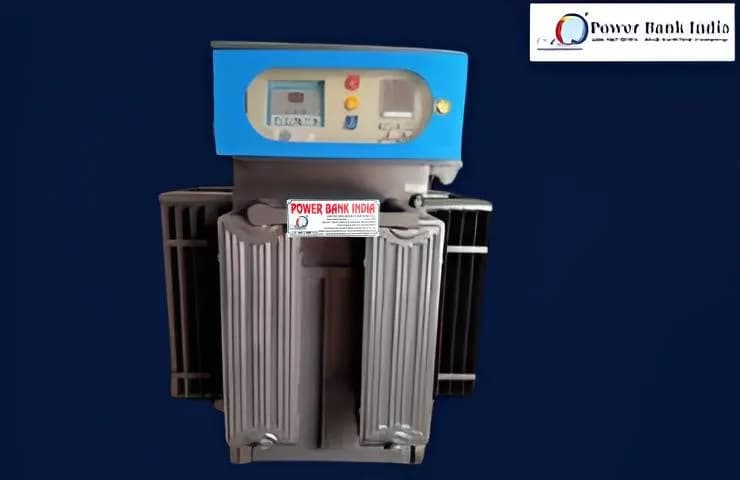
A servo stabilizer is designed to correct this. It continuously monitors the incoming supply and adjusts it to a steady output, using a servo motor and a buck-boost transformer, so your machines receive the voltage they were built to run on. The question for most plant managers is not what a servo stabilizer does, but whether their plant actually needs one. The seven signs below will help you decide.
This guide covers:
- Seven clear signs that your plant is suffering from voltage problems
- Why these problems happen and what they cost you
- How to confirm the problem before you buy
- What to check when choosing a servo stabilizer
Sign 1: Machines Trip or Shut Down Without a Clear Reason
If your machines stop unexpectedly, and the fault disappears after a restart, low or high voltage is a prime suspect. Most industrial machines have built-in protection that cuts power when the supply goes outside a safe range. When voltage keeps dipping or rising beyond that range, the machine trips again and again.
Each stoppage interrupts production, wastes material in half-finished jobs and forces the team to restart and recalibrate. A servo stabilizer helps maintain voltage within the required range, reducing unnecessary interruptions caused by voltage fluctuations.
Sign 2: Motors Run Hot or Burn Out Early
Motors are especially sensitive to voltage. When the supply is low, motors can draw more current to deliver the required power, which causes extra heat. When this continues over time, insulation can break down and windings may burn out. High voltage can also stress the insulation and shorten motor life.
If you are rewinding or replacing motors more often than expected, or you notice motors running much hotter than usual, unstable voltage is likely a factor.
Sign 3: Lights Flicker or Dim When Heavy Loads Start
When a large motor, compressor or furnace starts, it pulls a heavy current and can drag the voltage down for a moment. If the lights in your plant flicker or dim at those moments, it shows that the supply may not be holding steady under load.
The same voltage dip that you can see in the lights may also reach your machines, even if it does not always cause an immediate fault. Over time, repeated dips can add stress to connected equipment.
Sign 4: Controllers, Drives and PLCs Reset or Fail
Electronic equipment such as PLCs, variable frequency drives, control panels and circuit boards depends on clean, stable voltage. Sudden dips and surges can cause random resets, communication errors, false alarms and component failure.
If you see unexplained error codes, or the same boards and drives keep failing, the cause may not be the equipment itself but the power feeding it. Replacing the part without investigating the supply problem may allow the issue to return.
Sign 5: Product Quality Is Inconsistent
Precision machines such as CNC machines, laser cutters, injection moulding machines and testing equipment need steady power to perform consistently. When voltage fluctuates, motor speeds, heating and cutting performance can vary, which may lead to uneven finishes, dimensional errors and higher rejection rates.
If quality varies from shift to shift without any change in material or operator, checking the voltage is a sensible step before blaming other factors.
Sign 6: Compressors, Chillers and Air Conditioners Keep Tripping
Compressors and cooling equipment are among the voltage-sensitive loads in a plant because they require a strong starting current. Low voltage can make it difficult for them to start and run, causing them to trip on overload or experience additional stress.
If your compressors, chillers or air conditioners often trip or struggle to start, especially during peak hours, check the supply voltage and starting current. A stabilizer correctly sized for the load can help maintain a suitable voltage supply.
Sign 7: Repair Bills and Energy Costs Keep Climbing
Unstable voltage can be expensive in ways that are easy to miss. Equipment operating under unsuitable voltage conditions may draw excessive current or operate inefficiently, while frequent failures add repair, replacement and downtime costs.
If your maintenance budget keeps growing and the same equipment repeatedly needs attention, calculate what voltage-related problems are costing you over a year. For many plants, the cost of repeated damage and production interruptions makes investing in a properly sized servo stabilizer worth evaluating.
Why Does the Voltage Fluctuate in the First Place?
Voltage fluctuations can happen for several reasons, both within the electrical supply network and inside the plant.
- Overloaded Supply Lines or Transformers: When many users share the same supply, voltage can drop during peak demand.
- Heavy Loads Starting Inside the Plant: Large motors and compressors can cause sudden voltage dips as they start.
- Long Cable Runs: Voltage drops over distance, especially under heavy load.
- Seasonal Demand: Summer and festive seasons can put extra strain on the electrical supply.
- Weak or Unstable Grid Conditions: Some areas experience wider voltage variations due to local supply conditions.
How to Confirm the Problem Before You Buy
Do not guess. Measure the incoming voltage over time, ideally across a full week and at different hours, using a power quality analyser or a voltage logger.
This helps identify how far the voltage fluctuates, when the worst dips and surges happen, and whether the three phases are balanced. Share this data with your supplier so the stabilizer can be selected according to your actual electrical conditions rather than assumptions.
Also, note the total connected load, the largest motor you operate, and whether the electrical supply is single-phase or three-phase.
What to Check When Choosing a Servo Stabilizer
Selecting the right servo stabilizer requires more than checking the total electrical load. Consider the following specifications before making a decision:
- kVA Rating: Size it above your total load with a suitable safety margin, and consider the starting current of large motors.
- Phase and Balance Type: Check whether you need a single-phase or three-phase model and whether a balanced or independent-phase arrangement is suitable for your load.
- Input Voltage Range: It should cover the lowest and highest input voltages you actually experience.
- Output Accuracy: Tighter output accuracy may be important for precision equipment.
- Cooling Type: Air-cooled and oil-cooled models suit different capacities and environments. Choose according to load size, dust and heat conditions.
- Protection Features: Look for overload, short-circuit, over-voltage and under-voltage protection.
- Technical Support: Choose a supplier who can guide you on sizing, installation and maintenance.
Mistakes to Avoid When Buying a Stabilizer
Even a suitable stabilizer may not deliver the expected performance if the wrong model is selected or installed incorrectly.
- Choosing Only on Price: A low-cost unit with inadequate specifications or build quality may not meet your operating requirements.
- Undersizing the Capacity: A stabilizer that is too small can become overloaded and experience excessive stress.
- Ignoring Phase Imbalance: An uneven load may require a model designed to handle independent phase variations.
- Skipping Installation Guidance: Incorrect wiring or placement can affect performance and electrical safety.
Ready to Protect Your Plant? Start Here
If you recognise even two or three of these signs in your plant, it is worth getting your voltage checked and your electrical load assessed. Note down your connected equipment, total load, supply type and the problems you face, and share them with your supplier so they can recommend the right capacity and type.
For guidance on choosing the right servo stabilizer for your plant, contact Power Bank India with your requirements and get a solution matched to your load and supply conditions.
Conclusion
Unstable voltage quietly affects industrial plants through frequent trips, overheated motors, failing electronics, inconsistent product quality and rising repair costs. If you notice any of the seven signs described here, do not wait for a major breakdown. Measure your supply, understand your load and select a servo stabilizer that is correct