What is the difference between a naturalist guide and a regular safari driver in India?
This distinction is the most important in Indian wildlife tourism. A certified naturalist guide (WII, BNHS, or equivalent certification) has: formal training in wildlife ecology, animal behaviour, and species identification; the ability to identify 100–500+ bird species by sight and call; expertise in reading animal sign – pugmarks, scat, territorial markings, browsed vegetation; understanding of ecological relationships between species; conservation awareness and education capability; and reserve-specific field experience tracking individual animals over years. A safari driver with a state forest guard or mahout certificate has: driving skills on forest roads, basic familiarity with the reserve layout, and possibly years of incidental wildlife observation. The practical difference: on a Bandhavgarh tiger sighting, a certified naturalist tells you which individual tiger this is (by facial stripe pattern), its age, territory, recent kills, and ecological significance; a driver says 'tiger, right side, photo.' India has tens of thousands of safari drivers who call themselves naturalists and fewer than 2,000 truly certified wildlife naturalists; verified Trade4Asia operators provide the latter.
Which is better for first-time wildlife tourists — Ranthambore, Bandhavgarh, or Kanha?
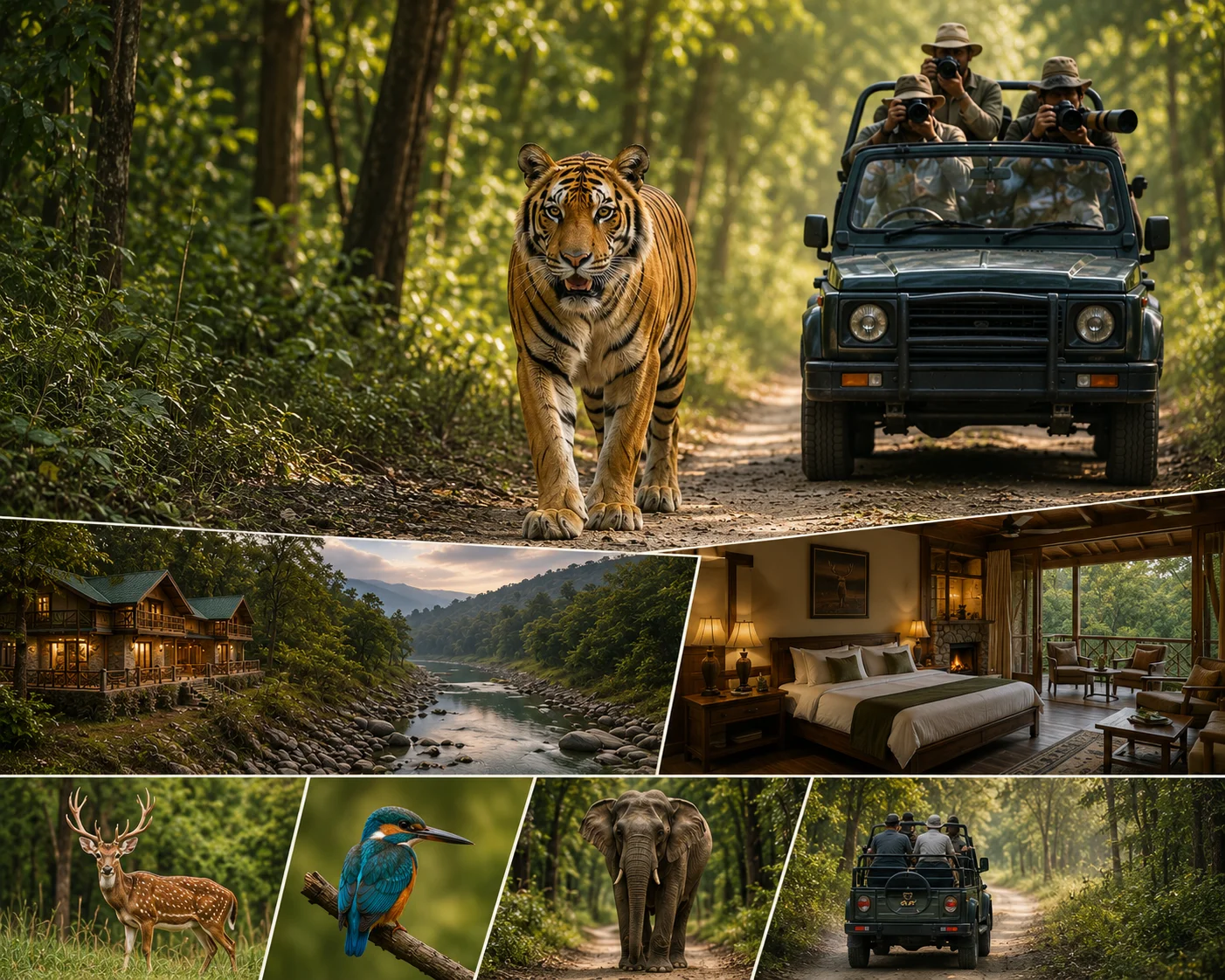
All three are excellent choices for first-time visitors, but they offer different experiences. Ranthambore (Rajasthan): most famous, most accessible from Delhi (5 hours), most photographed tigers – T-17 Arrowhead's lineage is internationally known; best for travellers who want the highest-profile tiger experience and don't mind some crowd; best season October–June. Bandhavgarh (Madhya Pradesh): world's highest tiger density, slightly less crowded than Ranthambore, excellent mix of habitats (sal forest, bamboo, open meadow), extremely active sloth bear and leopard population alongside tigers; best February–May. Kanha (Madhya Pradesh): Kipling's Jungle Book inspiration, India's most beautifully managed tiger reserve, extraordinary barasingha (swamp deer – state animal of Madhya Pradesh) herds, largest reserve area creating the most authentic wilderness feel; slightly lower tiger sighting probability but the richest overall ecosystem experience; best March–June. Recommendation: Ranthambore for ease of access from Delhi + high tiger visibility; Bandhavgarh for maximum tiger density; Kanha for the most authentic jungle experience with the widest biodiversity.
What is ethical wildlife tourism and why does it matter when choosing an operator?
Ethical wildlife tourism means engaging with wild animals in their natural habitat without causing harm through exploitation, disturbance, or complicity in captive animal abuse. In India specifically, ethical wildlife tourism means: no elephant riding (elephants trained through Phajaan – a brutal breaking process – to accept human riders), no tiger cub petting (facilities that offer this are invariably linked to illegal captive breeding that supplies the tiger bone trade), no baiting wildlife for photography (placing live prey to attract carnivores is illegal under WPA 1972 and ecologically harmful), no flash photography at nest sites (stress-causes nest abandonment in sensitive bird species), and maintaining minimum approach distances that allow wildlife to behave naturally. Why it matters: India's wildlife tourism generates approximately ₹8,500 crore annually; this revenue either supports conservation (when channelled through ethical operators who pay legitimate forest fees and community programs) or undermines it (when channelled through exploitative facilities that treat wild animals as tourist commodities). When you choose a verified Trade4Asia wildlife operator, your booking directly funds operators who are conservation partners, not conservation adversaries.
What is the best wildlife destination in India for bird watching?
India has 1,300+ bird species – more avian diversity than Europe and North America combined – with multiple world-class birding destinations for different target groups. For beginners and families: Bharatpur (Keoladeo Ghana UNESCO) – the most accessible world-class birding site in India, 15 minutes by auto-rickshaw from Bharatpur railway station, outstanding painted stork and open-billed stork colonies, winter migratory waterfowl in spectacular numbers (October–March). For serious birders: Chilika Lake (Odisha) – 160+ migratory species in winter peak, Irrawaddy dolphins as a bonus, flamingo congregations; Silent Valley (Kerala) – Western Ghats endemic specialist; Great Rann of Kutch – flamingo breeding colony and great Indian bustard, one of the world's most endangered birds. For endemic specialists: Andaman Islands – 14 bird species found nowhere else on earth (Andaman teal, Andaman drongo, Andaman coucal); Eaglenest Wildlife Sanctuary (Arunachal Pradesh) – one of the world's top 10 birding destinations, discovered scientifically only in 2003, extraordinary Eastern Himalayan endemics. For winter migration: Sultanpur National Park (Haryana, near Delhi) and Point Calimere (Tamil Nadu – Greater flamingo breeding). The key to all of these: a BNHS-certified ornithologist guide makes the difference between 30 species sighted and 150 species.
What is the snow leopard experience in Spiti and what are realistic sighting expectations?
The snow leopard expedition to Spiti Valley in Himachal Pradesh (January–March) is one of the world's most sought-after wildlife experiences – the ghost cat of the high Himalayas in its most accessible viewing territory. Spiti's Pin Valley National Park and Kibber Wildlife Sanctuary host the world's most accessible snow leopard population, with sighting probabilities of 65–75% over a 7–10 day expedition with experienced local naturalists who have tracked individual leopards for years. What to expect: the expedition involves cold (minus 10–20 deg C at night), altitude (3,800–4,500m – acclimatisation is mandatory), patience (leopards are observed through spotting scopes at distances of 200–800m on cliff faces, not approached), and extraordinary mountain landscape. The viewing model is conservation-sensitive – spotting scopes rather than close approach, which actually yields better viewing than stress-induced flight. A typical sighting: a naturalist with a spotting scope finds a snow leopard resting on a cliff face at 400m distance; the white-grey spotted coat against grey limestone creates natural camouflage that would be invisible without the guide's trained eye; watching the leopard through 60x spotting scope for 2–3 hours as it surveys its territory, grooms, or hunts bharal (blue sheep) is the experience. Realistic expectation: plan for 7 days minimum, expect extraordinary mountain experience with high (but not guaranteed) snow leopard sighting probability.